TECH Signal 359
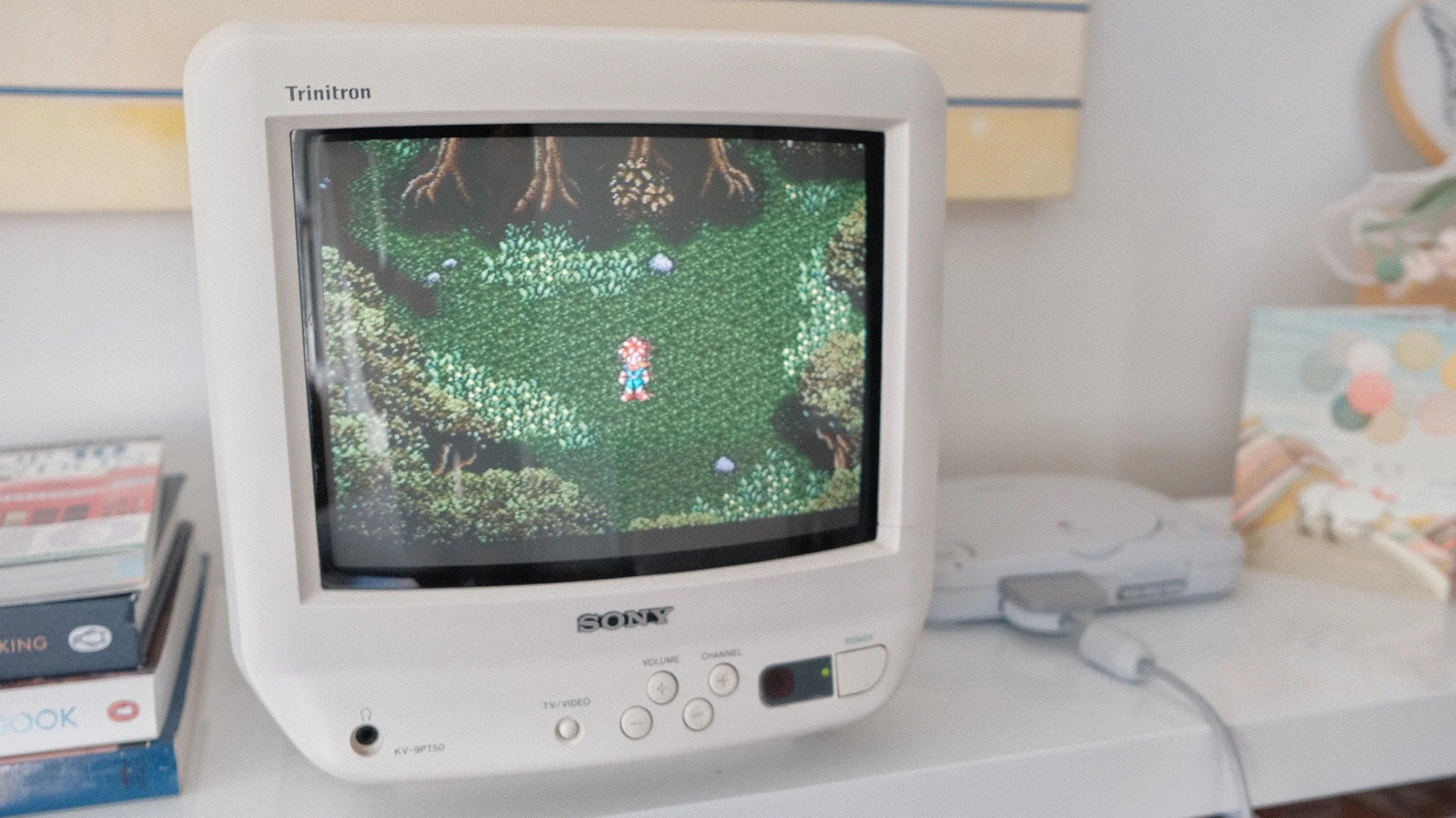
Retro games designed for CRT scanlines lose sharpness and motion clarity on modern flat-panel displays
 ↗
↗
Older game consoles output 240p or 480i signals that CRTs rendered as continuous scanlines, while modern displays resample them into fixed pixels.
Engineers working on emulation, retro ports, or display pipelines need to know why the original look is lost. The mismatch is not just nostalgia, it is a technical incompatibility between analog scan-out and digital sample-and-hold.
Written by elseif from the cluster below · every claim links back to a sourceThe three things worth knowing
CRTs draw images as horizontal scanlines, not discrete pixels, preserving motion clarity at low frame rates.
240p and 480i signals were standard for pre-HD consoles and are resampled poorly by modern fixed-resolution panels.
Modern displays use sample-and-hold, which introduces motion blur and scaling artifacts absent on CRTs.
THE READ
What the cluster adds up to.
Retro game consoles were engineered for cathode-ray tube displays. CRTs render images by sweeping an electron beam across a phosphorescent screen in horizontal scanlines, a process fundamentally different from the fixed-pixel grids of LCD and OLED panels. This analog scan-out method allowed CRTs to display 240p and 480i signals without the pixel smearing or scaling artifacts that occur when modern displays attempt to resample these low resolutions.
The scanline-based rendering of CRTs also provided superior motion clarity. Because CRTs redrew the screen continuously, low or inconsistent frame rates in older games were less perceptible. Modern displays, which hold each frame until the next refresh, introduce motion blur that makes these frame rate issues more noticeable. High-refresh-rate panels have mitigated this issue, but the fundamental difference in rendering techniques remains.
Resolution handling further complicates the mismatch. CRTs lacked a native resolution and could display multiple signal types without distortion. Modern displays, however, are optimized for specific resolutions and struggle to upscale or downscale 240p or 480i signals cleanly. Interlaced signals, in particular, are problematic because modern panels often deinterlace them poorly, introducing flicker or combing artifacts that were absent on CRTs.
For engineers working on retro game emulation or display pipelines, this incompatibility presents a challenge. Simply outputting the original signal to a modern display does not replicate the intended experience. Solutions such as scanline filters or integer scaling attempt to mimic CRT behavior, but they are approximations and cannot fully replicate the analog rendering of a CRT. Understanding these technical differences is critical for accurate preservation or adaptation of retro content.
Written by elseif from the cluster below · checked for specifics the sources never containedTHE CLUSTER