TECH Signal 497
States allege Meta used 'hook, hold, harvest, hide' strategy to target children in landmark trial
 ↗
↗
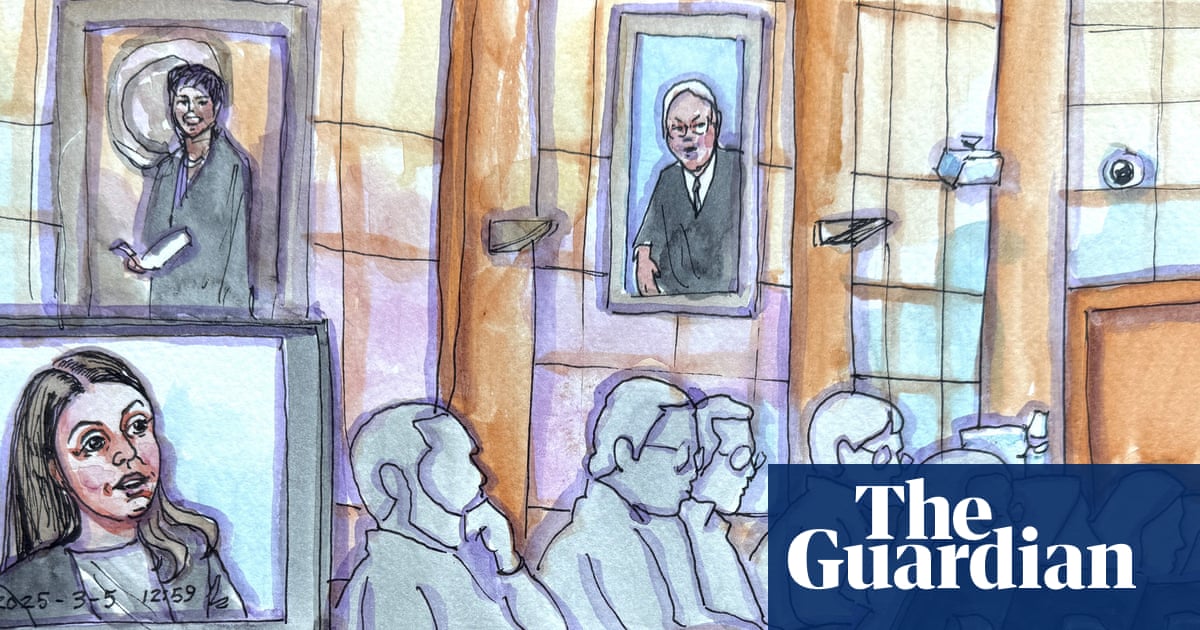
California and 28 other US states opened a landmark trial in Oakland this week accusing Meta of designing addictive Facebook and Instagram products that harm children and of collecting data on under-13 users without parental consent.
The jury is advisory, but Judge Yvonne Gonzalez Rogers will make the final ruling, and the states are seeking up to $200bn in damages alongside court-ordered product redesigns, the latter being the more permanent threat to Meta's business model. Meta has already lost two comparable cases this year, including a roughly $1bn New Mexico judgment, and faces thousands of similar suits from families, school districts and other attorneys general.
Written by elseif from the cluster below · every claim links back to a sourceThe three things worth knowing
Prosecutors opened with a 'hook, hold, harvest, hide' framework, alleging Meta maximizes engagement, monetizes children's data, and conceals the resulting harm from the public.
Former Meta safety engineer Arturo Béjar testified that Instagram's reporting tools failed his teenage daughter and described the company's child-safety posture as a 'don't ask, don't tell' strategy.
Meta denied the allegations, saying it bars under-13 sign-ups, has disabled more than 1m such accounts, and called the states' payout demand an 'outlandish' figure.
THE READ
What the cluster adds up to.
The case opened on Tuesday in Oakland, California, with California and 28 other US states as plaintiffs and attorneys from California, Colorado, Kentucky and New Jersey leading the prosecution. The suit advances two parallel theories of liability: that Meta violated US federal child privacy law by collecting data on users under 13 without parental permission, and that it broke state-level consumer protection laws by designing products the states call addictive. Eight jurors heard from counsel on both sides during the first week, but the jury's role is advisory; the final verdict and any damages award will be set by Judge Yvonne Gonzalez Rogers. The trial is scheduled to run six to eight weeks, with Meta CEO Mark Zuckerberg and Instagram head Adam Mosseri expected to testify.
Megan O'Neill, the California attorney delivering opening statements, reduced Meta's business to four words: hook, hold, harvest, hide. Under that framework, the company allegedly 'hooks' users, 'holds' them on the platform as long as possible, 'harvests' their data, and then 'hides' the truth from the public, a pattern the states argue worked 'especially well for kids.' The remedy the states are pursuing is unusually broad: not just monetary damages, which they cap at roughly $200bn, an amount the article equates to Meta's 2025 annual revenue, but also court-ordered changes to the design of Meta's products. A design mandate, if granted, would constrain the engagement-maximization mechanics at the core of Meta's advertising business, which is why the article characterizes the threat as existential rather than purely financial.
Meta's defense, articulated in court by attorney Paul Schmidt and publicly by spokesperson Liza Crenshaw, rests on three points: the company does not allow children under 13 to register, it has disabled more than 1m accounts belonging to that age group, and it has built tools to address the harms the states describe. Schmidt acknowledged there is 'no dispute' that people can struggle with social media, but framed the company's response as a work-in-progress rather than a violation. Crenshaw's characterization of the damages demand as an 'outlandish payout' signals Meta will contest both liability and the size of any remedy. The defense also implicitly leans on the advisory-jury structure to keep the case alive for appeal regardless of the jury's recommendation.
The first week's headline witness was Arturo Béjar, who held safety roles at Meta in two stints between 2009 and 2021 and has since become a prominent outside critic, including testifying before a US Senate committee. He tied his motivation to his teenage daughter's experience on Instagram, where she received unwanted sexual advances, genital images, and misogynistic insults that she could not effectively report through the platform's own tools. His characterization of Meta's posture as 'don't ask, don't tell' is significant because it comes from a former safety engineer rather than an external researcher, giving the jury a credentialed insider account of how safety reports were handled. Béjar is also serving as an expert witness in other social-media-harm cases, which means his Oakland testimony is likely to be cited beyond this trial.
The trial opens against a backdrop of recent losses for Meta on similar theories. In March, a court ordered the company to pay nearly $1bn to New Mexico over child sexual exploitation on its platforms, and a separate jury found Meta liable for designing addictive products that harmed one young user and awarded her more than $4m. Meta is also defending thousands of additional suits brought by families, school districts, and other state attorneys general, several of which are also using Béjar as an expert. For engineers, the operational signal is that the design choices behind engagement ranking, age-gating, and safety reporting are now the subject of live courtroom scrutiny, with a judge rather than a jury empowered to translate any finding of liability into structural product changes.
Written by elseif from the cluster below · checked for specifics the sources never containedTHE CLUSTER