INFRA Signal 86
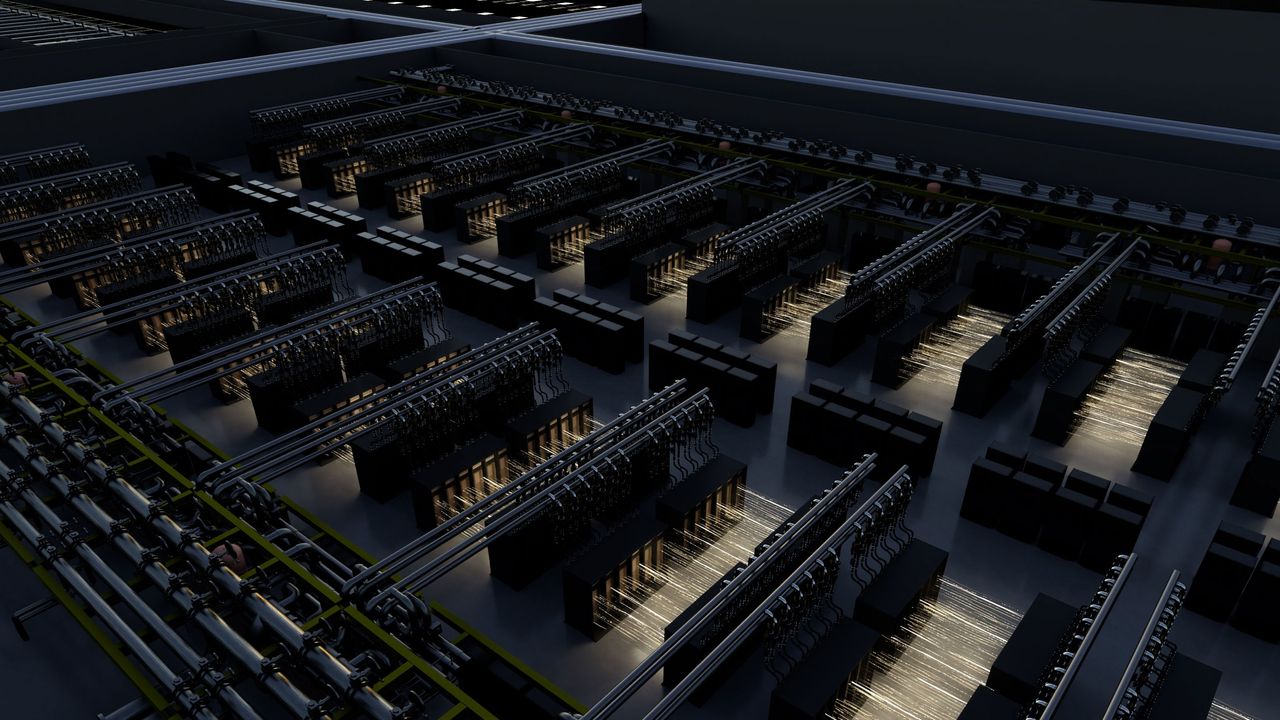
Nvidia DSX MaxLPS reportedly boosts data center compute within fixed 100MW power budgets
 ↗
↗
Nvidia’s DSX MaxLPS site power management approach dynamically redistributes power across racks to maximize compute within fixed data center power limits.
Data center power is a hard constraint for AI workloads, and static provisioning leaves capacity stranded. Dynamic power management could let operators deploy more hardware without expanding infrastructure. If proven at scale, this shifts the cost equation for large-scale AI deployments.
Written by elseif from the cluster below · every claim links back to a sourceThe three things worth knowing
DSX MaxLPS dynamically reallocates power between racks based on real-time workload demands, reducing stranded capacity.
Nvidia claims a 100MW facility could support 40,000 Rubin GPUs delivering up to 2 zettaFLOPS for inference under this model.
Workload-specific power profiles at the rack level further optimize efficiency for training, inference, or memory-bound tasks.
THE READ
What the cluster adds up to.
Nvidia’s DSX MaxLPS targets a fundamental bottleneck in data center scaling: power delivery. Traditional static provisioning allocates power based on worst-case peak draw per rack, which often results in unused capacity. By dynamically monitoring and redistributing power at the chip, rack, and cluster levels, MaxLPS aims to squeeze more compute from the same power budget. The example of a 100MW facility supporting 40,000 Rubin GPUs suggests a step-change in density, but the real-world impact depends on how closely actual workloads align with Nvidia’s assumptions.
The approach relies on continuous telemetry and software-defined control loops to shift power where it’s needed most. This introduces operational complexity, as data center operators must integrate MaxLPS with existing infrastructure and workload schedulers. The payoff is avoiding over-provisioning: Nvidia’s example shows a 540kW budget could support five racks instead of four under static provisioning. However, the system’s effectiveness hinges on workload predictability, unexpected spikes or uneven utilization could still leave power stranded or trigger throttling.
MaxLPS also introduces workload-aware power profiles, akin to power modes on consumer devices but scaled to racks. This allows operators to tune power delivery for specific tasks, such as inference or training, potentially improving efficiency further. The lack of measured performance data for Rubin GPUs leaves open questions about real-world gains, but the principle aligns with broader industry trends toward software-defined infrastructure. For engineers, the trade-off is clear: dynamic power management requires tighter integration between hardware, firmware, and orchestration tools, but the reward is higher utilization of fixed resources.
The broader implication is a shift from hardware-centric to system-level optimization. Nvidia’s pitch frames power as a shared resource, not a fixed allocation per rack. This could influence how future data centers are designed, with implications for cooling, cabling, and even facility layout. However, adoption depends on whether operators trust dynamic power management to avoid cascading failures or performance degradation. The technology’s success will likely be measured in incremental gains, more racks per megawatt, lower reserve margins, rather than revolutionary breakthroughs.
Written by elseif from the cluster below · checked for specifics the sources never containedTHE CLUSTER