TECH Signal 92
Android Auto mirrors a phone onto the car display while Android Automotive OS runs natively on vehicle hardware
 ↗
↗
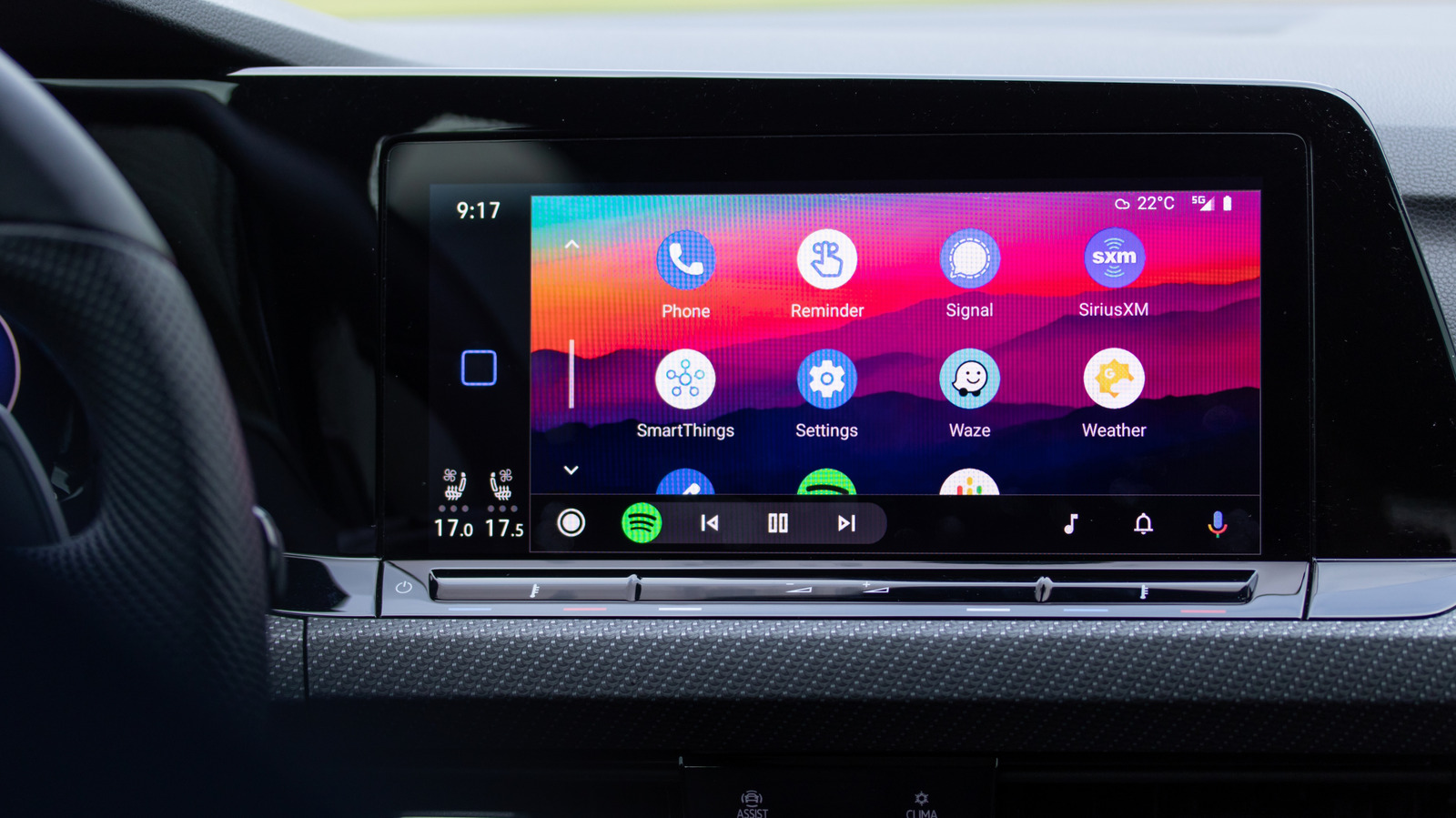
Android Auto projects a phone-driven interface onto a compatible car screen, whereas Android Automotive OS is an open-source platform installed directly on the vehicle's hardware and integrated with infotainment, instrument displays, climate controls, and EV data.
For engineers building in-car software, the distinction determines whether the phone or the vehicle is the compute platform. Automakers can adopt AAOS as a base layer and still choose whether to license Google built-in services, support Android Auto projection, or build a fully proprietary experience on top. The Polestar and Rivian examples show that these are not mutually exclusive decisions but independent architectural choices.
Written by elseif from the cluster below · every claim links back to a sourceThe three things worth knowing
Android Auto depends on a connected Android phone for processing and app data, displaying a driving-optimized interface on the car's screen via USB or wireless connection.
Android Automotive OS is open-source software running on the car's own hardware, integrating with vehicle functions like climate controls, instrument displays, and EV information without requiring a phone.
Google built-in is a separately licensed package of Google Automotive Services, native Maps, Play, and voice assistant, that automakers can optionally add to AAOS-based vehicles.
THE READ
What the cluster adds up to.
The core architectural difference is where computation happens. Android Auto treats the phone as the brain and the car display as a larger, less distracting output surface; the car's own operating system is irrelevant to the projection layer. Android Automotive OS, by contrast, is the car's operating system, meaning the vehicle manufacturer is responsible for integrating it with hardware subsystems such as climate, instrumentation, and battery management.
Google built-in adds a layer of confusion on top of AAOS. It is not part of the open-source AAOS itself but a separately licensed collection of Google Automotive Services that can provide native Google Maps, Google Play, and Google's voice assistant without a phone. An automaker can run AAOS without Google built-in, as Rivian does, building its own software experience on the open-source base while declining to offer Android Auto or CarPlay projection at all.
The two systems are not an either-or choice for the end vehicle. Polestar demonstrates that an AAOS-based car with Google built-in can simultaneously support Android Auto and Apple CarPlay projection, meaning a driver can use either the native in-car platform or their phone's interface. This flexibility matters for spec-sheet literacy: a car listing Android Automotive OS does not guarantee Android Auto support, and vice versa.
Only one feed carried this story, and it is an explainer rather than a product launch or policy change. The material does not describe a new release, a version number, a benchmark, or a pricing change. The value for engineers is in the clarification of naming and licensing relationships among three distinct Google offerings, Android Auto, AAOS, and Google built-in, that are frequently conflated.
Written by elseif from the cluster below · checked for specifics the sources never containedTHE CLUSTER