INFRA Signal 148
How the controller-runtime Cache Actually Works, and Why Your Controller Does Not Crash the API Server
 ↗
↗
elseif has not written about this yet · Kubernetes describes it this way
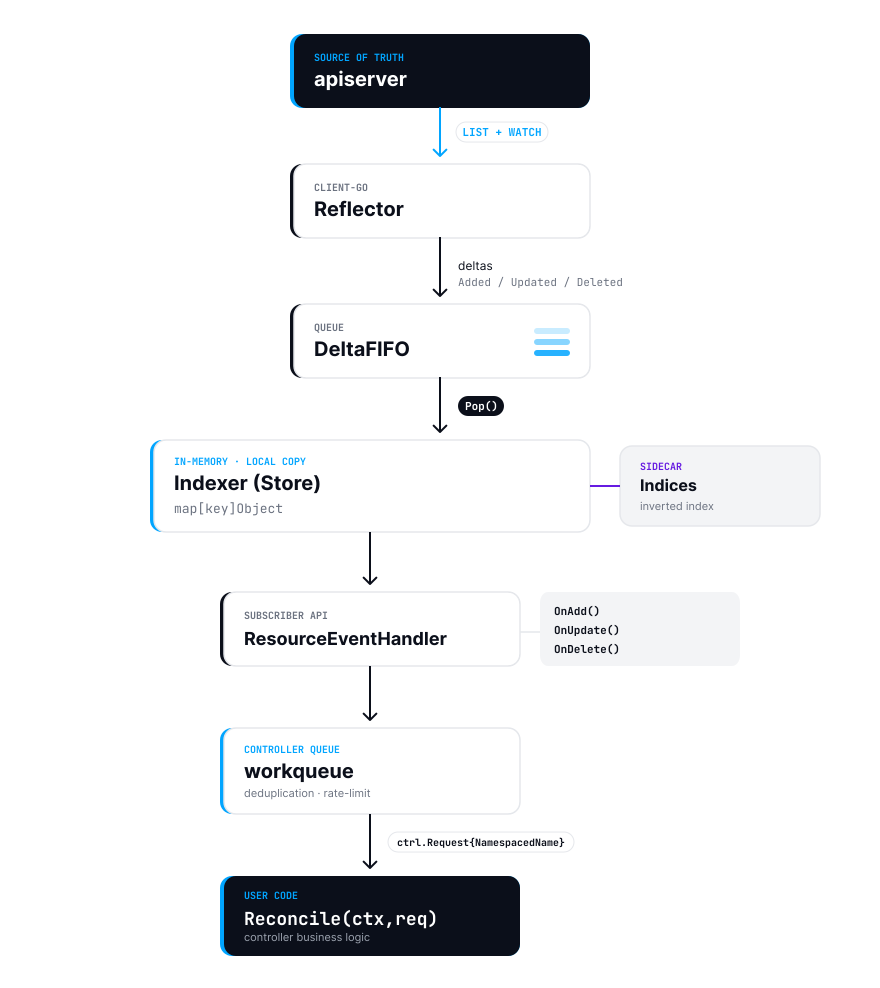
Caution:Some of the technical detail in this article is not accurate. We are reviewing it and preparing corrections. Until then, check what you read here against the controller-runtime documentation. Kubernetes has long been the default platform for distributed workloads, and writing your own controller for it is now a matter of a few hours. The common path — Golang, using kubebuilder on top of controller-runtime — gives you a project scaffold, types, and a reconciler. For typical scenarios that is more than enough. But as soon as load grows or the controller starts behaving in ways you did not expect, a whole class of edge cases shows up. Most of them trace back to the same root cause: a fuzzy mental model of how controller-runtime works inside. If you write Kubernetes controllers in Go, this article should help you build a coherent picture and avoid expensive surprises in production. This article walks through the internals of controller-runtime and, along the way, shows which architectural decisions are baked into Kubernetes itself. The starting point is how controllers actually read objects from the Kubernetes API. A common misconception goes like this: r.Get() inside Reconcile
THE CLUSTER
Same story, 1 feed.
Kubernetes
How the controller-runtime Cache Actually Works, and Why Your Controller Does Not Crash the API Server
Open ↗