TECH Signal 434 2 feeds carried it
Humanoid robot reportedly breaks Usain Bolt's 100-meter dash record in 9.39 seconds
 ↗
↗
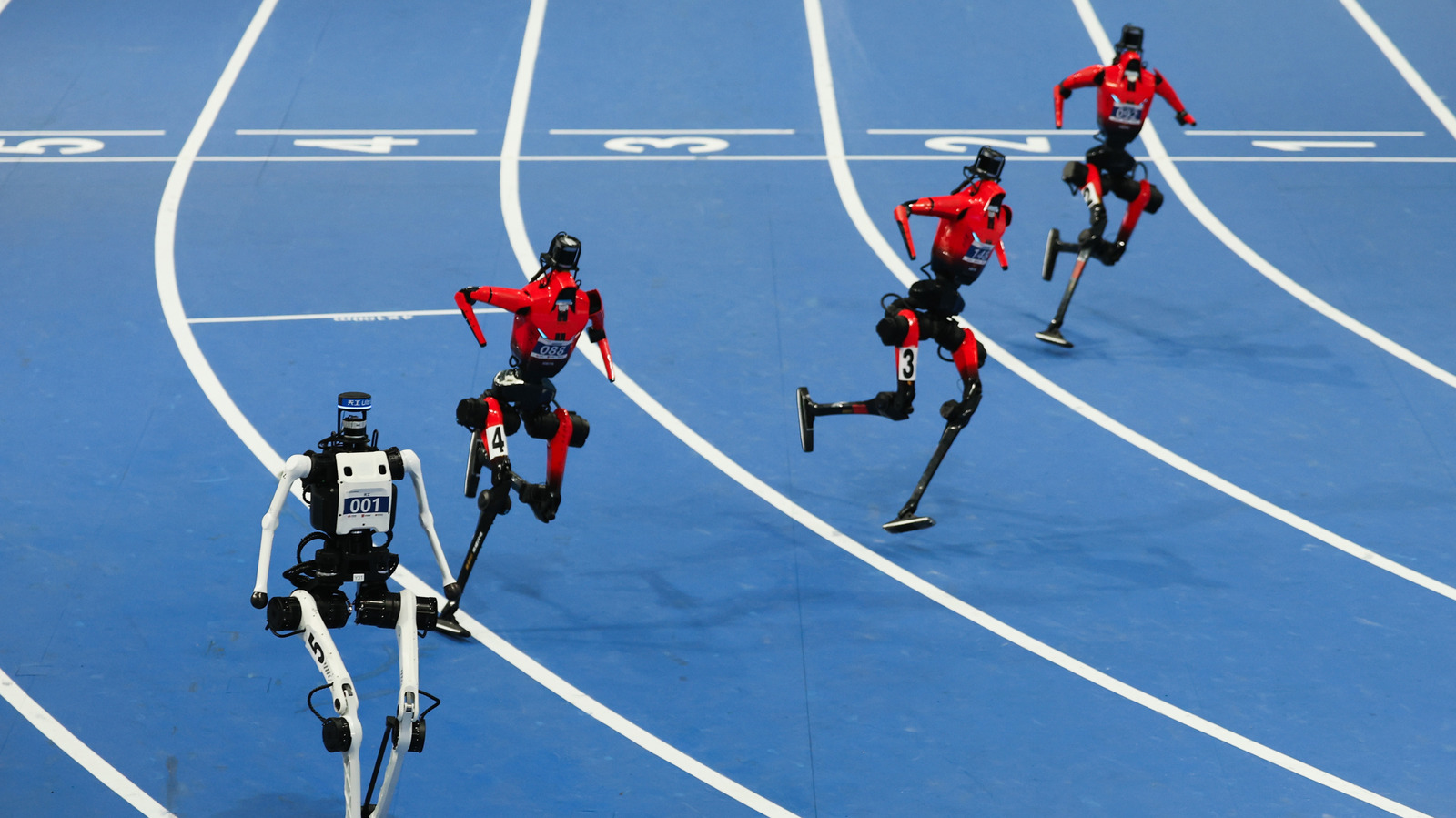
A humanoid robot completed a 100-meter sprint faster than the human world record, though with significant stability issues.
This milestone demonstrates rapid progress in humanoid robot locomotion but highlights critical limitations in real-world durability. For engineers, it underscores the gap between speed benchmarks and practical deployment.
Written by elseif from the cluster below · every claim links back to a sourceThe three things worth knowing
Tiangong Ultra humanoid robot ran 100 meters in 9.39 seconds, beating Usain Bolt's 9.58-second record.
Robots required human intervention after sprints due to crashes and instability.
Event included other competitions like soccer and boxing, with mixed performance outcomes
THE READ
What the cluster adds up to.
The reported 9.39-second 100-meter dash by a humanoid robot marks a symbolic threshold in robotic locomotion. While the speed surpasses the fastest human time, the event's context reveals this is a controlled demonstration rather than a practical breakthrough. The robots' inability to stop or remain upright after crossing the finish line suggests the achievement relies on highly optimized conditions, not general-purpose mobility. For engineers, this raises questions about the trade-offs between speed, stability, and energy efficiency in bipedal designs.
The material highlights a recurring theme in humanoid robotics: performance in isolated tasks outpaces real-world robustness. The same robots that set sprint records also crashed into pads or required stretcher assistance, indicating that dynamic balance and recovery mechanisms remain unsolved challenges. The half-marathon event further illustrates this gap, where even the winning robot took 50 minutes to complete the distance, far slower than human runners. These inconsistencies suggest that current systems excel in narrow, pre-tuned scenarios but lack the adaptability needed for unstructured environments.
The event's structure as a competitive showcase underscores how humanoid robotics is still in a phase of rapid iteration rather than mature deployment. The inclusion of diverse competitions like soccer and boxing implies an effort to test versatility, but the mixed results, including crashes, hint at the difficulty of generalizing locomotion skills. For engineers, the takeaway is that while speed records generate headlines, the real work lies in improving reliability, power consumption, and environmental interaction. The next meaningful milestone may not be faster sprints but robots that can complete tasks without human intervention.
Written by elseif from the cluster below · checked for specifics the sources never containedTHE CLUSTER