TECH Signal 514
GW-BASIC-compatible interpreter boots on UEFI and runs on Windows
 ↗
↗
A new BASIC interpreter replicates GW-BASIC on bare-metal UEFI systems and Windows with modern memory and graphics support
Engineers maintaining legacy systems or teaching retro computing now have a lightweight, OS-free option that runs on current hardware. The tool also demonstrates how to target UEFI directly, a skill useful for firmware-level diagnostics or bootloaders.
Written by elseif from the cluster below · every claim links back to a sourceThe three things worth knowing
Interpreter runs on bare-metal UEFI or Windows with no 64 KB memory ceiling
Supports 24-bit color graphics, high-precision timing, and multi-gigabyte data segments
Includes full-screen editing, error trapping, and direct UEFI file-system access
THE READ
What the cluster adds up to.
Thoreau BASIC is a GW-BASIC-compatible interpreter that boots directly on UEFI firmware. It eliminates the need for a host operating system, making it suitable for diagnostics, education, or embedded scripting. The interpreter uses the largest block of conventional memory reported by the firmware, which on modern machines can be gigabytes in size. This allows for large arrays and data structures without the constraints of older BASIC implementations.
The interpreter supports modern hardware features such as 24-bit color graphics, high-precision timing via the CPU's invariant TSC, and direct access to the UEFI Simple File System. Graphics commands like PSET, LINE, and CIRCLE operate at native framebuffer resolution, and text windows can be carved into regions with independent cursors and colors. These capabilities make it practical for simple games, visualizations, or firmware-level tools without requiring a full OS stack.
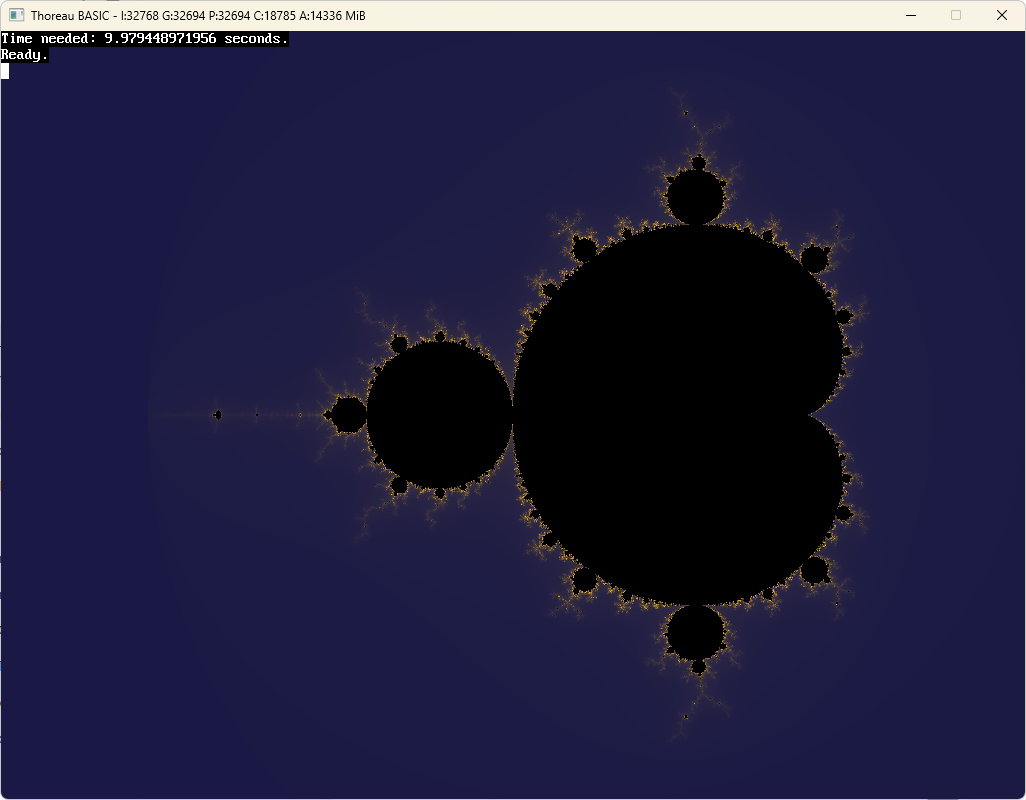
Performance has been significantly improved with a per-line token cache, precedence-climbing expression evaluator, and variable-slot caching. The author reports a 25× speedup on compute-heavy programs, such as a Mandelbrot set renderer dropping from 230 seconds to under 10 seconds. This makes the interpreter viable for interactive applications, though it remains limited to single-threaded execution and lacks modern language features like object-oriented programming or advanced data structures.
The tool includes features for debugging and program management, such as ON ERROR GOTO, RESUME, ERL, ERR, and RENUM, which renumbers lines and updates all references. It also supports direct memory access via PEEK, POKE, and VARPTR, as well as readable pointers into system memory regions like LOMEM and HIMEM. These features are useful for low-level programming but require caution, as they can lead to system instability if misused.
Thoreau BASIC is available as a downloadable Windows executable or as a UEFI bootable EFI file. The UEFI version can be renamed to BOOTX64.EFI and placed in the \EFI\BOOT directory to boot directly. While the interpreter is still in development, it provides a lightweight, retro-compatible option for engineers working with legacy code or exploring UEFI development.
Written by elseif from the cluster below · checked for specifics the sources never containedTHE CLUSTER