PLATFORMS Signal 475 2 feeds carried it
White House releases retro arcade games where Trump administration policies always fail
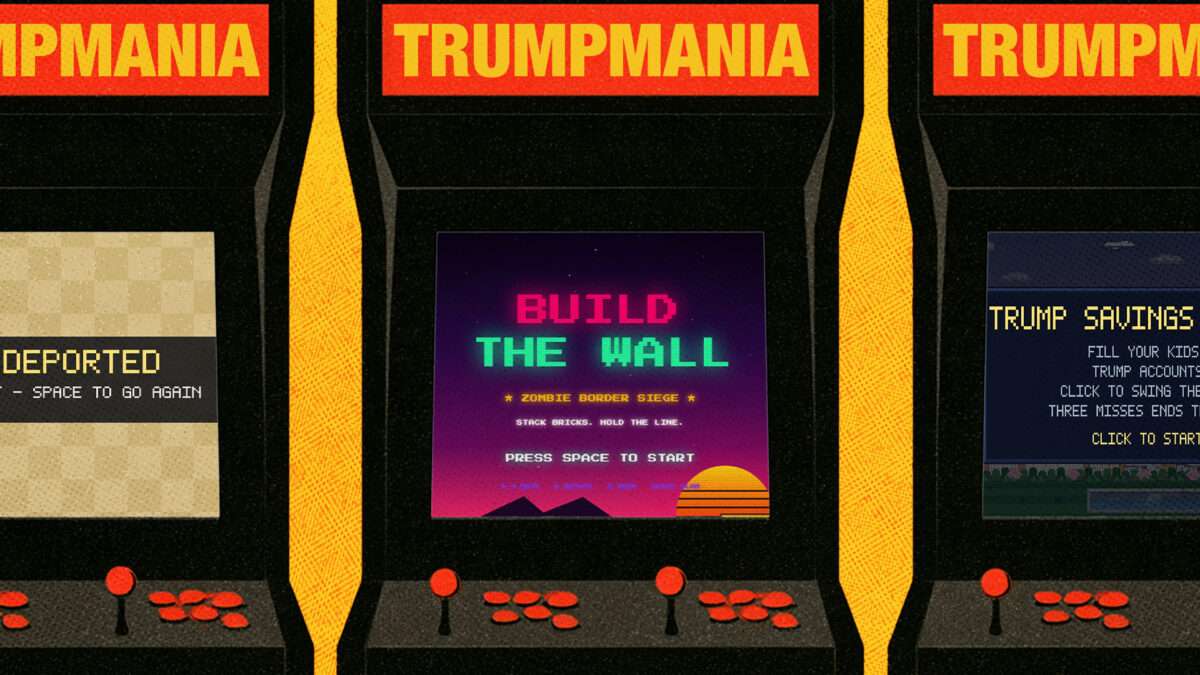 ↗
↗
The White House launched MAGA-themed reskins of classic games where players inevitably lose at enforcing border control or dietary restrictions
The games frame administration policies as unwinnable, reflecting a broader critique of their feasibility. For engineers, this highlights how government messaging can be subverted through design choices in seemingly innocuous projects. The technical execution is secondary to the unintended narrative it reinforces.
Written by elseif from the cluster below · every claim links back to a sourceThe three things worth knowing
Games reskin classics like Tetris and Tapper with MAGA-themed objectives such as border control and dietary regulation
All games are designed so players inevitably lose, implying policy goals are unattainable
The project demonstrates how gamification can undermine rather than promote political messaging
THE READ
What the cluster adds up to.
The White House released a set of browser-based arcade games that reimagine classic titles with themes tied to Trump administration policies. These include border enforcement, dietary regulation, and legislative success. The games are technically simple, relying on well-known mechanics from Tetris, Snake, and Flappy Bird. However, the core change is not in gameplay but in the framing: every game is structured so that the player cannot win indefinitely. This design choice turns the games into a commentary on the perceived futility of the policies they represent.
For engineers, the project is a case study in how design decisions can override intended messaging. The games are not broken in a technical sense, they are functional and playable. Yet their structure ensures failure, which contradicts the administration’s stated goal of promoting its successes. The cost of adoption here is not computational but ideological: the games may entertain briefly, but they also reinforce skepticism about the policies they depict. This tension between form and function is a reminder that even simple software projects can carry unintended consequences when political narratives are embedded in their mechanics.
The games stop working as propaganda because their mechanics undermine their own premise. In *Build the Wall*, the player stacks blocks until the wall is inevitably overrun. In *Supply Line*, seed oils always breach the lunch line defenses. These outcomes are not bugs but features of the design, suggesting that the policies they represent are doomed to fail. The White House’s announcement framed the games as a celebration of administration wins, but the gameplay tells a different story. This disconnect highlights how gamification can backfire when the underlying systems are not aligned with the intended message.
The project also raises questions about the role of government in creating entertainment software. Unlike private-sector games, which are often designed to maximize engagement, these games prioritize a political narrative over player satisfaction. The result is a set of experiences that are less fun than their classic counterparts, as noted in the critique of *Build the Wall* being less satisfying than Tetris. For engineers, this serves as a cautionary example of how political constraints can limit creative or technical ambition. The games are not a failure in execution, but they are a failure in achieving their stated goals.
Written by elseif from the cluster below · checked for specifics the sources never containedTHE CLUSTER