TECH Signal 532 2 feeds carried it
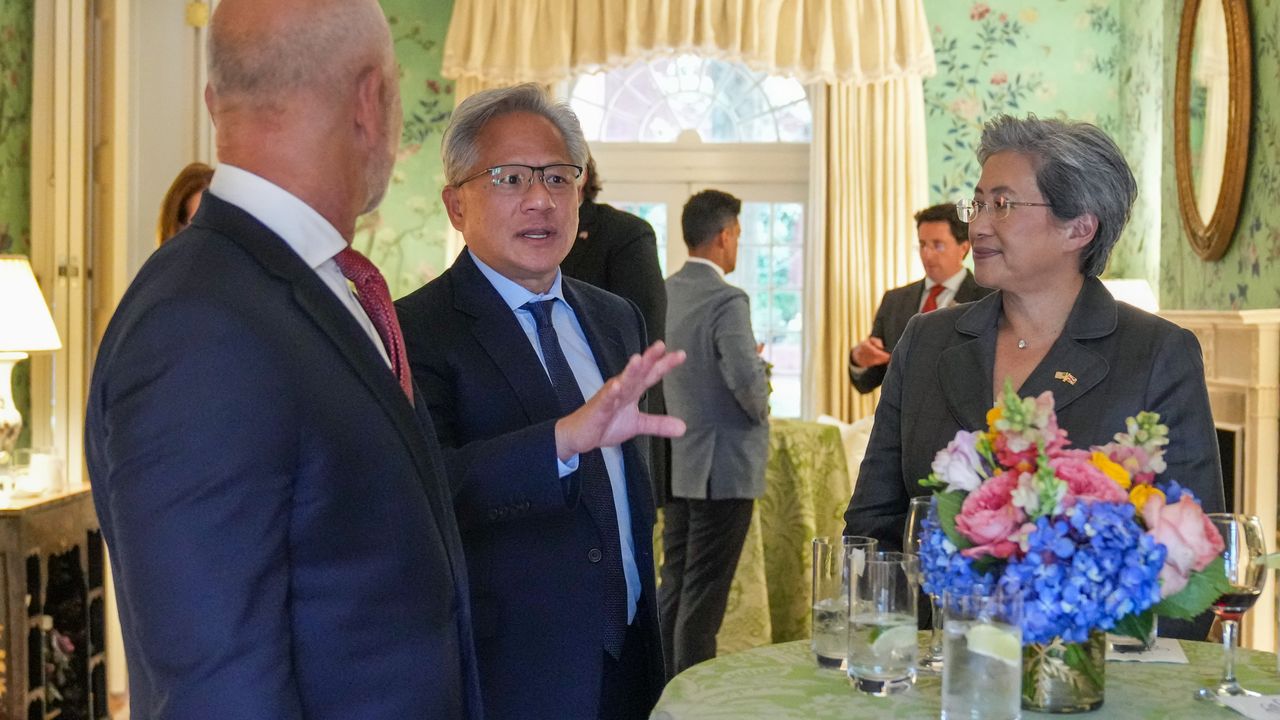
TIME's fourth annual AI list omits Nvidia's Huang and AMD's Su, includes Paris Hilton and Ben Affleck
 ↗
↗
TIME's 2026 TIME100 AI list omits Nvidia CEO Jensen Huang and AMD CEO Lisa Su, while including Paris Hilton and Ben Affleck.
The omission of the two leading GPU executives from a prominent AI list highlights a disconnect between media recognition and technical influence. For engineers, the list's inclusion of celebrities over industry leaders may signal a shift in how AI's impact is perceived, but it does not change the hardware reality. The list's focus on sustainability, as seen in Nvidia's sole entry, points to real environmental concerns that engineers will need to address.
Written by elseif from the cluster below · every claim links back to a sourceThe three things worth knowing
Nvidia's sole representative on the 2026 TIME100 AI is head of sustainability Josh Parker, not CEO Jensen Huang.
AMD CEO Lisa Su, named TIME's 2024 CEO of the Year, is also absent from the list.
The list includes executives from Broadcom, Micron, SMIC, Huawei, Cerebras, CoreWeave, and Nscale, covering Nvidia's suppliers, customers, and rivals.
THE READ
What the cluster adds up to.
The 2026 TIME100 AI list marks a notable shift in who the magazine considers influential in AI. For the first time, Nvidia CEO Jensen Huang is absent, despite his company's GPUs powering frontier AI training and its record financial results. AMD's Lisa Su, a previous TIME CEO of the Year, is also missing. Instead, the list includes celebrities like Paris Hilton and Ben Affleck, alongside politicians like Bernie Sanders.
The omission is particularly striking given Nvidia's market position. The article notes Nvidia's second-quarter revenue of $96.2 billion, with $89 billion from data centers, and its crossing a $5 trillion market cap. Huang has appeared on every previous edition of the TIME100 AI. The only Nvidia representative is Josh Parker, head of sustainability, whose profile focuses on data center energy and water consumption, and the Rubin platform's shift to liquid cooling.
The list's composition suggests an editorial focus on new additions and diverse storylines rather than established industry leaders. TIME's editor-in-chief said selection was based on 'key storylines' and 'most influence in driving these developments.' Yet the inclusion of Broadcom, Micron, SMIC, and Huawei executives, who are Nvidia's suppliers, customers, and rivals, indicates the list does recognize hardware players, just not the two most prominent CEOs.
For engineers, this list's credibility is questionable. The absence of the two executives whose companies dominate AI hardware may reflect a media tendency to favor novelty and celebrity over sustained technical impact. However, the list's practical effect on engineering work is nil; the actual influence of Huang and Su is measured in deployment decisions and market share, not magazine features. The list's focus on sustainability, as seen in Parker's inclusion, does highlight a real concern: Nvidia's Scope 3 emissions tripled in two years, and the Rubin platform's liquid cooling is a technical shift worth noting.
Ultimately, the snub is a media event, not a technical one. The list's inclusion of Paris Hilton and Ben Affleck alongside AI executives may dilute its signal for engineers seeking to understand who drives AI. But the underlying technology and business dynamics remain unchanged. The list stops being useful as a guide to AI influence when it omits the people whose products are foundational to the field.
Written by elseif from the cluster below · checked for specifics the sources never containedTHE CLUSTER