SECURITY Signal 715 3 feeds carried it
Rumour of a bug enables LLM agents to generate exploits within minutes, making traditional security embargoes ineffective
 ↗
↗
A disclosed path-traversal flaw in OCaml's cohttp triggered automated probing minutes after a fix was announced, showing that even vague bug rumours let AI agents craft exploits instantly.
Engineers can no longer rely on secrecy of vulnerability details to protect users, because large-language-model agents can produce working exploits from minimal information. This forces open-source projects to redesign disclosure and patch workflows to reduce the window of exposure.
Written by elseif from the cluster below · every claim links back to a sourceThe three things worth knowing
Probes matching the cohttp path-traversal bug appeared in live server logs within minutes of the public fix PR.
LLM agents created a functional exploit in under a minute after being given only a high-level description of the issue.
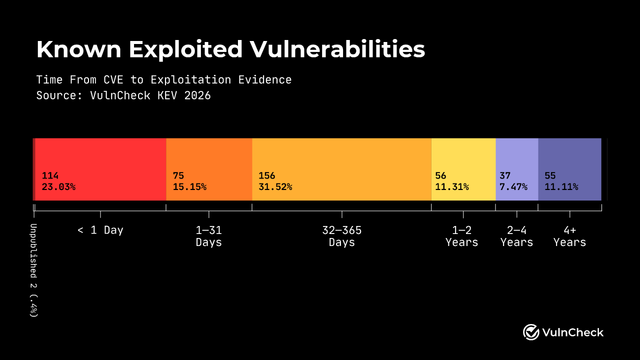
Studies cited show that GPT-4 agents exploit 87% of a 15-vulnerability benchmark when supplied a CVE description, and the mean time to exploit has turned negative, meaning exploitation now precedes patch release.
THE READ
What the cluster adds up to.
The author released a security fix for OCaml's cohttp 6.3.0 and immediately observed web-server logs containing probes that matched the exact path-traversal pattern, indicating that the mere announcement of the bug triggered automated scanning. By directing their own LLM-based agents at the affected code, they could produce a working exploit in under a minute, demonstrating that a rumor alone supplies enough guidance for rapid exploit generation.
Broader data reinforce this shift: a cited experiment showed a GPT-4-driven agent exploited 87% of a fifteen-vulnerability benchmark when given a CVE description, while the same agent succeeded on only 7% without any description. The reported mean time to exploit has become negative seven days, meaning exploitation now occurs before a patch is available, a stark contrast to the multi-week window typical in 2018-19. Recent CVEs such as marimo's CVE-2026-39987 and Langflow's CVE-2026-33017 were probed within nine and twenty hours respectively after advisory publication.
For engineers maintaining open-source libraries, the traditional embargo model, private fix, limited disclosure, then public advisory, no longer limits attacker access, because agents can infer exploit paths from a high-level bug hint. The bottleneck has moved to defender remediation throughput, requiring faster validation, prioritisation, and release cycles, potentially aided by semantics-grounded, model-assisted tooling. Adopting such workflows incurs the cost of integrating advanced AI tools and allocating scarce maintainer time to triage and verify automatically generated patches.
The new threat model does have limits: agents still need at least a broad direction or a public hint to focus their search, so completely undisclosed vulnerabilities may remain out of reach for automated exploitation. Moreover, defender capacity remains flat, meaning not every generated exploit can be mitigated instantly, and false positives from aggressive scanning could increase operational noise. Engineers must therefore balance rapid response mechanisms with practical constraints on validation resources.
Written by elseif from the cluster below · checked for specifics the sources never containedTHE CLUSTER