TECH Signal 311
JWST data reveals early galaxies may contain three to four times more mass than estimated
 ↗
↗
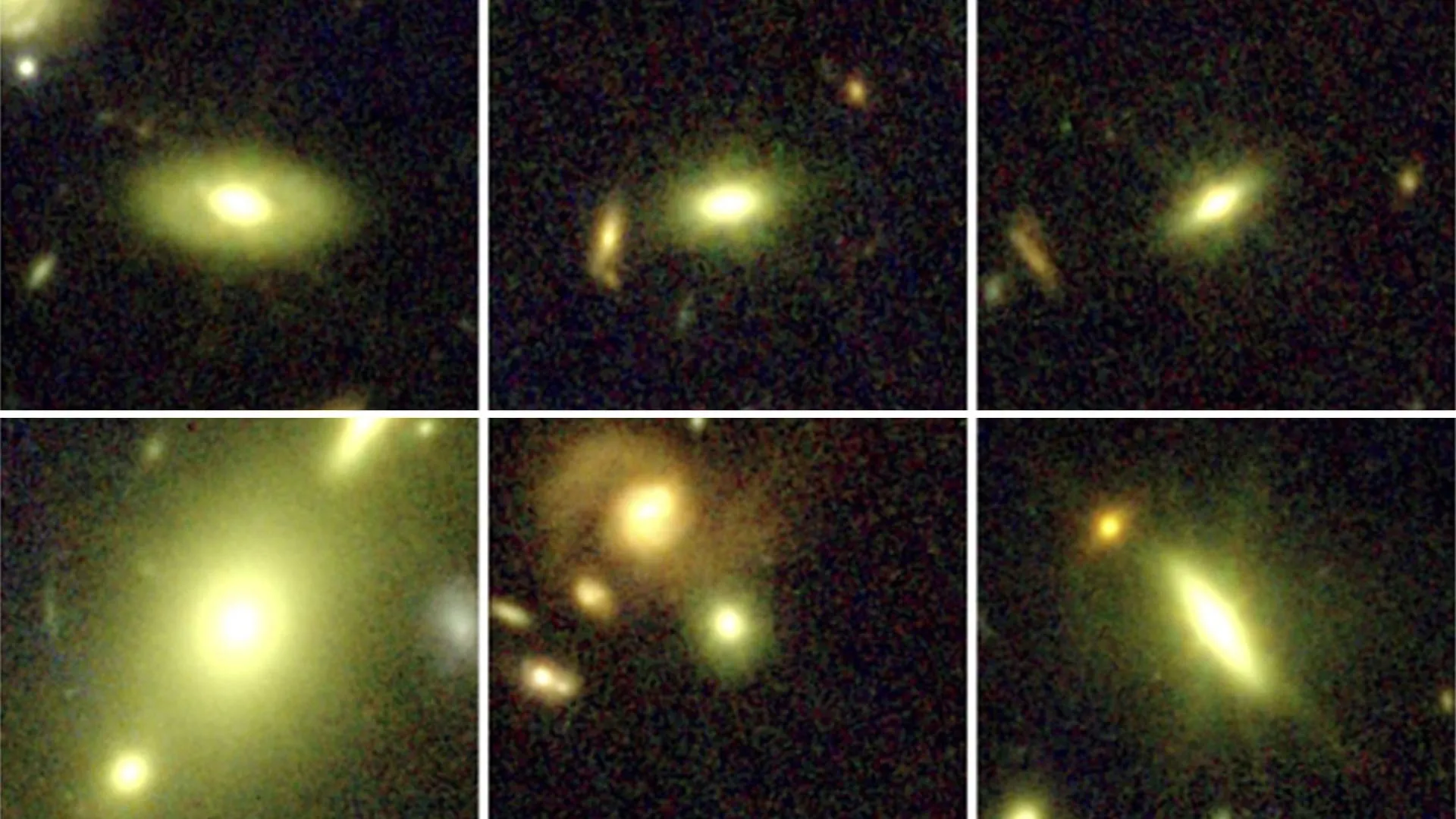
Observations from the James Webb Space Telescope suggest massive early galaxies hold far more small, faint stars than previously assumed, increasing their total mass estimates significantly.
This finding complicates existing models of galaxy formation, as it suggests early galaxies grew much larger and faster than theories predicted. For engineers working on astrophysical simulations or telescope data pipelines, the discovery highlights the need for updated assumptions about stellar populations in early-universe models.
Written by elseif from the cluster below · every claim links back to a sourceThe three things worth knowing
JWST spectra reveal early galaxies likely contain 3 to 4× more low-mass stars than previously thought, increasing their total mass estimates.
The discovery challenges long-standing assumptions about star formation ratios in the early universe, particularly for massive galaxies.
This adds pressure to existing galaxy formation theories, which already struggled to explain the rapid emergence of mature galaxies after the Big Bang.
THE READ
What the cluster adds up to.
The James Webb Space Telescope has provided new spectral data on nine massive, mature galaxies from the early universe, revealing a previously hidden population of small, faint stars. These stars, which are difficult to detect due to their low luminosity, appear to be far more numerous than expected. The result is a significant upward revision in the estimated mass of these galaxies, potentially three to four times higher than earlier calculations. This challenges the assumption that star formation ratios in the early universe mirrored those observed in galaxies like the Milky Way today.
The discovery was made possible by combining JWST’s high-resolution spectra with advanced modeling techniques developed by researchers at Penn State and Leiden University. Traditional methods relied on the light from bright, massive stars, which dominate observations but represent only a fraction of a galaxy’s total stellar population. By accounting for the subtle spectral signatures of low-mass stars, the team was able to uncover their disproportionate contribution to the mass of these ancient galaxies. This approach may become a new standard for analyzing distant galaxies, but it also introduces complexity into data interpretation.
For engineers and scientists working on cosmological simulations or telescope data processing, this finding underscores the limitations of current models. Existing theories of galaxy formation struggle to explain how such massive galaxies could form so quickly after the Big Bang. The revised mass estimates exacerbate this problem, suggesting that either star formation in the early universe was far more efficient than assumed, or that other unknown mechanisms were at play. This may prompt revisions to simulation parameters or the development of new observational techniques to further refine mass estimates.
The implications extend beyond galaxy formation. If low-mass stars were more common in the early universe, it could also mean that planetary systems around such stars were more prevalent than previously thought. This could influence models of early-universe habitability or the distribution of exoplanets. However, the discovery also raises questions about the reliability of mass estimates derived from older, less precise data. Engineers working on next-generation telescopes or data analysis tools may need to prioritize sensitivity to faint stellar populations in future designs.
Written by elseif from the cluster below · checked for specifics the sources never containedTHE CLUSTER