INFRA Signal 487
A fatal crash carries a $1.6M societal cost, yet California's minimum liability is $30K
 ↗
↗
California’s liability minimum for drivers rises from $15,000 to $30,000 per person effective January 1, 2025, with a further increase to $50,000 set for January 1, 2035, while the NHTSA estimates a fatal crash costs $1.6 million in economic terms.
Engineers designing risk models or telematics systems must update assumed liability limits to reflect the new $30K minimum and the planned $50K future threshold. The unchanged $1.6M societal cost per death highlights a large gap between required coverage and actual crash expenses, affecting insurance pricing and liability software.
Written by elseif from the cluster below · every claim links back to a sourceThe three things worth knowing
California’s minimum bodily injury liability increases to $30,000 per person starting January 1, 2025.
A second step raises the minimum to $50,000 per person on January 1, 2035.
The NHTSA’s $1.6 million estimate of economic loss per fatal traffic death has remained unchanged since 2019.
THE READ
What the cluster adds up to.
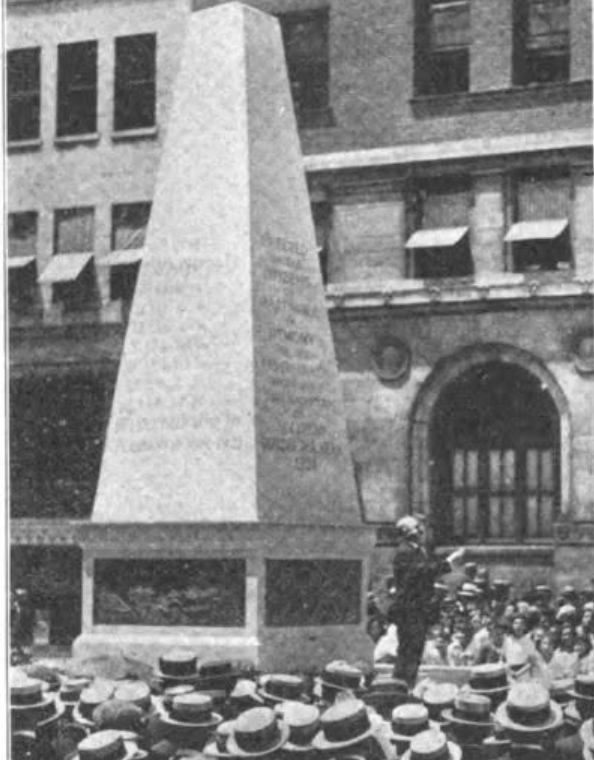
In the early 1920s cities experimented with mechanical speed governors to curb rising pedestrian deaths, but voters rejected such limits. Instead, states adopted financial responsibility laws that required drivers to prove they could pay for crash damages. Massachusetts pioneered mandatory proof of insurance in 1927, setting an initial minimum of $5,000 per person. That approach spread nationwide and remains the core of auto insurance regulation today.
California kept its bodily injury minimum at $15,000 per person and $30,000 per crash from 1967 until 2025, despite inflation eroding its real value. Senate Bill 1107, effective January 1, 2025, raised the per-person limit to $30,000 and scheduled a further rise to $50,000 per person on January 1, 2035. The change marks the first adjustment in over half a century. Legislative action was driven by affordability concerns rather than the full economic cost of crashes.
NHTSA’s 2019 analysis estimates that each traffic fatality imposes about $1.6 million in discounted lifetime economic costs, covering lost productivity, medical care, legal fees and property damage. Because insurance limits only bind the insurer, any judgment above the policy limit often goes uncollected, leaving victims to rely on personal assets or bankruptcy protections. The Insurance Research Council found 15.4% of drivers uninsured and another 18% underinsured in 2023, meaning one-third cannot cover the harm they are statistically likely to cause. Consequently, a large share of crash costs is shifted to the uninsured motorist pool or to public revenues through taxes and premiums.
For engineers building actuarial models, telematics platforms, or claims-processing software, the updated minimums require recalibrating risk exposure assumptions and premium calculations. The persistent $1.6M societal cost per death highlights a structural mismatch between required coverage and actual loss, which can inform product design such as higher-limit optional coverages or layered protection schemes. Engineers must also account for the bankruptcy discharge of ordinary negligence judgments, except for drunk-driving cases protected by 11 U.S.C. §523(a)(9). Finally, tracking the scheduled 2035 increase allows long-term planning for system updates and compliance testing.
Written by elseif from the cluster below · checked for specifics the sources never containedTHE CLUSTER