TECH Signal 404
Laser wireless charging could keep drones airborne indefinitely — improved receiver converts at 38.49% efficiency and uses nanocrystalline material for thermals
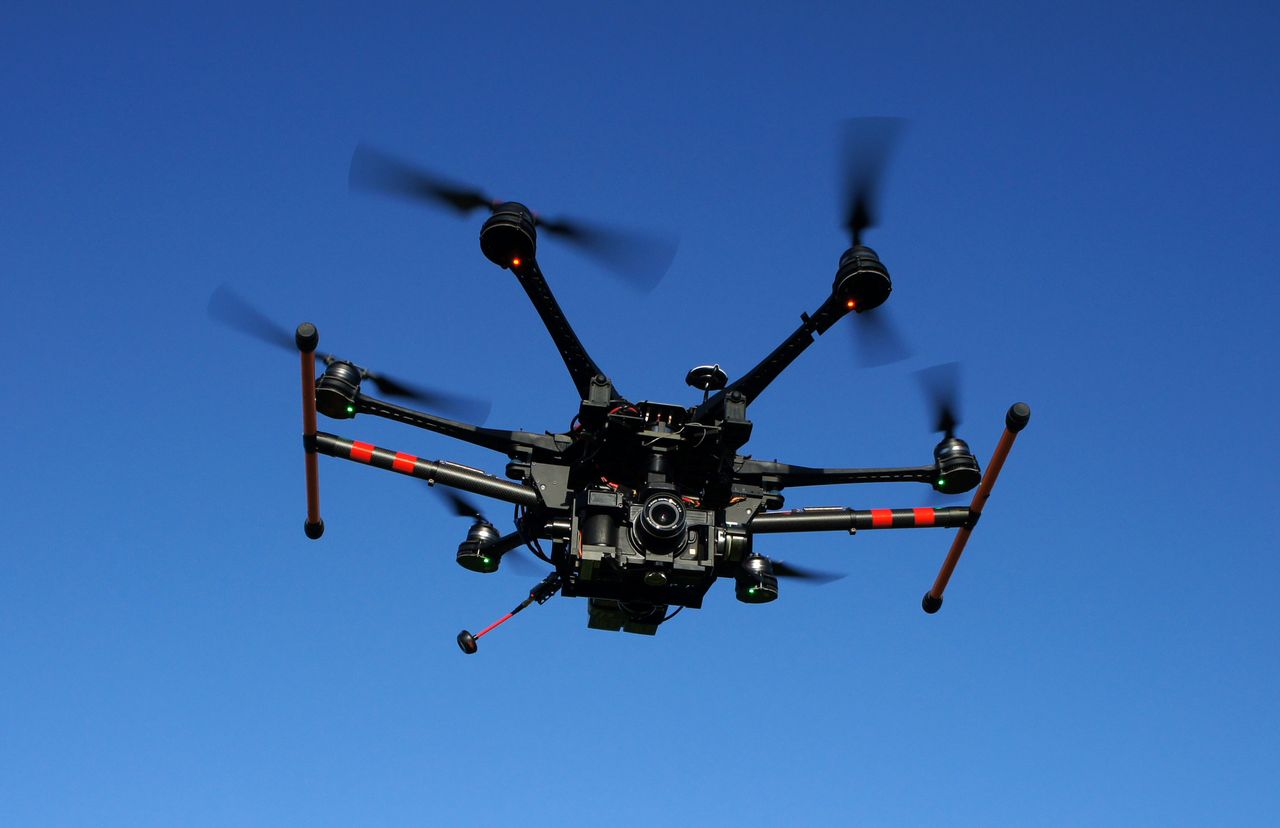 ↗
↗
A research team developed a laser-based wireless charging system for drones, achieving 38.49% energy conversion efficiency with thermal management via nanocrystalline materials and aerodynamic cooling.
For engineers working on UAVs or remote power delivery, this shifts the design trade-off from battery weight to receiver efficiency and thermal limits. If the system scales, it could eliminate landing cycles for small drones, but adoption hinges on solving tracking, safety, and real-world efficiency losses. The thermal barrier innovation may also apply to other high-power wireless charging scenarios.
Written by elseif from the cluster below · every claim links back to a sourceThe three things worth knowing
The receiver combines perovskite laser cells and thermoelectric layers to convert laser energy and recover waste heat.
Nanocrystalline materials act as a thermal barrier, while drone propellers drive airflow through wing channels to dissipate excess heat.
Current efficiency is 38.49%, but outdoor flight tests and tracking/safety challenges remain unresolved.
THE READ
What the cluster adds up to.
The core change is replacing battery capacity with a ground-to-air power link. For drone designers, this means payload and endurance are no longer constrained by battery weight, but by the receiver’s ability to handle heat and maintain line-of-sight with the laser. The 38.49% efficiency figure is a lab result; real-world losses from atmospheric scattering, tracking errors, and thermal drift will reduce it. Engineers must now model these losses against mission profiles to decide if the trade is worth it.
Adopting this system requires new hardware on both ends: a high-power laser emitter on the ground and a lightweight, thermally managed receiver on the drone. The nanocrystalline thermal barrier adds cost and complexity, but the bigger expense is likely the laser infrastructure. For small drones, the receiver’s weight and cooling channels may fit within existing airframes, but larger UAVs will need structural redesigns to accommodate the airflow paths and heat sinks.
The system’s limits are clearest at the edges. It stops working if the drone loses line-of-sight with the laser, if atmospheric conditions scatter the beam, or if the receiver overheats despite the thermal barriers. The 80 to 90°C temperatures seen in testing suggest that even with nanocrystals and airflow, the receiver is operating near its thermal limits. Engineers will need to monitor degradation over time, as perovskite materials can degrade under sustained heat and light exposure.
The feed’s framing focuses on the potential for indefinite flight, but the practical consequence is a shift in failure modes. Instead of running out of battery, drones may now fail due to laser misalignment, thermal runaway, or receiver damage. For operators, this means new maintenance routines and redundancy requirements. The research also highlights a broader trend: wireless power is moving from niche applications to systems where weight and endurance are critical, but the engineering challenges are still thermal and optical, not just electrical.
Written by elseif from the cluster below · checked for specifics the sources never containedTHE CLUSTER