INFRA Signal 524
Launch HN: Stoa Markets (YC S26) – A Marketplace for GPUs and AI Servers
 ↗
↗
Stoa Markets launched as a marketplace for GPUs and AI servers, providing a single venue for price discovery and verified counterparties.
Engineers involved in hardware procurement can now view transparent clearing levels and reduce reliance on private quotes, which lowers transaction risk and speeds up acquisition. The platform’s structured workflow from request for quote to settlement creates an auditable trail that can be integrated into existing procurement systems. By consolidifying fragmented supply sources, it helps data center operators and AI teams plan capacity upgrades with more predictable pricing.
Written by elseif from the cluster below · every claim links back to a sourceThe three things worth knowing
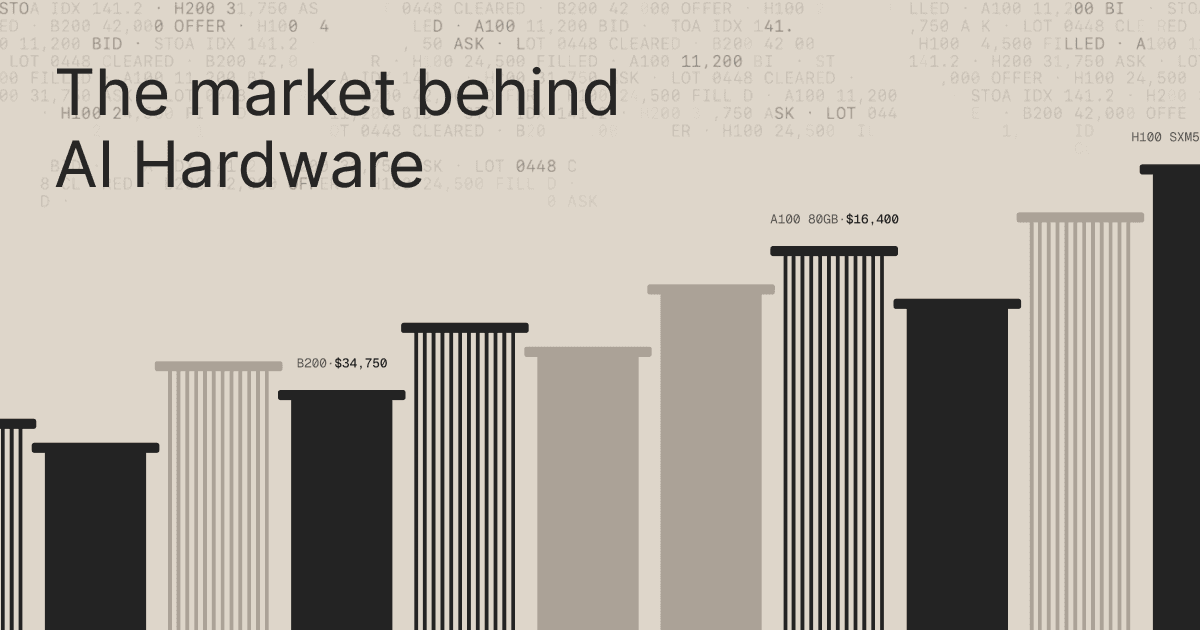
Stoa offers a centralized exchange where buyers and sellers can discover clearing prices for GPU models such as A100 80GB, H100 SXM5, H200 SXM, B200, and GB200 NVL.
The trade process follows four explicit steps: describe the trade via an RFQ, receive firm quotes from verified dealers, execute at a set price, and settle with evidence-based checkpoints.
Different market participants, brokers, data center operators, AI labs, cloud providers, OEMs, resellers, lenders, and funds, gain specific capabilities like matching supply, selling surplus, acquiring capacity, or evaluating collateral.
THE READ
What the cluster adds up to.
The launch introduces a unified marketplace that addresses the previously scattered nature of GPU supply, where OEM allocations, cloud capacity, brokers, operators, and secondary sellers each offered only a slice of the market. By bringing these slices together, Stoa creates a shared price discovery layer that was missing before. This change means engineers no longer need to piece together information from multiple private channels to gauge fair value.
Users initiate a trade by describing the desired hardware in plain text or by uploading a quote PDF; an AI-assisted draft helps shape the RFQ while the user retains control over all fields. After review, the RFQ is sent to verified dealers who respond with firm, binding quotes. Acceptance locks in the trade, and the platform records grade, condition, and verification expectations.
Settlement proceeds through a recorded timeline that requires evidence at each stage: confirmation, payment, shipment, delivery, inspection, and final settlement. This step-by-step approach provides an auditable trail that can be used for internal compliance or external reporting. The process is designed to reduce the settlement risk associated with off-market deals conducted over DMs or spreadsheets.
The platform’s effectiveness depends on active participation from verified dealers; if liquidity is low for a particular SKU, region, or urgency level, firm quotes may not appear and the trade may stall. Additionally, the current offering focuses on the listed GPU models and server configurations, so niche or custom hardware may still need to be sourced through traditional off-market channels. Engineers adopting Stoa must integrate its RFQ-to-settlement workflow into their procurement tools and accept that any cost of using the service is not disclosed in the source material.
Written by elseif from the cluster below · checked for specifics the sources never containedTHE CLUSTER