TECH Signal 384
Ledger CLI enables double-entry accounting in plain text files without apps or cloud storage
 ↗
↗
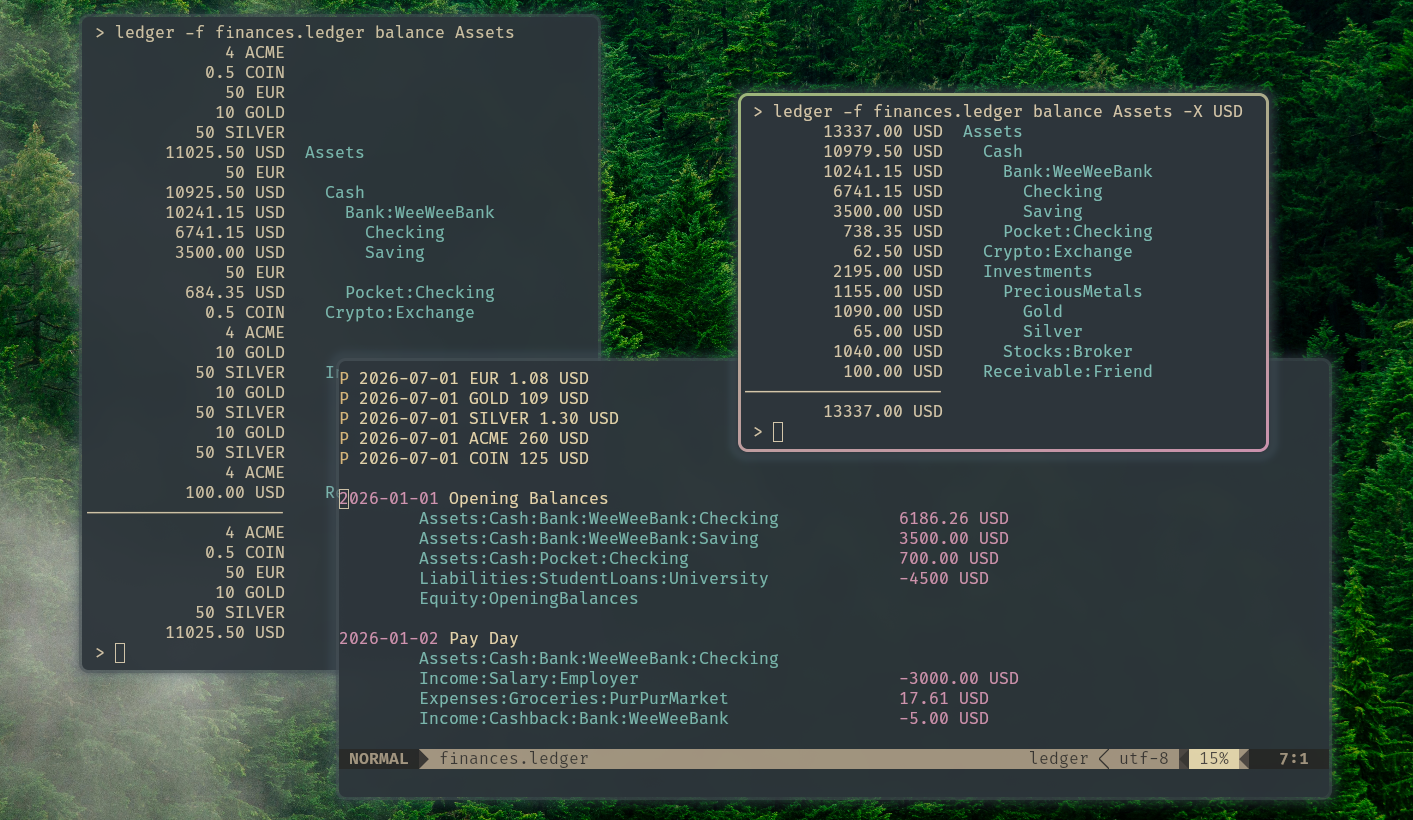
Ledger CLI is a command-line tool for double-entry accounting using plain text files instead of spreadsheets or banking apps.
For engineers who value data ownership and version control, Ledger CLI offers a minimal, offline, and scriptable alternative to proprietary accounting tools. The approach trades GUI convenience for long-term file durability and auditability, but requires manual transaction logging discipline.
Written by elseif from the cluster below · every claim links back to a sourceThe three things worth knowing
Transactions are recorded in a plain text file using double-entry accounting with zero-sum postings across five root account types.
Multi-currency and commodity tracking (e.g., gold, stocks, crypto) are built-in, with automatic conversion via a single flag.
The tool integrates with version control (e.g., Git) and terminal workflows, but demands daily manual entry discipline
THE READ
What the cluster adds up to.
Ledger CLI replaces banking apps and spreadsheets with a plain text file and command-line queries. The tool enforces double-entry accounting, where every transaction moves value between at least two accounts (e.g., Assets and Expenses) and must sum to zero. This structure eliminates reconciliation errors but requires users to adopt a specific sign convention, Income is negative, as money flows from Income into Assets. The file format is human-readable and supports arbitrary account hierarchies, allowing users to track spending by venue, person, or category without predefined schemas.
The tool’s plain text foundation enables workflows that proprietary tools block. Users can version-control their financial data with Git, grep transactions, or script custom queries. Multi-currency support is native: commodities like gold, silver, or stocks are treated as units, and a single flag converts all values to a reference currency. However, this flexibility comes at the cost of manual data entry. The article’s author logs every transaction daily, including small expenses like bus rides, which may be impractical for users who prefer automation or bank syncs.
Ledger CLI prioritizes data longevity and transparency over convenience. The plain text file will remain readable for decades, unlike proprietary formats or cloud-dependent apps. Queries are fast, milliseconds for complex filters, but require learning command-line syntax. The tool also lacks built-in budgeting or forecasting features, though these could be implemented via scripts or external tools. For engineers comfortable with terminals and version control, the trade-off is clear: full control and auditability in exchange for daily discipline and no GUI.
The approach assumes users will structure their accounts consistently. The article recommends starting with a simple hierarchy and splitting accounts later, but inconsistent naming (e.g., typos in account paths) breaks queries. Similarly, while Ledger supports multi-currency transactions, users must manually record exchange rates or premiums (e.g., splitting bank fees from asset purchases). The tool’s offline nature is a strength for privacy but a limitation for collaborative workflows, shared files would require manual merging or external sync tools.
Written by elseif from the cluster below · checked for specifics the sources never containedTHE CLUSTER