INFRA Signal 432
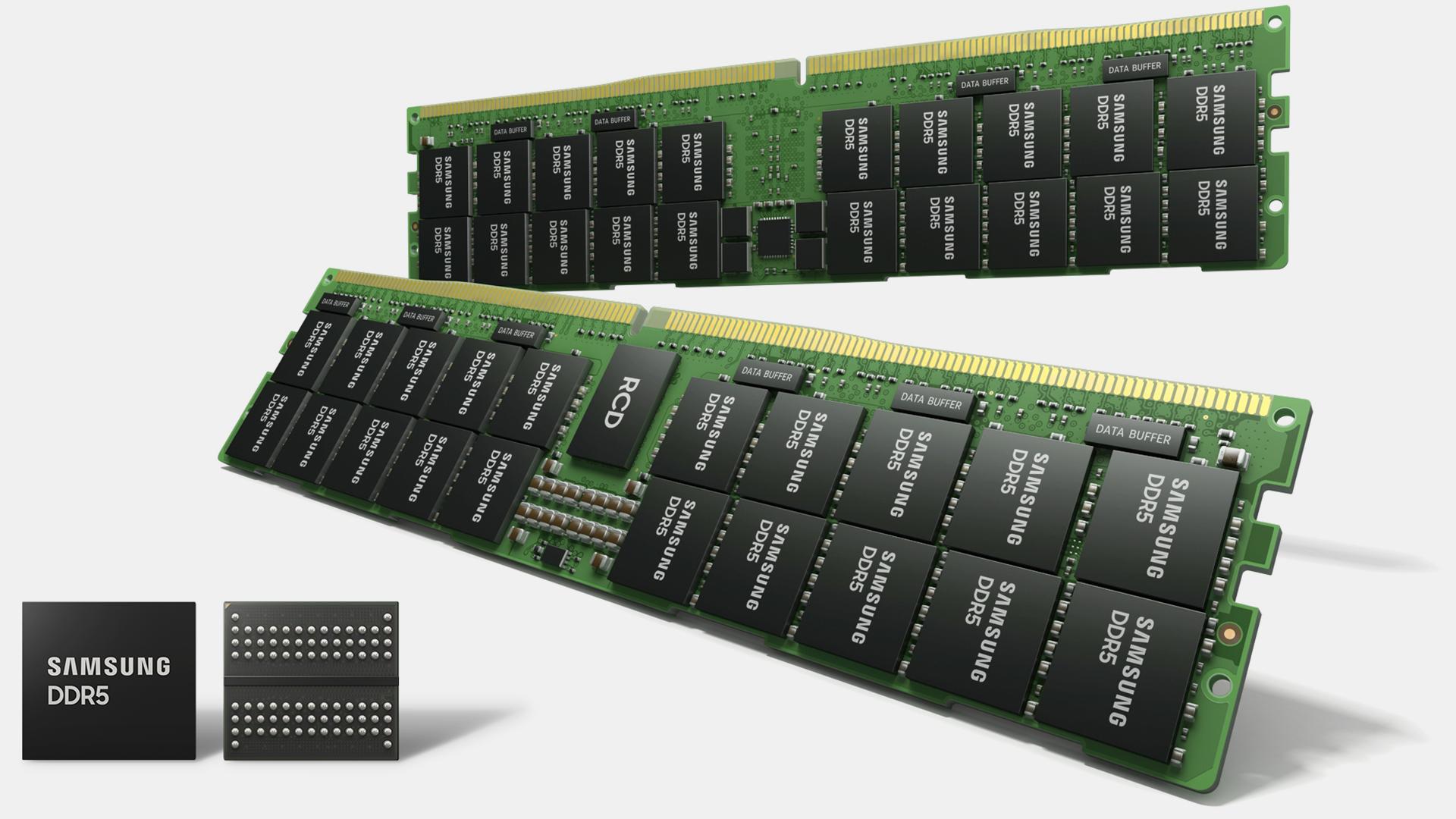
Memory chips reportedly now cost more to manufacture than compute chips on a per-area basis
 ↗
↗
DRAM makers may potentially get more money for their wafers than TSMC gets for its N3 wafers.
The rising production costs of memory chips indicate a significant market shift driven by AI demand. This trend could impact pricing strategies and profitability for both memory and compute chip manufacturers.
Written by elseif from the cluster below · every claim links back to a sourceThe three things worth knowing
AI demand has led to record-high memory prices, affecting production costs.
The cost per area of DRAM has surpassed that of leading-edge silicon used for compute chips.
Comparisons between DRAM and TSMC wafer prices are complicated by differing production and packaging costs.
THE READ
What the cluster adds up to.
The manufacturing cost of memory chips, specifically DRAM, has increased to a point where it now exceeds that of compute chips, such as those produced using TSMC's N2 and N3 technologies. This change is primarily driven by heightened demand from the AI sector, leading to significant price increases for DRAM in recent times.
Calculations show that DRAM chips, particularly the 1b generation, have a manufacturing cost of around $0.654 per mm², which is notably higher than the estimated $0.424 per mm² for TSMC's N2 wafers. While this indicates a shift in profitability dynamics, the cost-effectiveness of producing DRAM remains better than logic chips, which require more expensive processing techniques.
Despite the implications of this shift, the comparison between DRAM and TSMC wafer prices is not straightforward. Factors such as packaging costs, contract pricing variability, and the speculative nature of spot prices complicate the overall analysis. Without precise contract price data for DRAM, it's difficult to assert definitively how the profit margins stack up between DRAM and compute chips.
As the market evolves, memory manufacturers may benefit from higher prices, but engineers must consider the potential impacts on production costs and supply chains. The increased costs may also influence how projects are budgeted, particularly in sectors heavily reliant on memory technology.
In conclusion, while memory chip production costs are currently higher than those of compute chips, the long-term implications for the semiconductor industry depend on how supply chains adapt to the changing market landscape and the eventual stabilization of prices.
Written by elseif from the cluster below · checked for specifics the sources never containedTHE CLUSTER