TECH Signal 434
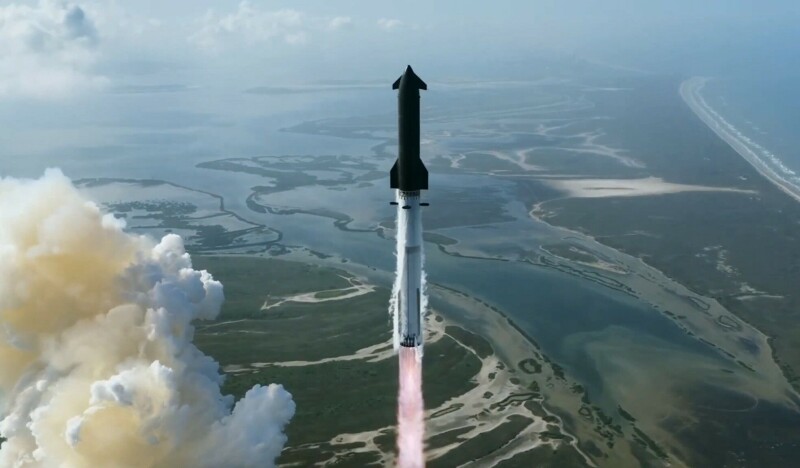
SpaceX postpones first Starship booster catch as Musk revises timeline
 ↗
↗
Musk now says SpaceX will likely wait several months before attempting to catch a returning Starship, reversing his earlier optimism that it could happen on the next test flight.
Catching the upper stage is central to SpaceX's full-reuse economics, which it has pitched to investors since its IPO. A faster launch cadence enabled by reliable catches becomes important for future missions such as deploying Starlink V3 satellites and fueling lunar landers for NASA Artemis. The delay shows that Starship milestones continue to slip, raising uncertainty about when those benefits will be realized.
Written by elseif from the cluster below · every claim links back to a sourceThe three things worth knowing
Musk indicated that catching Starship will probably occur in a few months, not on the imminent next flight.
The previous test flight saw the booster splash down hard and the upper stage survive intact, requiring an unexpected tow back to port.
Successful catches are needed to realize the reuse savings and launch cadence SpaceX has promised to investors and NASA.
THE READ
What the cluster adds up to.
Musk’s latest post shifts the expected date for the first Starship catch from the upcoming test flight to a horizon of several months. This revises the bullish outlook he expressed during SpaceX’s first earnings call as a public company. The change reflects a more cautious assessment after reviewing recent flight data. It signals that the timeline for demonstrating tower-based recovery is being stretched.
Continuing to rely on ocean recovery means the upper stage must be located, towed, and refurbished after each flight. The prior flight showed the booster hitting the Gulf of Mexico hard while the upper stage floated gently in the Indian Ocean, surviving but needing a tow. Such recovery adds logistical complexity and time compared with a direct tower catch. It also postpones the cost savings that come from immediate reuse of the caught stage.
If the catch remains delayed beyond the few-month window, the cadence needed for frequent Starlink V3 launches could be hampered. A slower launch rate would affect the deployment schedule for the next-generation broadband constellation. Similarly, the multiple launches required to pre-position propellant for a lunar lander in orbit would take longer. That could push back the support SpaceX offers for NASA’s Artemis missions beyond the current planning horizon.
Full reuse remains a cornerstone of SpaceX’s financial story told to investors since its IPO. Without reliable tower catches, the economic advantage of rapid turnaround stays unproven. The historical pattern of slipping milestones suggests further delays are possible. Engineers must therefore weigh the technical promise against the demonstrated schedule uncertainty when planning downstream systems or missions that depend on Starship’s reuse.
Written by elseif from the cluster below · checked for specifics the sources never containedTHE CLUSTER