TECH Signal 380
NASA images confirm new 60-foot lunar crater from SpaceX Falcon 9 upper stage impact
 ↗
↗
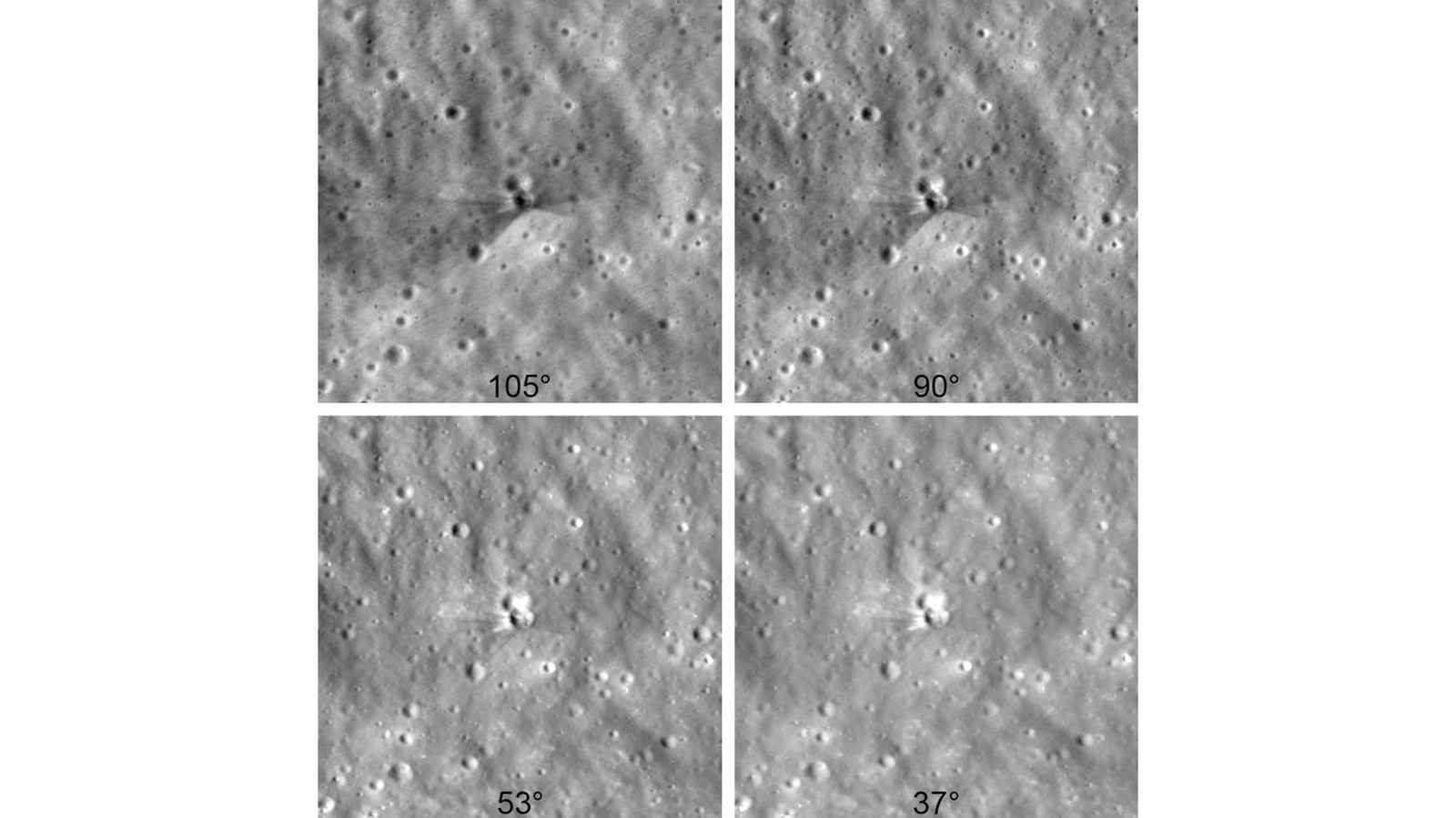
NASA’s Lunar Reconnaissance Orbiter captured before-and-after images of a crater formed by a SpaceX Falcon 9 rocket stage crashing into the moon.
The event highlights the growing challenge of tracking and mitigating space debris beyond Earth orbit. For engineers, it underscores the need for better end-of-life disposal strategies for rocket stages to avoid unintended lunar impacts. The crater’s size and composition also provide data on hypervelocity impacts in low-gravity environments.
Written by elseif from the cluster below · every claim links back to a sourceThe three things worth knowing
The impact created a 60-foot-wide, 12-foot-deep crater on the lunar surface.
NASA’s Lunar Reconnaissance Orbiter required precise timing and camera adjustments to capture the site.
The Falcon 9 upper stage, launched in 2025, lacked fuel to deorbit and was pulled into the moon by gravity.
THE READ
What the cluster adds up to.
The images from NASA’s Lunar Reconnaissance Orbiter (LRO) provide direct evidence of a hypervelocity impact on the moon by a SpaceX Falcon 9 upper stage. The crater’s dimensions, 60 feet wide and 12 feet deep, align with predictions based on the rocket’s mass and impact speed. This event is notable because it marks one of the few documented cases of human-made debris striking the lunar surface unintentionally. For engineers, the incident serves as a case study in the long-term behavior of rocket stages in cislunar space, where gravitational influences and solar radiation can alter trajectories unpredictably.
Capturing the crater required precise coordination from the LRO team. The spacecraft orbits the moon every two hours at a speed of one mile per second, while the moon’s rotation shifts the target site beneath it. Engineers had to tilt the LRO sideways and use its Narrow-Angle Camera to achieve the necessary resolution, which can detect objects as small as three feet wide. The six-day delay between the impact and the imaging pass highlights the logistical challenges of tracking and observing transient events in space. This level of precision is critical for future missions aiming to study or mitigate lunar debris.
The Falcon 9 upper stage involved in the crash was part of the 2025 Blue Ghost mission, which delivered lunar landers to orbit. After exhausting its fuel, the stage lacked the propulsion to deorbit or escape the Earth-moon system, leaving it vulnerable to gravitational forces. Independent astronomer Bill Grey’s early predictions of the impact demonstrate the value of orbit-computing software in tracking debris, but the event also exposes gaps in end-of-life disposal protocols for rocket stages. Engineers may need to prioritize fuel reserves or alternative disposal methods to prevent similar incidents in the future.
The crater’s composition offers insights into lunar geology and impact dynamics. The darker materials radiating from the crater consist of surface dust and rocks altered by solar winds and cosmic rays, while the lighter materials near the rim originate from deeper underground. These observations can inform models of hypervelocity impacts in low-gravity environments, which are relevant for both scientific research and the design of future lunar infrastructure. The event also raises questions about the long-term effects of human activity on the moon, particularly as missions to the lunar surface increase.
Written by elseif from the cluster below · checked for specifics the sources never containedTHE CLUSTER