TECH Signal 381
NASA's moon orbiter discovers new crater formed by rare impact event
 ↗
↗
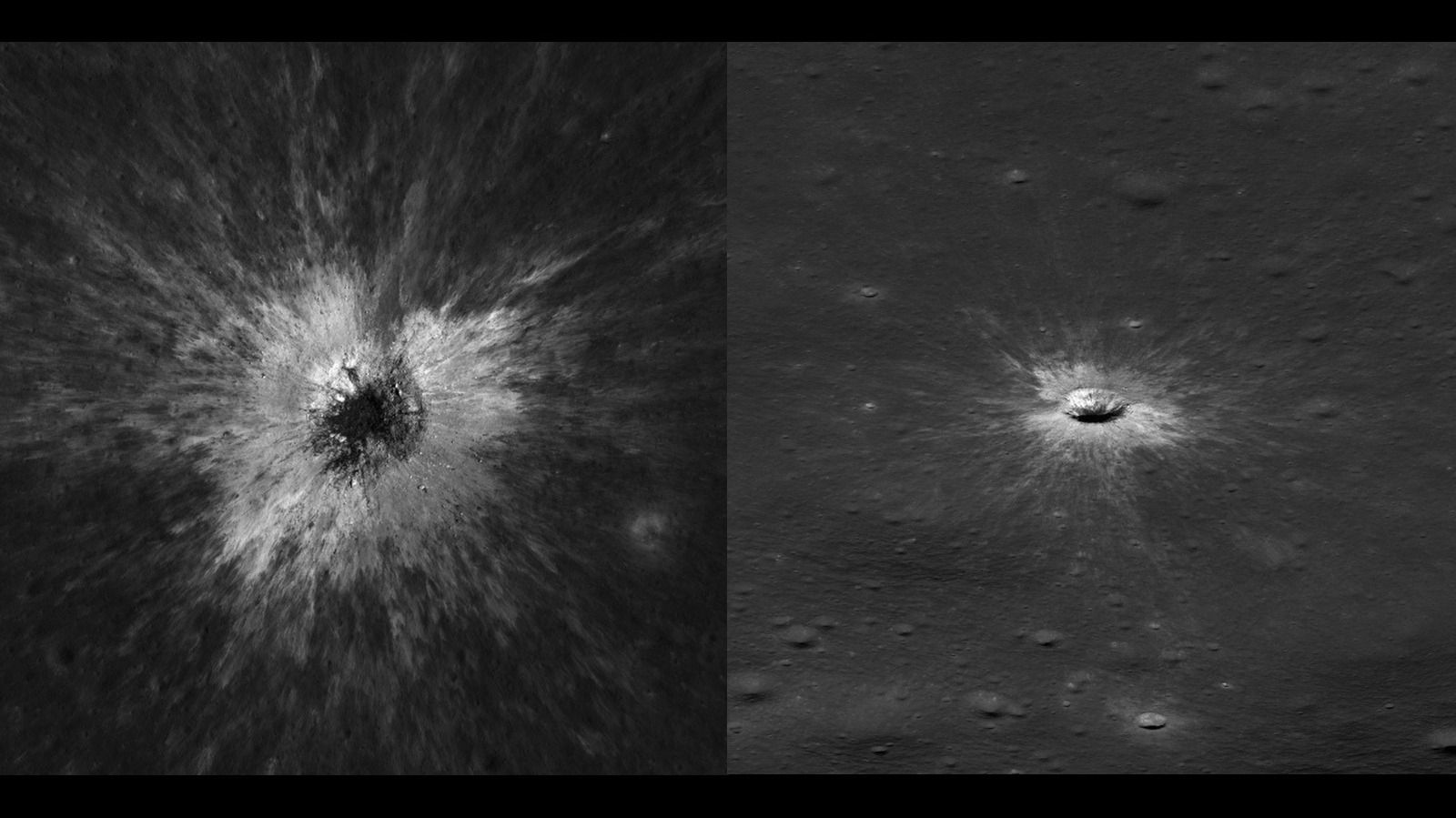
NASA's Lunar Reconnaissance Orbiter identified a 728-foot crater on the moon, resulting from an impact that occurs roughly once every 132 years.
The discovery of the McGetchin crater provides valuable insights into lunar geology and impact events. Understanding how such impacts affect the moon's surface can inform future exploration and rover design, particularly in how they interact with newly formed terrain.
Written by elseif from the cluster below · every claim links back to a sourceThe three things worth knowing
The McGetchin crater measures 728 feet wide and 141 feet deep.
Impacts of this magnitude occur approximately every 132 years.
The surrounding area of the crater exhibits a significant temperature drop at night due to disturbed lunar regolith.
THE READ
What the cluster adds up to.
NASA's Lunar Reconnaissance Orbiter has identified a new impact crater on the moon, dubbed the McGetchin crater, which is a significant geological feature measuring 728 feet wide. This discovery is particularly noteworthy as impacts of this scale are extremely rare, occurring only once every 132 years.
The crater's formation is attributed to an impact from an asteroid or comet approximately the size of a three- to six-story building. The implications of such a large impact are profound, as they can influence the lunar environment and warrant further scientific study to understand the geological changes it causes.
One of the notable findings related to the McGetchin crater is that the surrounding area has been observed to be about 16 degrees Fahrenheit cooler at night. This cooler temperature is attributed to the disturbance of the lunar regolith, which affects its density and heat retention properties.
Understanding the cooler areas around the crater is crucial for planning future lunar missions. Specifically, it could impact how rovers and other equipment interact with the surface, making it essential for engineers to consider these factors in their designs and operational strategies.
The discovery of the McGetchin crater not only enhances our knowledge of lunar geology but also sets the stage for future studies that may examine the effects of impacts on the moon's surface, potentially informing both scientific understanding and practical applications in lunar exploration.
Written by elseif from the cluster below · checked for specifics the sources never containedTHE CLUSTER