TECH Signal 368
NASA's PUNCH mission can now accurately predict when solar storms will hit Earth
 ↗
↗
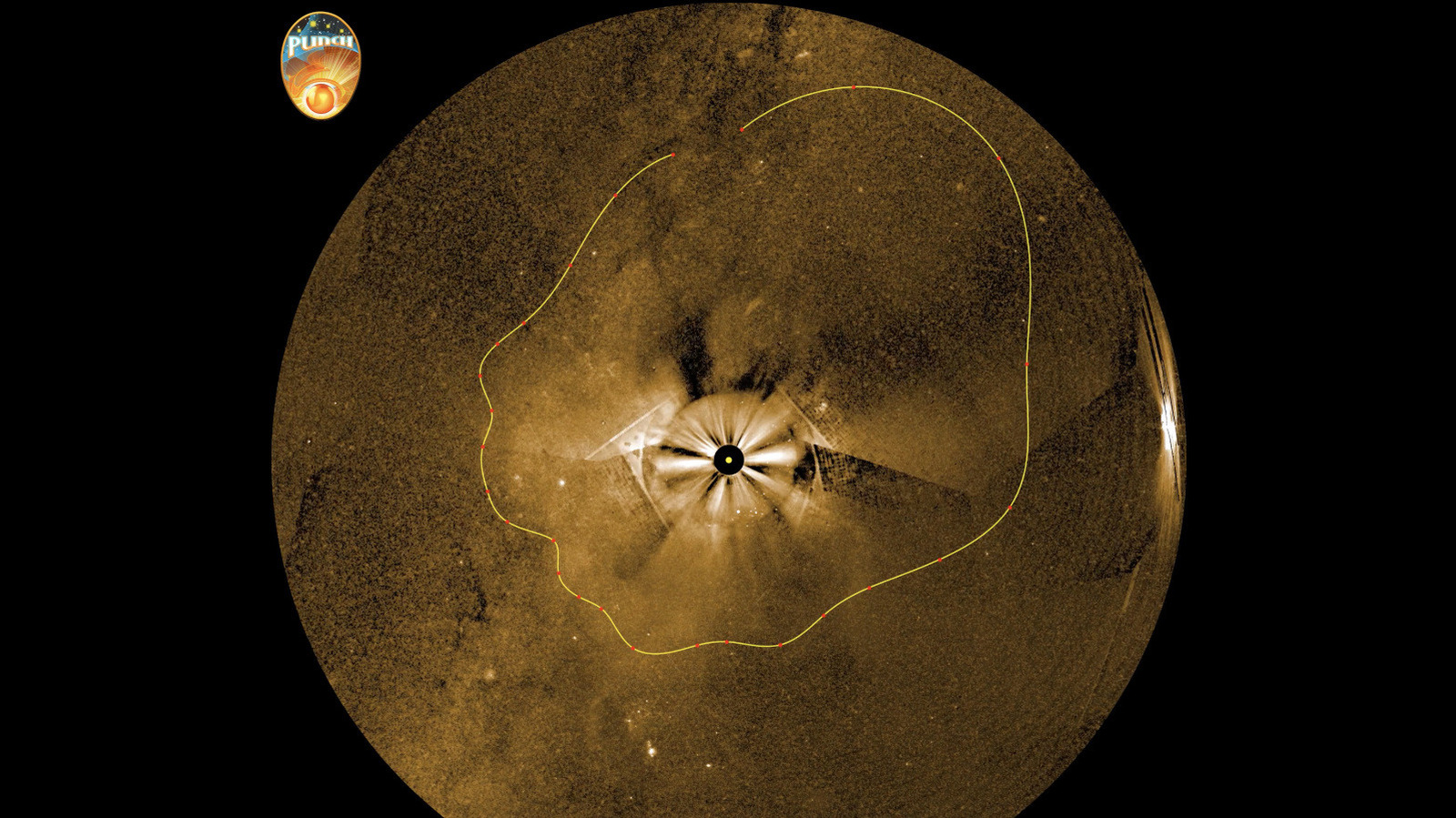
NASA's PUNCH mission has demonstrated the ability to predict the arrival of solar storms at Earth within a half-hour error margin using continuous imaging from its four-satellite constellation.
More accurate solar-storm forecasts allow operators of power grids, satellites, and communication networks to take timely protective actions, reducing the risk of blackouts and service disruptions. Cutting the typical prediction error from several hours to under thirty minutes provides a meaningful window for mitigation efforts. This advance moves space-weather forecasting closer to the reliability needed for critical infrastructure planning.
Written by elseif from the cluster below · every claim links back to a sourceThe three things worth knowing
PUNCH’s four microsatellites provide uninterrupted, four-minute cadence images that track a coronal mass ejection from the Sun’s corona to near-Earth space.
In the initial test, analyzing the first twelve hours of a CME’s evolution yielded an arrival prediction accurate to within thirty minutes, compared with the typical five-hour error of existing methods.
The result is an early proof of concept; further model refinement and additional event data are needed to confirm operational reliability and extend forecast lead times.
THE READ
What elseif makes of it.
Before PUNCH, space-weather forecasts relied on instruments that could observe only a fraction of a coronal mass ejection’s path, leading to typical arrival errors of several hours. The PUNCH constellation provides uninterrupted, four-minute cadence images that follow a CME from the Sun’s corona to near-Earth space. By measuring the evolving edges of the ejection over the first twelve hours, the mission’s computer model can infer speed and shape and compute an Earth-arrival time. In the initial test this approach yielded a prediction accurate to within thirty minutes.
Adopting this capability requires maintaining the four microsatellites in their operational orbits and ensuring continuous downlink of the image stream. Ground-segment systems must process the high-frequency data to feed the predictive model. Operational teams will need to allocate storage for the image archive and develop validation procedures for each new CME. The additional cost is primarily the sustained mission operations and the computational resources for model runs.
The current result is based on a single coronal mass ejection observed during the initial test, so the demonstrated accuracy may not generalize to all solar eruptions. Variations in CME density, magnetic orientation, or early-stage acceleration could affect the edge-tracking method’s reliability. Moreover, the model assumes that the CME’s speed and shape remain representative after the initial twelve-hour window; deviations later in the journey could introduce error. Until more events are analyzed, the half-hour precision remains a proof-of-concept rather than a guaranteed operational metric.
Space-weather centers that currently rely on longer-lead forecasts would need to integrate PUNCH-derived inputs into their existing forecasting chains. If imaging gaps occur, due to satellite anomalies or data loss, the advantage of continuous tracking diminishes. Consequently, the method’s effectiveness stops working when the observational record is incomplete or when the CME’s evolution violates the assumptions embedded in the predictive model.
Written by elseif from the cluster below · checked for specifics the sources never containedTHE CLUSTER