LANGUAGES Signal 56
NASA reactivates two Swift telescope instruments as orbital decay accelerates
 ↗
↗
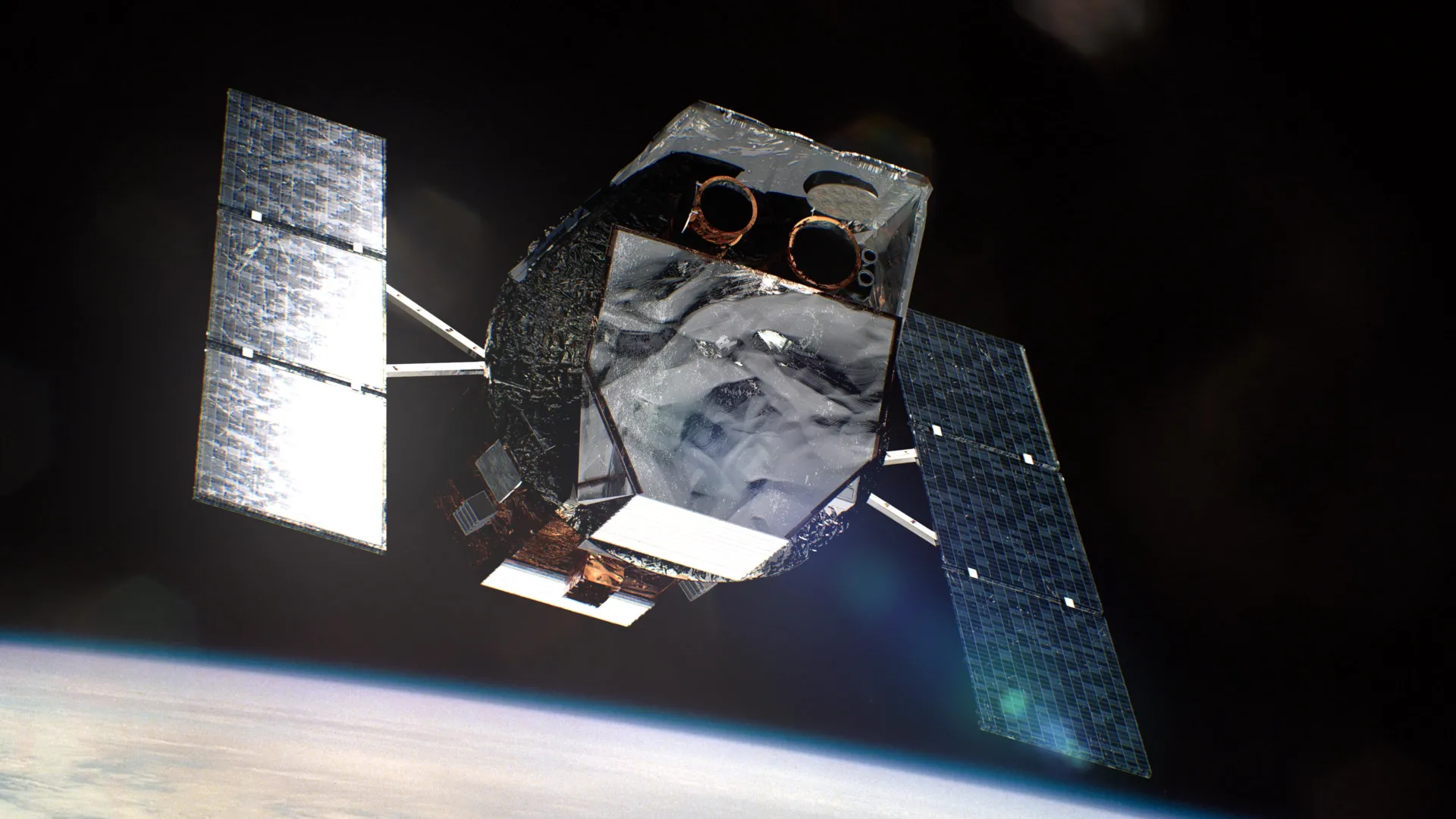
NASA restored two of three instruments on the Swift observatory after a failed commercial mission to raise its orbit, but atmospheric drag may end operations within months.
Swift’s return to partial operation highlights the challenges of maintaining aging space assets without propulsion. Engineers must now prioritize data collection while preparing for the telescope’s inevitable deorbit, offering lessons for future satellite servicing missions.
Written by elseif from the cluster below · every claim links back to a sourceThe three things worth knowing
Swift’s Ultraviolet/Optical and X-ray Telescopes resumed operations after a temporary shutdown to reduce drag.
A commercial mission to boost Swift’s orbit failed, leaving the telescope vulnerable to accelerated orbital decay.
Atmospheric drag from solar activity may force Swift below operational altitude within one to two months.
THE READ
What the cluster adds up to.
NASA’s Swift Observatory has partially resumed science operations after technical setbacks disrupted a planned orbital rescue. The Ultraviolet/Optical Telescope and X-ray Telescope are now back online, while the Burst Alert Telescope remains offline but is expected to return within weeks. This partial reactivation reflects a shift in priorities: from extending the mission’s lifespan to maximizing data collection before the spacecraft’s orbit decays further. The failure of the commercial rescue mission, Katalyst Space’s LINK, underscores the difficulty of in-space servicing, particularly for aging satellites without propulsion systems.
The root cause of Swift’s predicament is its low Earth orbit, where atmospheric drag gradually pulls spacecraft downward. Solar activity has exacerbated the problem by expanding Earth’s upper atmosphere, increasing drag on Swift and accelerating its orbital decay. Without a propulsion system, Swift cannot counteract this effect, leaving it at the mercy of orbital mechanics. The telescope’s current altitude is nearing a critical threshold of 185 miles, below which operations become increasingly difficult. This situation highlights the limitations of long-duration missions in low Earth orbit, where even minor changes in solar activity can have outsized impacts on spacecraft longevity.
The failed rescue mission by Katalyst Space was an ambitious attempt to test in-space servicing technologies. While LINK’s rendezvous and proximity operations with Swift were abandoned, the mission may still yield valuable data for future satellite servicing efforts. For engineers, Swift’s current state offers a case study in trade-offs: balancing power consumption, drag reduction, and science output in a deteriorating orbital environment. The observatory’s remaining time in orbit is now measured in weeks or months, forcing teams to prioritize high-value observations and prepare for the mission’s end. This scenario is a reminder of the finite lifespans of even the most successful space assets and the need for sustainable design in future missions.
Written by elseif from the cluster below · checked for specifics the sources never containedTHE CLUSTER