TECH Signal 238
JWST finds clay minerals on Neptune's inner moons, suggesting they are debris from shattered larger moons
 ↗
↗
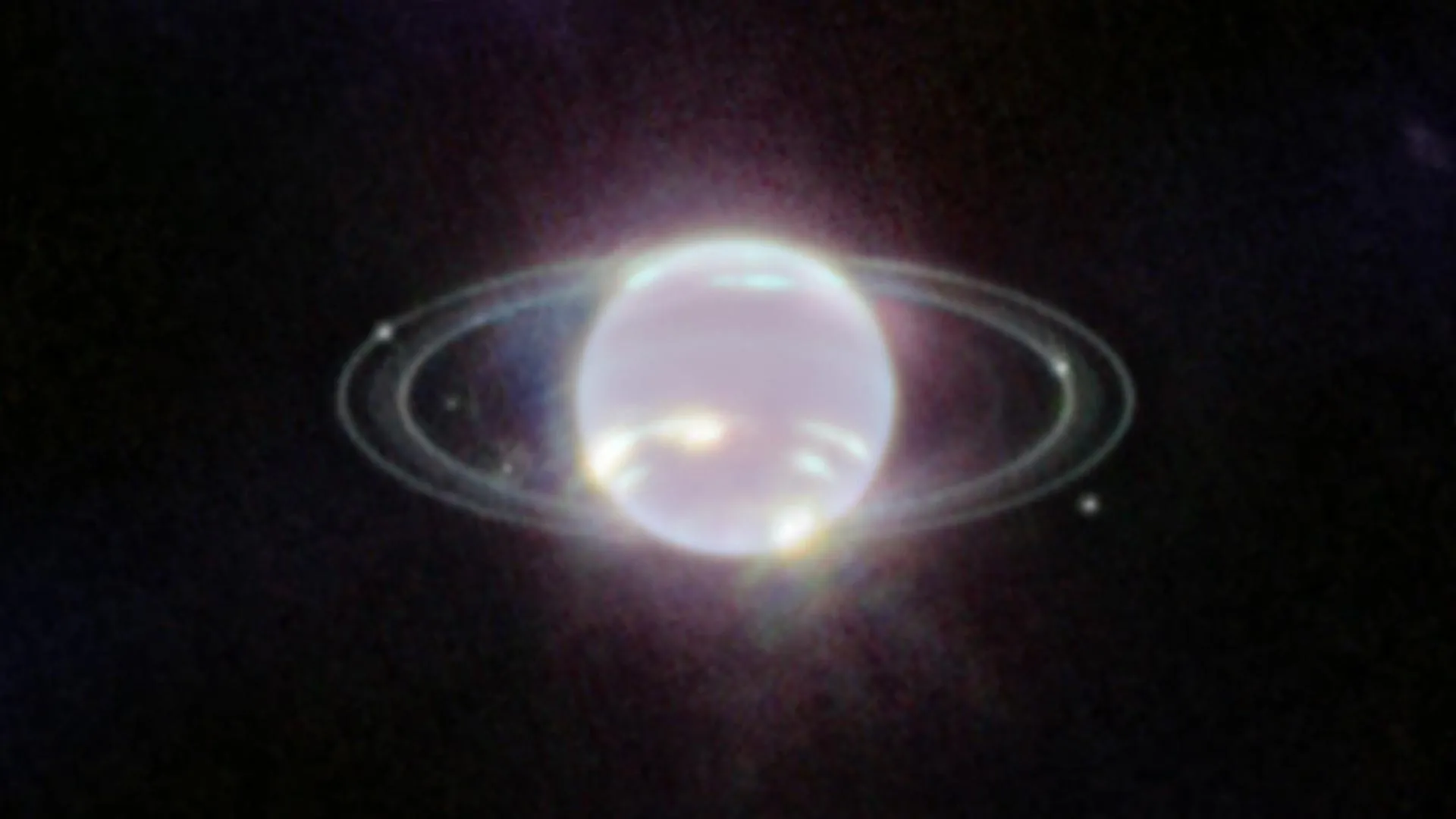
JWST observations of Neptune's inner moons and rings reveal clay minerals that likely formed in liquid water, supporting the idea that these bodies are debris from larger moons destroyed when Triton was captured.
This discovery demonstrates JWST's near-infrared spectrograph can analyze the composition of small, distant bodies, offering a new tool for studying outer solar system objects. For engineers building planetary instruments, it underscores the value of spectroscopy in revealing a body's history. The finding also challenges assumptions about the stability of moon systems around giant planets, which could inform models of planetary evolution.
Written by elseif from the cluster below · every claim links back to a sourceThe three things worth knowing
JWST's near-infrared spectroscopy found magnesium-rich clay minerals on Neptune's inner moons Larissa and Galatea and on the planet's rings.
The clay minerals require liquid water to form, but no water ice was detected on those bodies, a surprising combination for the outer solar system.
The discovery supports the theory that Neptune's original moons were shattered when Triton was captured, leaving the current small moons as debris.
THE CLUSTER