TECH Signal 431
Netflix replaces in-house batch job system with open-source Kubernetes-native Kueue
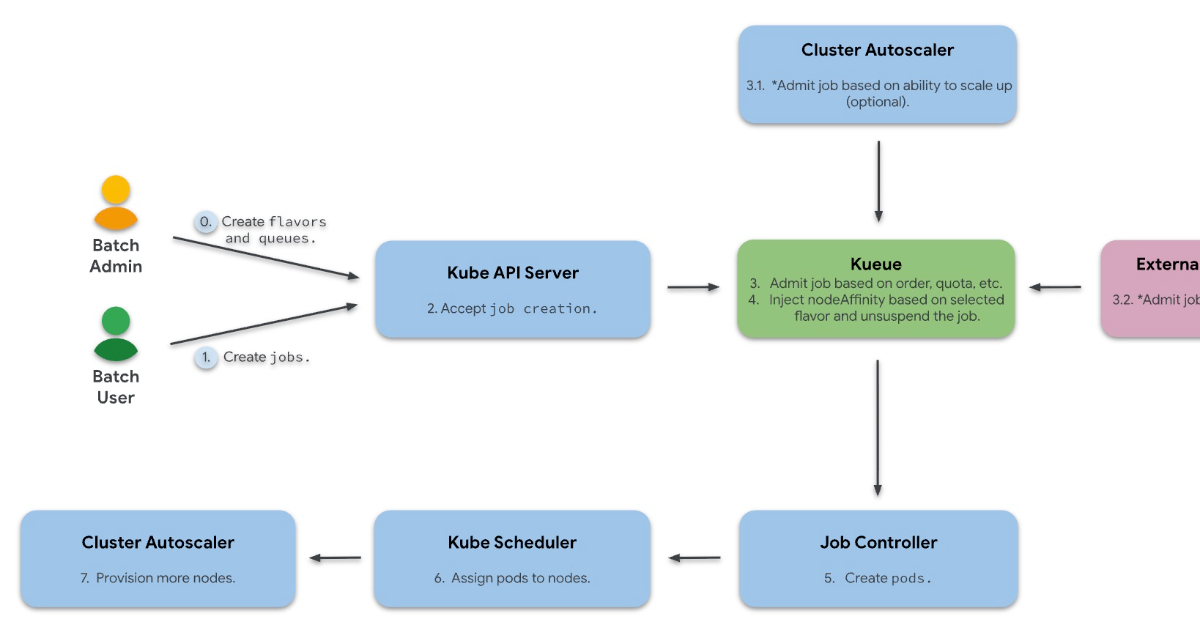 ↗
↗
Netflix migrated most batch workloads from its homegrown Compute Managed Batch to Kueue, a cloud-native job queueing system for Kubernetes, achieving feature parity and new capabilities without disrupting users.
For engineers running large-scale batch workloads, this migration signals that open-source Kubernetes-native solutions like Kueue can now match or exceed the functionality of custom-built systems. The shift reduces maintenance overhead while introducing features like preemption-based fair sharing, which can improve resource utilization without sacrificing reservation guarantees.
Written by elseif from the cluster below · every claim links back to a sourceThe three things worth knowing
Netflix replaced its in-house Compute Managed Batch with Kueue, an open-source Kubernetes-native job queueing system, maintaining API parity for seamless migration.
Kueue’s features, including priority-based queuing, multi-cluster scheduling, and preemption-based fair sharing, enabled Netflix to improve resource utilization while preserving tenant isolation.
The migration was tenant-bound and included early adoption of the most complex use case, reducing risk and ensuring the new system met throughput requirements from the outset.
THE READ
What the cluster adds up to.
Netflix’s decision to replace its homegrown Compute Managed Batch (CMB) with Kueue reflects a broader trend of adopting open-source, Kubernetes-native tools for batch job management. CMB, built in 2018, initially addressed Netflix’s need for tenant hierarchies and multi-cluster federation, but over time, its integration with Kubernetes became a limitation. Kueue, as a Kubernetes-native solution, aligns more closely with the ecosystem’s evolution, reducing the engineering effort required to maintain and extend the system. This shift also allows Netflix to leverage community-driven innovation, which can outpace the development of proprietary solutions in both features and scalability.
The migration process prioritized continuity for existing users, a critical factor for large-scale platforms. By maintaining API parity with CMB, Netflix minimized disruption, allowing tenants to transition without changes to their workflows. Engineers mapped CMB’s tenant hierarchies to Kueue’s Cohors, ClusterQueue, and LocalQueue resources, ensuring that capacity requirements and isolation policies were preserved. This approach derisked the project, as it enabled gradual adoption and easy rollback if issues arose. The decision to migrate the most complex use case first further validated Kueue’s capabilities, ensuring the system could handle Netflix’s production workloads before broader deployment.
Kueue’s features, such as preemption-based fair sharing, address a key challenge in batch job management: balancing resource utilization with reservation guarantees. Netflix’s implementation of this feature improved average resource utilization by allowing idle capacity to be temporarily allocated to other tenants while maintaining the ability to reclaim it when needed. This capability is particularly valuable in multi-tenant environments where workloads vary in priority and resource demands. The migration also highlights the importance of load testing in non-production environments, which helped fine-tune Kueue’s configuration to meet Netflix’s throughput requirements without compromising stability.
For engineers considering a similar migration, Netflix’s experience underscores the value of open-source tools in reducing long-term maintenance costs. Kueue’s adoption by Netflix, managing millions of batch workloads, demonstrates that open-source solutions can scale to meet the demands of large, complex systems. However, the migration also reveals the trade-offs involved: while Kueue offers advanced features like topology-aware scheduling, integrating it into an existing infrastructure requires careful planning to ensure compatibility with legacy systems and workflows. The project’s success hinged on maintaining API parity and prioritizing tenant transparency, lessons applicable to any large-scale system migration.
Written by elseif from the cluster below · checked for specifics the sources never containedTHE CLUSTER