TECH Signal 327
Neutrinos from Deep Inside Earth Provide a New Picture of the Mantle
 ↗
↗
A worldwide network of underground neutrino detectors is now measuring geoneutrinos, giving a direct view of the radioactive elements that heat Earth’s mantle.
Geoneutrino counts translate into estimates of uranium, thorium and potassium distribution, refining models of mantle convection and tectonic heat flow. Engineers building geophysical simulation tools will have a new, physics-based data stream to calibrate thermal and dynamical models. The measurements also expose the practical limits of neutrino detection, informing where and how such data can be relied upon.
Written by elseif from the cluster below · every claim links back to a sourceThe three things worth knowing
Multiple deep-underground detectors, including SNO+ and the upcoming JUNO experiment, are now reporting geoneutrino events that map Earth’s internal heat sources.
The neutrino counts provide a quantitative probe of mantle-wide radioactive decay, improving estimates of the planet’s heat budget used in tectonic and magnetic field models.
Operating these detectors requires massive, ultra-pure scintillator volumes, extensive shielding, and strict contamination controls, limiting the technique to a handful of specialized sites.
THE READ
What the cluster adds up to.
The recent reports from SNO+ and the anticipated first detections from JUNO mark the first time a distributed set of detectors can collectively image the mantle’s heat-producing elements. Previously, only isolated measurements from Kamland (2005) and Borexino (2009) existed, offering limited geographic coverage. This expanded network creates a more complete picture of where uranium, thorium and potassium reside inside Earth. The new data are being described as a "never-before-seen view" of the radioactive elements that power the tectonic heat engine.
For engineers developing Earth-system models, the geoneutrino fluxes constitute a direct observational constraint on internal heat production. Incorporating these measurements means adding a low-rate, high-uncertainty data stream that must be statistically merged with seismic and gravimetric inputs. The benefit is a physics-based calibration of mantle convection simulations, potentially improving predictions of plate motion and magnetic field generation. However, the sparse event counts demand careful error propagation in any downstream analysis.
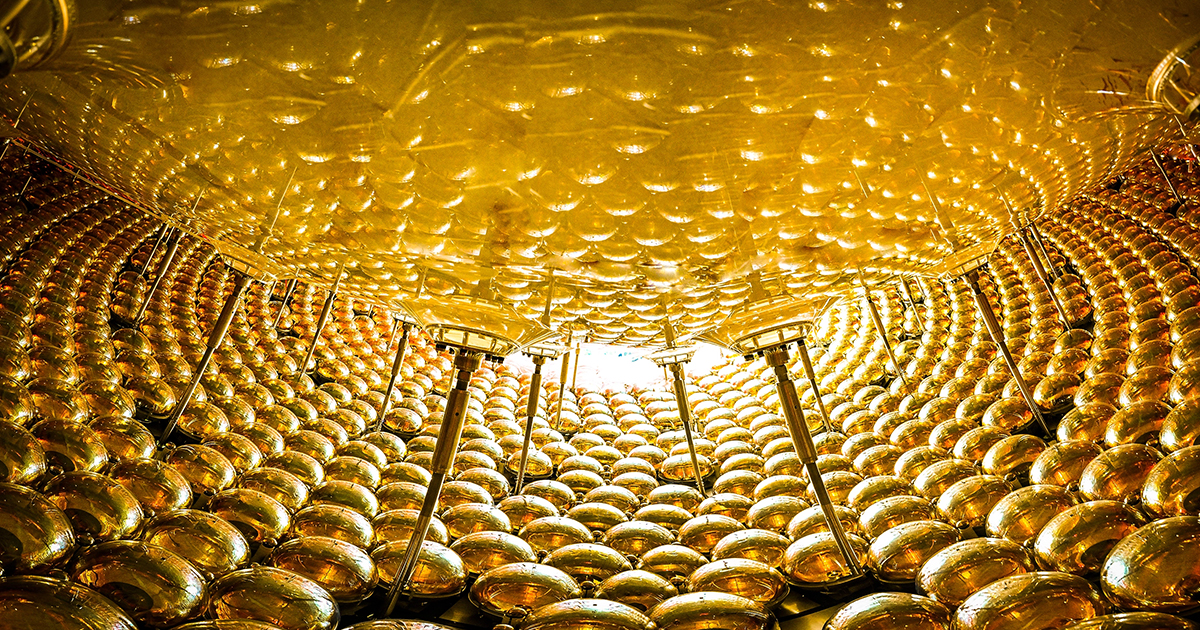
Deploying and maintaining the detectors involves substantial infrastructure: underground caverns several kilometers deep, tens of thousands of light sensors, and thousands of tons of ultra-pure water or scintillating liquid. The SNO+ setup, for example, uses an acrylic sphere surrounded by nearly 10,000 photodetectors and is kept in a dark, radon-free environment. Such requirements translate into high capital and operational costs, limiting the technology to national labs or large collaborations rather than commercial deployment. Engineers tasked with supporting these facilities must manage cryogenic safety, contamination control, and continuous calibration routines.
Despite the breakthrough, the technique remains constrained by the intrinsic rarity of neutrino interactions. Even with large detector volumes, only a few hundred geoneutrino events have been recorded over many years, providing coarse spatial resolution tied to detector locations. Consequently, the method cannot replace traditional geophysical surveys but serves as a complementary probe of deep Earth processes. Engineers should therefore treat geoneutrino data as an auxiliary input that fills gaps in regions where other measurements are unavailable.
Adopting geoneutrino observations into existing workflows will require software that can ingest event timestamps, energy spectra, and detector-specific background models. The integration cost includes building pipelines for real-time data quality monitoring and adapting statistical frameworks to handle low-count Poisson statistics. The approach ceases to be effective outside the few deep-underground sites equipped with the necessary shielding and ultra-pure media, so global coverage will remain patchy for the foreseeable future.
Written by elseif from the cluster below · checked for specifics the sources never containedTHE CLUSTER