TECH Signal 342
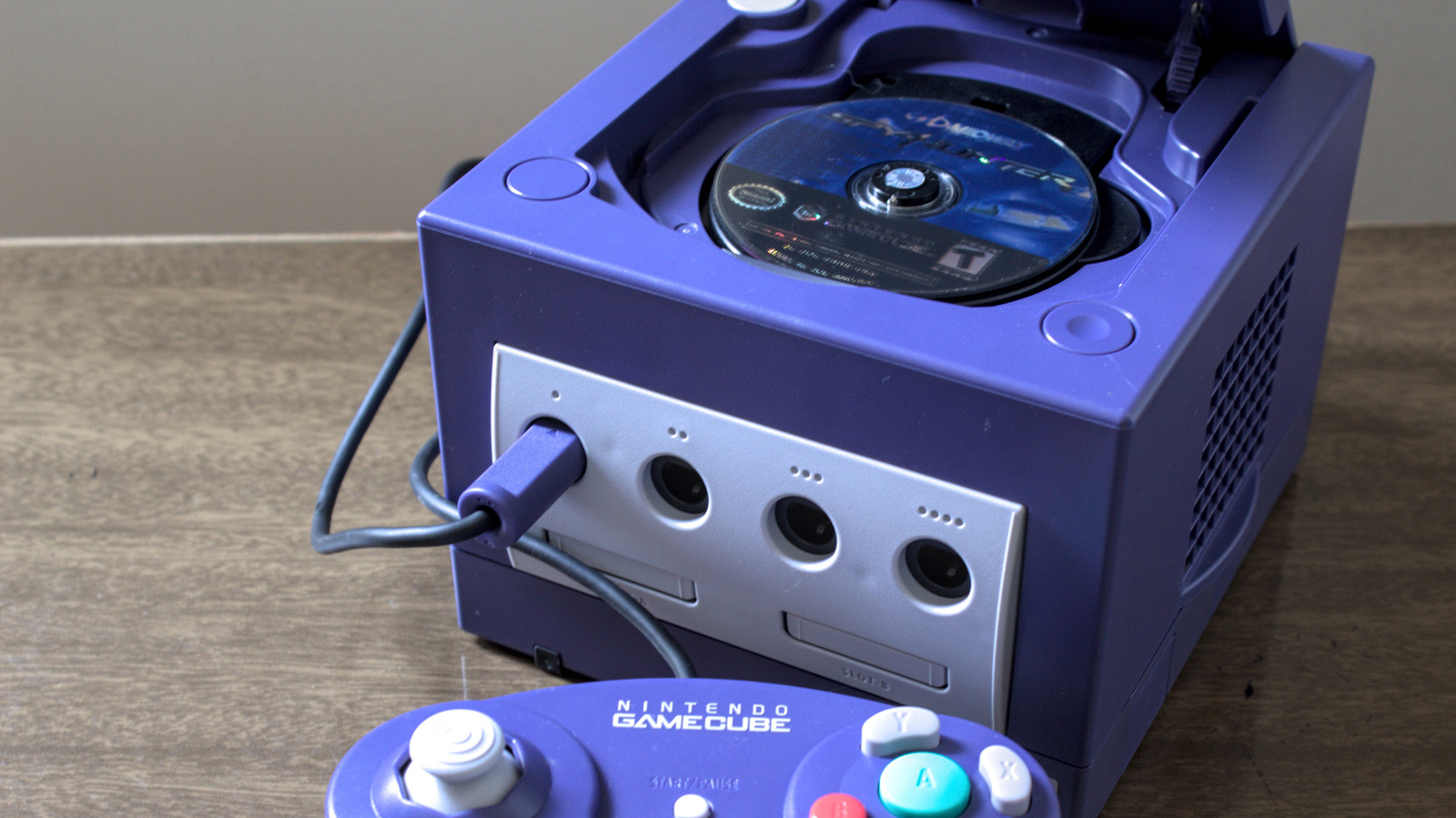
GameCube's miniDVDs traded DVD playback for $20 per-console licensing savings and faster load times
 ↗
↗
Nintendo's GameCube used proprietary 3.15-inch miniDVDs to skip DVD Forum licensing and deter piracy, trading capacity and movie playback for a $200 launch price and faster load times.
For hardware engineers, the GameCube illustrates how a single media-format decision can bundle licensing cost, anti-piracy, mechanical size, and load-time behaviour into one product choice, with consequences that surface years later in the install base. The roughly 1.5GB capacity and the absence of DVD playback are the format's clearest long-tail costs, since both the developer's content budget and the customer's living-room utility were capped by the same physical spec. Only Engadget carried this explainer, so the value is the trade-off framework itself rather than corroboration of a new development.
Written by elseif from the cluster below · every claim links back to a sourceThe three things worth knowing
The proprietary disc measured 3.15 inches versus 4.17 inches for standard DVDs and held just under 1.5GB of read-only data, with no built-in storage on the console and saves requiring a separate memory card.
Nintendo avoided roughly $20 per console in DVD Forum licensing royalties because the GameCube could not play DVD movies, and standard PC DVD burners of 2001 could not read the proprietary media, which the article credits with slowing piracy.
The smaller disc radius let the optical drive fit a 5.7-pound chassis launched at $200, and the article argues the laser's shorter travel distance gave the GameCube faster load times than the PS2's full-size DVDs.
THE READ
What the cluster adds up to.
The GameCube shipped in late 2001 with 3.15-inch proprietary optical discs that remain unique among consumer consoles, sized to fit a deliberately small machine and to dodge the DVD Forum's per-unit royalty. The decision is presented as a deliberate multi-factor choice rather than a single engineering constraint, with cost, security, and form factor pulling in the same direction. Only Engadget is carrying the explainer, so the analysis is the trade-off framework itself rather than corroboration of a new development.
The clearest quantifiable benefit is financial. Skipping DVD playback meant Nintendo did not pay the roughly $20 per console in DVD Forum licensing royalties that the PS2 and Xbox effectively absorbed, money that instead went into a $200 launch price against the competition's $300 entry point. The same format choice served as anti-piracy: standard PC DVD burners of 2001 could not read the proprietary media, so GameCube titles were harder to copy than PS2 or Xbox games at retail. Modders eventually broke this with the Dolphin emulator, but the protection held throughout the early-2000s commercial window.
The smaller disc radius also shaped the machine physically. A 3.15-inch disc let Nintendo pick a smaller optical drive, which the article connects to a 5.7-pound chassis against the original Xbox's 8.8 pounds, and a body small enough to carry by its built-in handle. The mechanical claim is that the laser's shorter travel distance produced faster load times than the PS2's full-size DVDs, an assertion consistent with the physics of optical pickup traversal but not independently benchmarked in the piece.
The trade-offs were real and partly commercial. Capacity sat at just under 1.5GB, a constraint the article uses to frame development feats like The Legend of Zelda: The Wind Waker's open sea as compression achievements, and saves required a separate memory card because the console had no built-in storage. More damaging in 2001 was the loss of DVD movie playback, which the PS2 offered out of the box and the Xbox offered through a $30 add-on, before streaming was a viable substitute.
The format remains unique in console history because the same combination of factors rarely aligns. Once optical media gave way to cartridges, hard drives, and digital downloads, the licensing-versus-piracy-versus-size calculation moved to a different layer of the stack, but the underlying trade-off is the one any hardware team faces when a format choice also encodes a business model.
Written by elseif from the cluster below · checked for specifics the sources never containedTHE CLUSTER