INFRA Signal 425
Nvidia denies report of China-bound Groq-based LPU shipments, says no China-specific LPU in roadmap
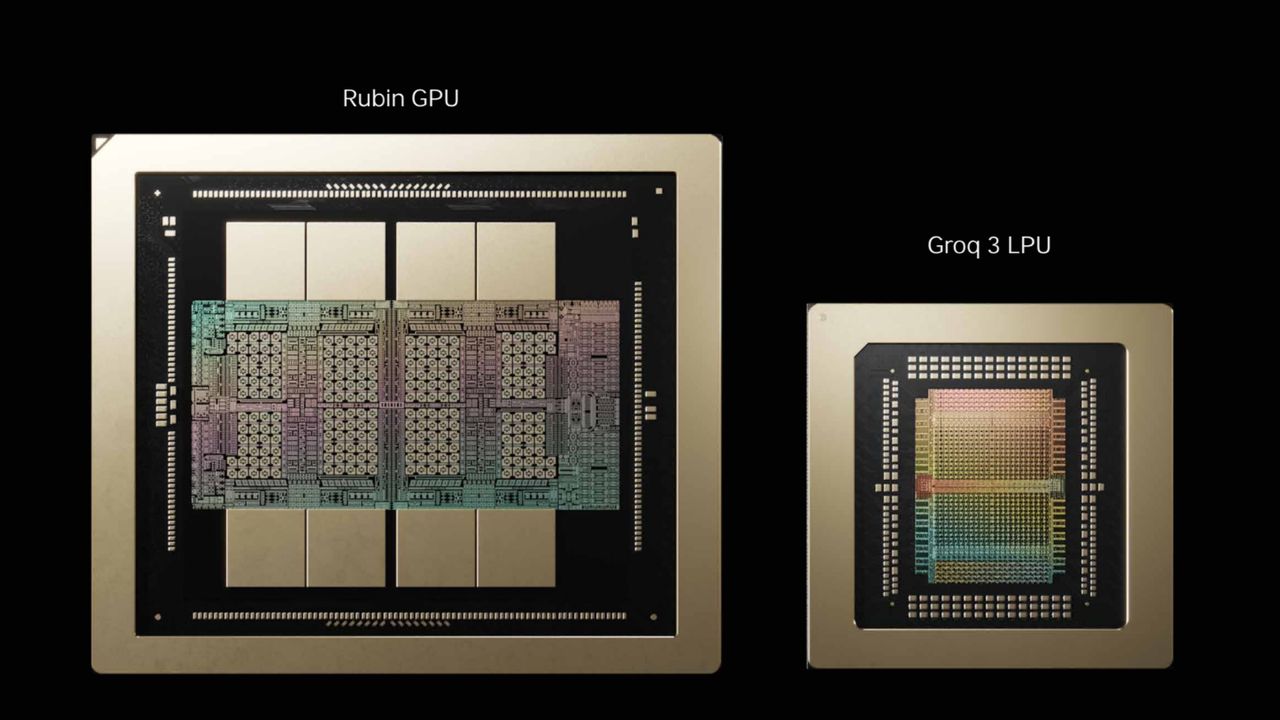 ↗
↗
Nvidia stated there is no China-specific LPU product in its roadmap and denied any current LPU sales in China.
Engineers evaluating AI accelerators for China must note that Nvidia has confirmed it offers no China-specific LPU product and currently has no LPU sales there, removing a potential hardware option from the market. The denial also clarifies that any standard LPU, being an SRAM-only decode accelerator without HBM, may still comply with U.S. export thresholds, while competitors such as Huawei’s Ascend 950DT are positioned for the same decode-focused workload.
Written by elseif from the cluster below · every claim links back to a sourceThe three things worth knowing
Nvidia denied a report of planned China-bound LPU shipments and stated there is no China-specific LPU in its roadmap.
The company said it currently has no LPU sales in the China market.
Despite the denial, the standard LPU’s SRAM-only, no-HBM design could still meet U.S. export limits for China, while Huawei’s Ascend 950DT targets the same decode-focused workload.
THE READ
What the cluster adds up to.
Nvidia issued a denial that it plans to ship a Groq-based LPU tailored for Chinese customers by the end of 2026. The company said the report from The Information was incorrect and emphasized that it has no China-specific LPU product in its roadmap. Nvidia also stated that there are currently no LPU sales in the China market. This clarification replaces the earlier speculation of small-batch shipments later this decade.
Engineers designing AI systems for China can no longer count on a Nvidia-specific LPU as a hardware option. They must evaluate whether the standard LPU, which is an SRAM-only decode accelerator without HBM, can be exported under existing U.S. export thresholds. If the standard LPU is usable, any software that splits work between GPU and LPU would need to be validated for the processors actually available in China. Otherwise, teams may need to qualify alternative accelerators or redesign their decode pipelines.
The standard LPU’s eligibility hinges on its SRAM-only, no-HBM architecture, which fits the compute-density and bandwidth thresholds set for China. Should Nvidia add HBM or increase compute density in a future variant, the part could fall outside the export allowance and require a license or be blocked. Additionally, the LPU was conceived as a decode co-processor for the Vera Rubin platform, which Nvidia says cannot be sold in China. This system-level restriction means that even an exportable LPU cannot be paired with Vera Rubin in Chinese deployments.
Huawei’s Ascend 950DT, positioned as a direct competitor, is optimized for decode and training and is slated for release in Q4 2026. The prefill-focused 950PR variant has already been in production since April, giving Huawei an early presence in the same market segment. Nvidia’s own acknowledgment that it has largely conceded China’s AI chip market to Huawei reinforces the competitive shift. Engineers monitoring the Chinese accelerator landscape should therefore weigh Huawei’s roadmap alongside Nvidia’s export-compliant offerings.
Written by elseif from the cluster below · checked for specifics the sources never containedTHE CLUSTER