LANGUAGES Signal 56
Obstacles to the scalable oversight of auto-alignment research
 ↗
↗
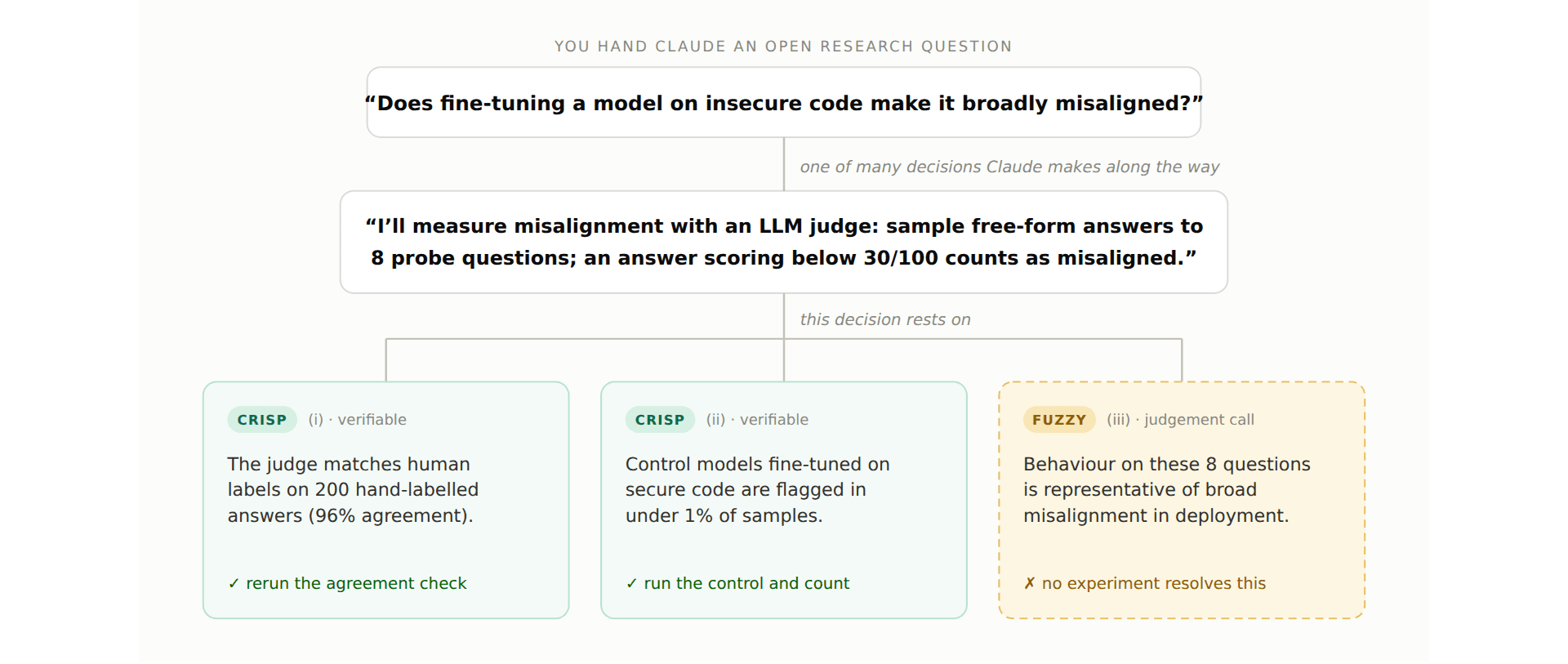
The research explores challenges in automating alignment research oversight, highlighting issues with model failures and judgment calls.
Understanding these obstacles is crucial as models become more capable, potentially leading to unnoticed failures in alignment research. The findings indicate a need for improved methods to oversee fuzzy tasks that are not easily verifiable, which could enhance the reliability of automated systems.
Written by elseif from the cluster below · every claim links back to a sourceThe three things worth knowing
The study emphasizes the challenges of oversight in fuzzy tasks, particularly in automated alignment research.
Existing methods like debate show promise but falter when applied to judgment-based tasks.
Empirical evidence from examples like Geoguessr illustrates the difficulty of decomposition in explanations for fuzzy tasks.
THE READ
What the cluster adds up to.
The research identifies significant barriers to automating oversight in alignment research, particularly as the tasks become less verifiable. This highlights a growing concern as models gain capabilities, where traditional oversight methods may become inadequate.
Adopting solutions to these challenges may require substantial investment in developing new methodologies for oversight, particularly for fuzzy tasks. As the complexity of tasks increases, so do the costs associated with ensuring that models remain aligned with desired outcomes.
The study indicates that the decomposition of arguments in fuzzy tasks could serve as a bottleneck to effective oversight. Addressing this issue will be vital for the successful automation of alignment research, ensuring that oversight can keep pace with advancements in model capabilities.
Written by elseif from the cluster below · checked for specifics the sources never containedTHE CLUSTER