TECH Signal 155
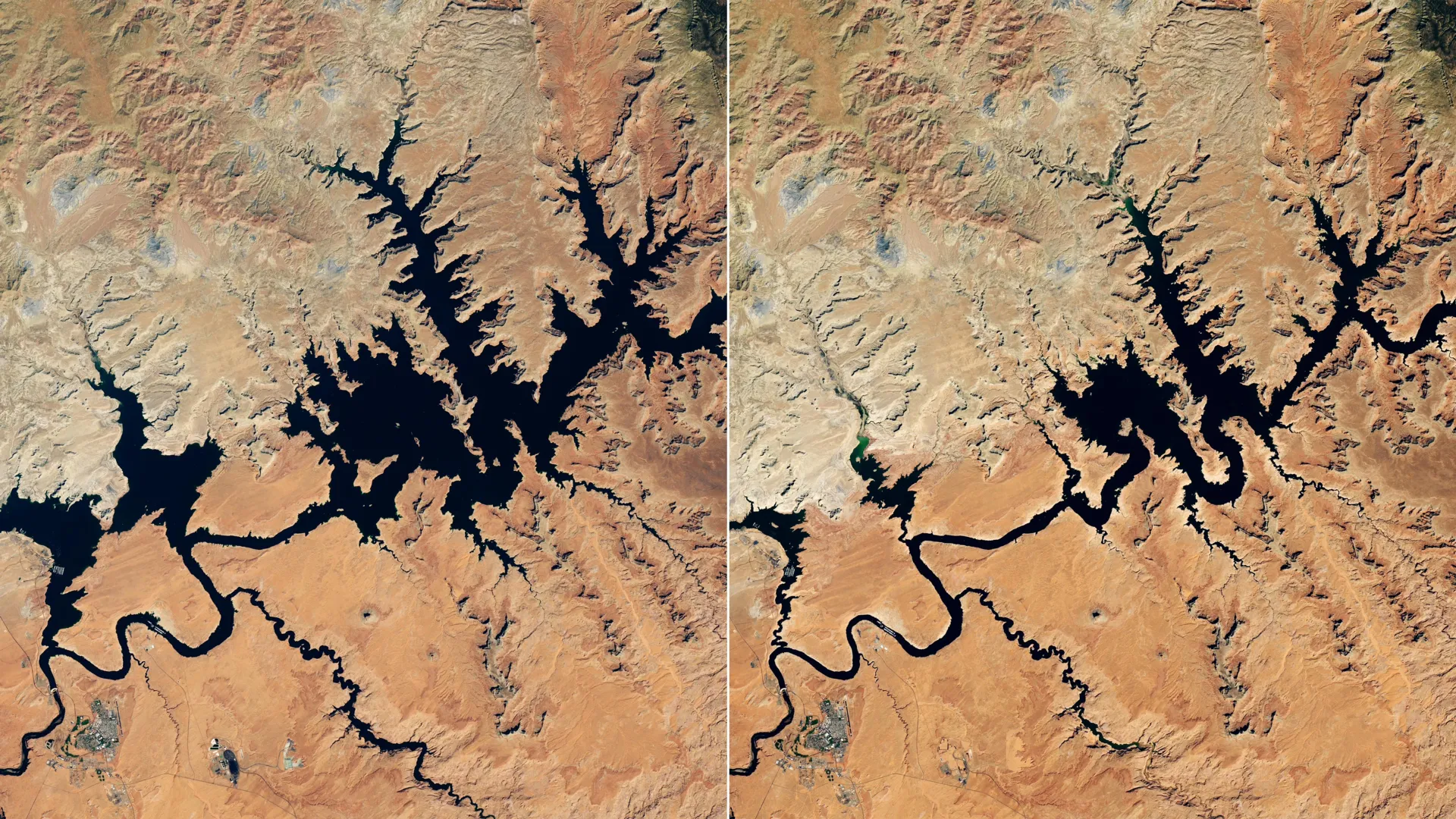
Lake Powell hits record low after dry winter
 ↗
↗
Lake Powell reached its lowest recorded level in September 2026 due to an exceptionally dry and warm winter that left the Colorado River Basin with minimal snowmelt.
The drop threatens hydropower generation and water supplies for millions across the Southwest. Federal agencies are deploying emergency measures to stabilize the reservoir, but long-term water scarcity persists.
Written by elseif from the cluster below · every claim links back to a sourceThe three things worth knowing
Lake Powell fell below its previous record of 3,519.92 feet in early September 2026.
Lake Mead also reached record lows, compounding stress on the Colorado River system.
Emergency water releases from Flaming Gorge Reservoir are being used to stabilize Lake Powell.
THE READ
What the cluster adds up to.
The record low reflects a sustained decline in snowpack across the Upper Colorado Basin, directly reducing inflows to Lake Powell.
Federal agencies are spending resources to move water from other reservoirs and cut downstream releases, indicating the severity of the shortage.
Without these interventions, hydropower capacity at Glen Canyon Dam could be compromised, affecting electricity for millions.
The event underscores how climate-driven snow drought is reshaping water management in the Southwest, with cascading impacts on power and agriculture.
Written by elseif from the cluster below · checked for specifics the sources never containedTHE CLUSTER