TECH Signal 372
One of NASA's Mars rovers could find itself promised to the moon instead
 ↗
↗
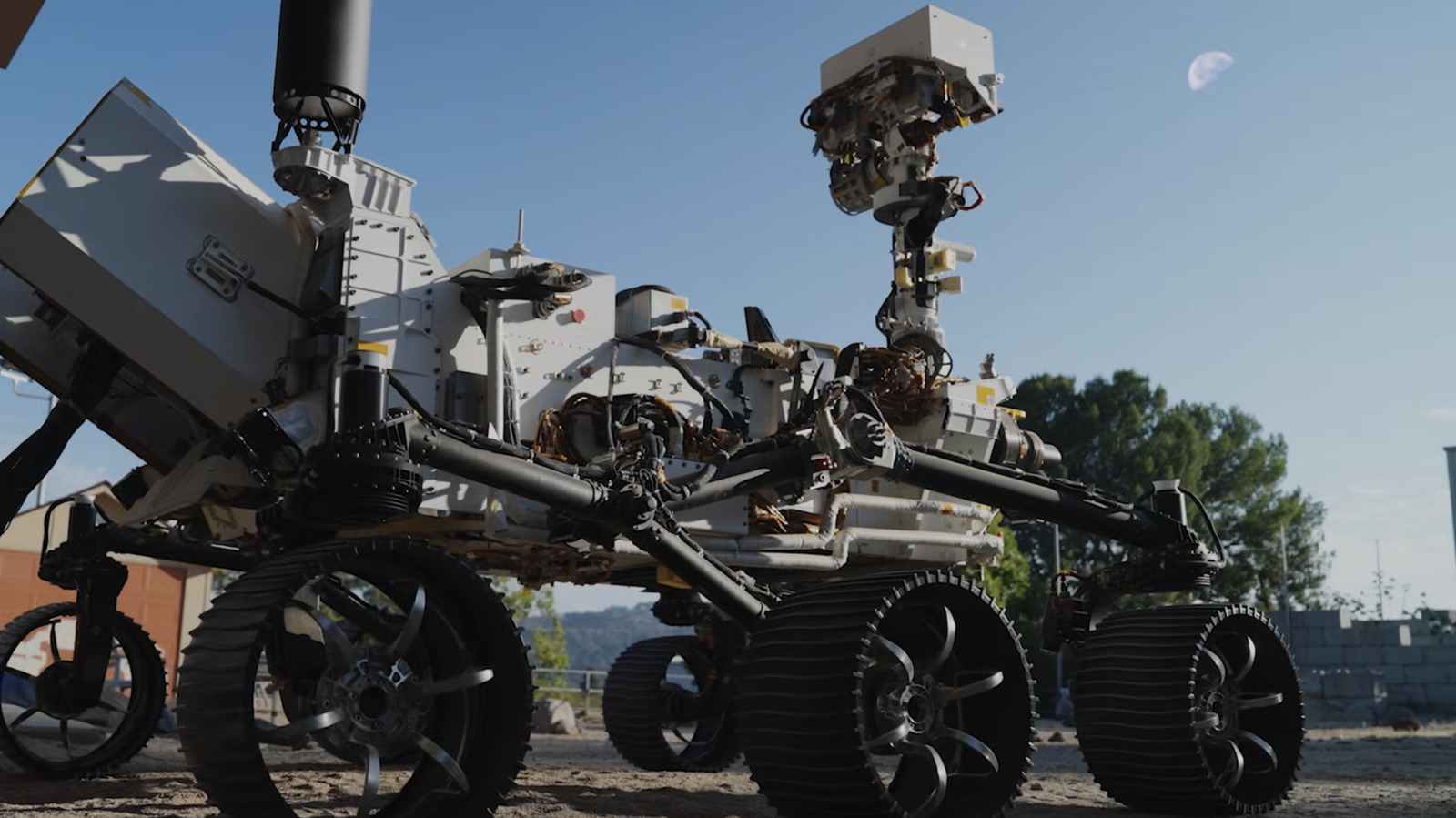
NASA plans to repurpose an Earth-based engineering test model of its Mars rovers into a lunar rover called PROMISE for exploring the moon's south pole.
This shift allows NASA to leverage existing rover hardware and operational experience to accelerate lunar exploration. For engineers, it means adapting Mars-tested systems for a harsher, dustier, and thermally extreme environment. The project also tests the limits of reusability in space robotics, with implications for future planetary missions.
Written by elseif from the cluster below · every claim links back to a sourceThe three things worth knowing
PROMISE will be a hybrid of Earth-based test models from NASA’s Perseverance and Curiosity Mars rovers, repurposed for lunar use.
The rover will rely on a nuclear power source, enabling operation in permanently shadowed regions of the moon’s south pole.
Extensive modifications are required to make the rover flight-ready, including dust resistance, thermal controls, and new instrumentation.
THE READ
What the cluster adds up to.
NASA’s decision to repurpose an Earth-bound rover testbed for lunar exploration reflects a pragmatic approach to cost and timeline constraints. The Perseverance and Curiosity engineering models were built to validate software, hardware, and operational procedures before deployment to Mars. By adapting one of these models for the moon, NASA avoids the expense and risk of designing a new rover from scratch. However, the lunar environment presents unique challenges that Mars rovers were never designed to handle, particularly the abrasive regolith and extreme temperature swings. Engineers will need to retrofit the vehicle with dust-resistant seals, thermal management systems, and radiation-hardened components to ensure survival in the moon’s unshielded environment.
The rover’s nuclear power source, a multi-mission radioisotope thermoelectric generator (MMRTG), is a critical enabler for its mission. Unlike solar-powered systems, an MMRTG allows PROMISE to operate continuously, regardless of lighting conditions. This is essential for exploring the moon’s south pole, where some regions are in permanent shadow and others experience prolonged darkness during the lunar night. The trade-off is the complexity of handling and integrating a plutonium-based power system, which requires additional safety measures and regulatory approvals. For engineers, this means balancing power reliability against the logistical and operational overhead of nuclear systems.
The proposed timeline and budget underscore the uncertainties in repurposing existing hardware for a new mission. While the rover’s core structure and mobility systems may be reusable, critical subsystems, such as sensors, communications, and scientific instruments, will need to be redesigned or replaced. Lunar dust, which is far more abrasive than Martian regolith, poses a significant risk to moving parts and optical surfaces. Engineers will need to develop new coatings, seals, and filtration systems to mitigate this hazard. The project’s estimated cost and launch window suggest that these modifications will be neither quick nor inexpensive, raising questions about whether repurposing is truly more efficient than a clean-sheet design.
The differences in how the feeds frame the event highlight the tension between innovation and pragmatism in space exploration. Engadget’s headline emphasizes the novelty of repurposing a Mars rover for the moon, while the underlying article reveals the extensive work required to make this feasible. For engineers, the takeaway is that reusability in space systems is not as simple as swapping out a few components. The lunar environment demands fundamentally different design considerations, from power management to dust mitigation. This project will test whether the benefits of leveraging existing hardware outweigh the costs of adapting it for a new destination.
Written by elseif from the cluster below · checked for specifics the sources never containedTHE CLUSTER