TECH Signal 296
66-million-year-old dinosaur fossils reportedly retain original collagen molecules
 ↗
↗
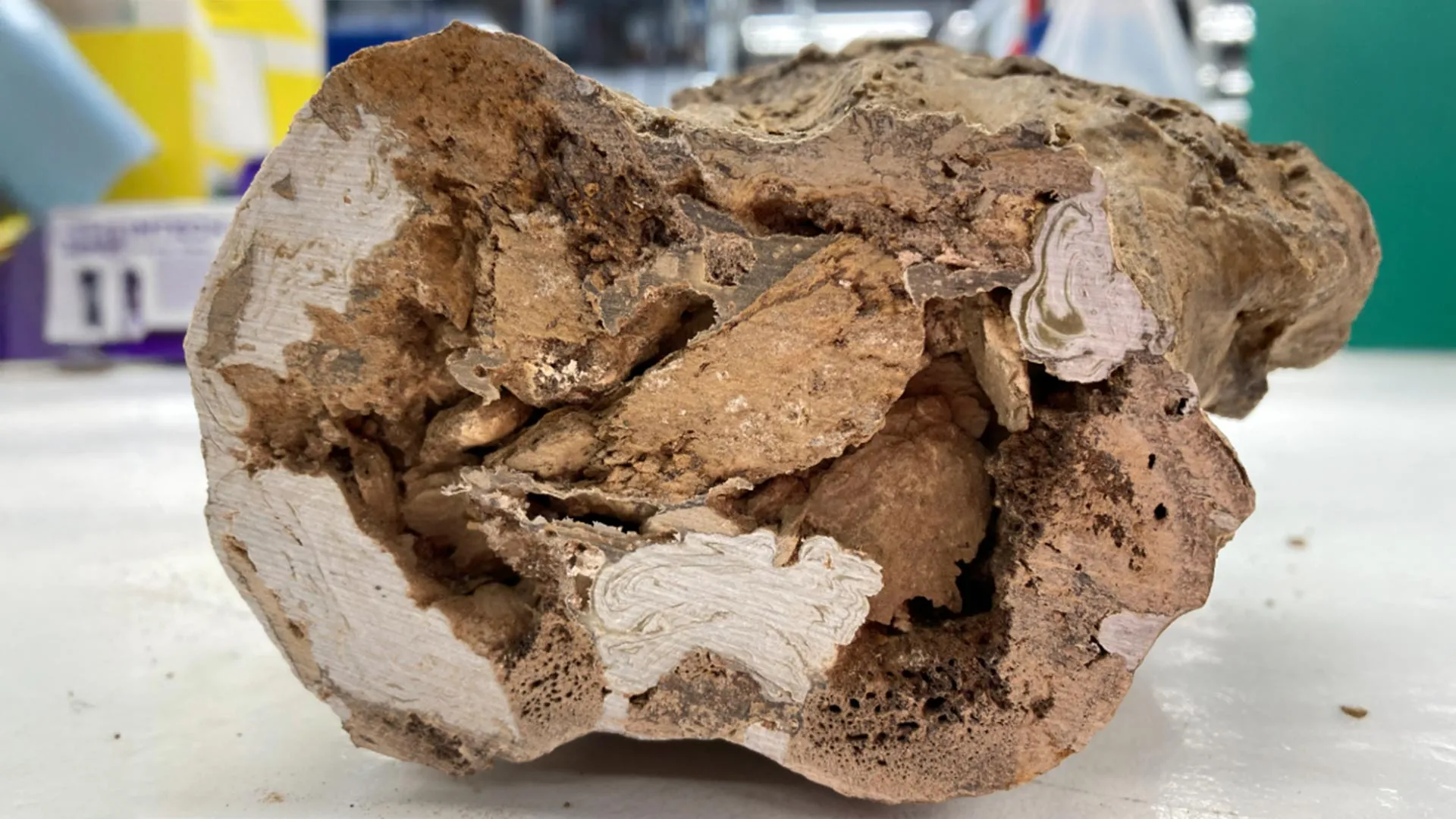
Researchers detected collagen in a dinosaur fossil, challenging the assumption that organic molecules degrade entirely during fossilization.
This discovery could redefine paleontological analysis by enabling molecular-level study of ancient organisms. It may also prompt re-examination of existing fossil archives using modern techniques, potentially uncovering new biological insights. However, the mechanisms behind such long-term protein preservation remain unclear.
Written by elseif from the cluster below · every claim links back to a sourceThe three things worth knowing
Collagen remnants were identified in a 66-million-year-old Edmontosaurus fossil using mass spectrometry and protein sequencing.
The finding disputes the long-held belief that fossilization destroys all original organic molecules, including proteins.
Older cross-polarized light microscopy images of fossils may now be re-analyzed for preserved collagen, expanding research opportunities.
THE READ
What the cluster adds up to.
The detection of collagen in a dinosaur fossil challenges a foundational assumption in paleontology: that fossilization erases all traces of original organic molecules. For decades, the field operated under the premise that proteins and other biological materials could not survive tens of millions of years. This discovery suggests that some fossils may retain molecular-level information, opening new avenues for studying ancient life. The implications extend beyond theoretical debates, as it could enable researchers to extract biological data that traditional anatomical analysis cannot provide.
The study relied on advanced analytical techniques, including mass spectrometry and protein sequencing, to identify collagen in the fossilized sacrum of an Edmontosaurus. These methods allowed researchers to distinguish between original organic material and potential contaminants, addressing a key criticism in prior debates. However, the findings do not yet explain how collagen, or fragments of it, managed to persist for such an extended period. The mechanisms behind this preservation remain an open question, one that could reshape our understanding of fossilization processes.
A practical consequence of this discovery is the potential to revisit existing fossil archives. Cross-polarized light microscopy images, collected over the past century, may now be re-examined for signs of preserved collagen. If such patches can be identified, researchers could leverage modern protein analysis techniques to study a broader range of specimens. This could accelerate discoveries about dinosaur biology, evolution, and even relationships between species that are not apparent from skeletal anatomy alone.
The debate over contamination has long clouded research into ancient organic molecules in fossils. Critics have argued that detected materials could originate from external sources, such as microbes or handling. The new findings strengthen the case for genuine preservation, but the burden of proof remains high. Future studies will need to replicate these results across different fossils and environments to solidify the claim. Until then, the discovery remains a promising but preliminary step toward molecular paleontology.
Written by elseif from the cluster below · checked for specifics the sources never containedTHE CLUSTER