TECH Signal 259
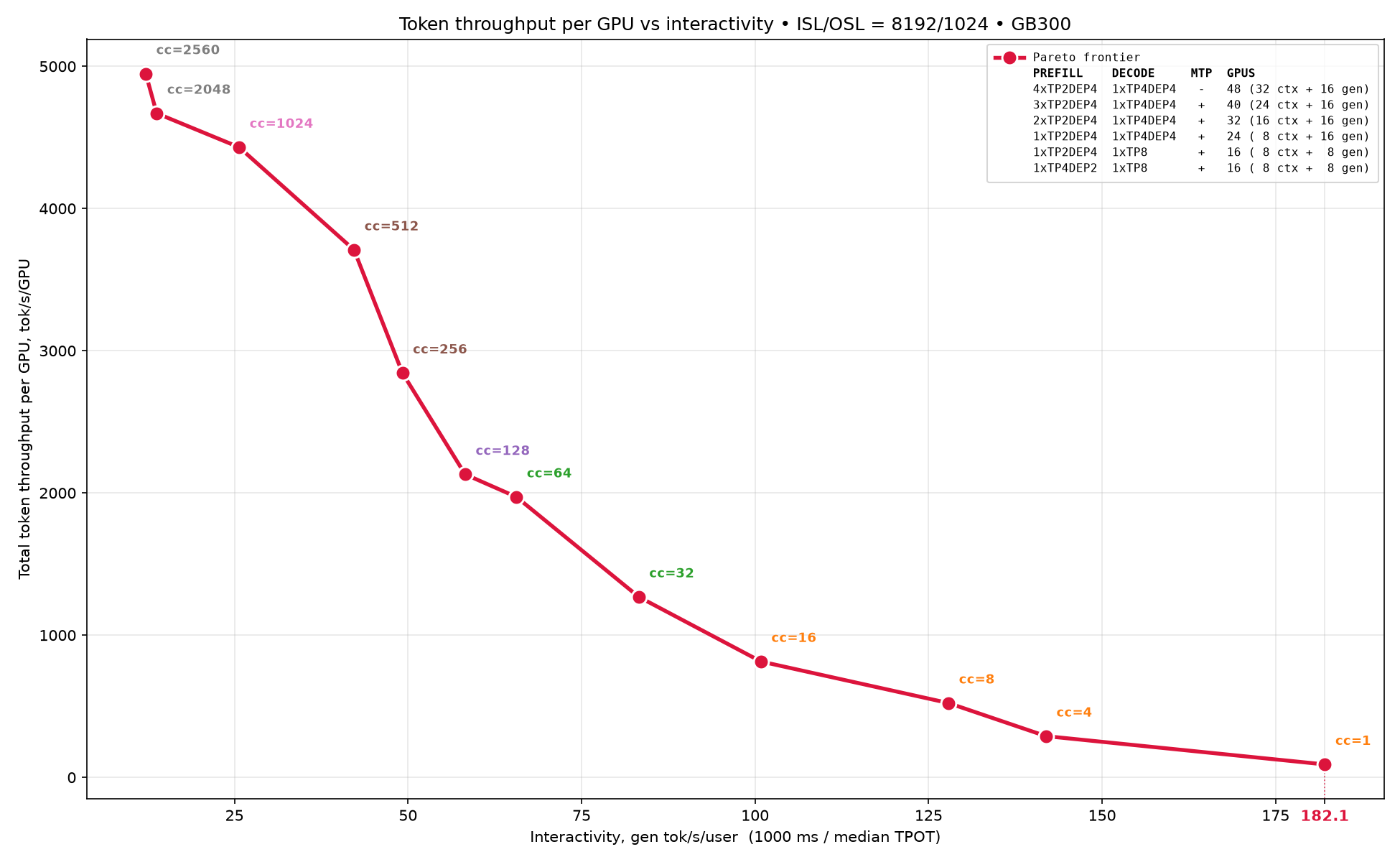
PD Serving of Qwen3.8-2.4T Achieves 5K Throughput and 180 Interactivity Using vLLM
 ↗
↗
vLLM demonstrates high throughput and interactivity metrics on Qwen3.8-2.4T with specific configurations.
Achieving high throughput and low latency is crucial for applications relying on real-time processing. The combination of these metrics indicates advancements in serving architectures for large models. The detailed methodology allows engineers to replicate and optimize performance in their deployments.
Written by elseif from the cluster below · every claim links back to a sourceThe three things worth knowing
vLLM reached 5000 total token throughput per GPU on Qwen3.8-2.4T.
The low latency scenario produced 180 generated tokens per user.
The blog provides a detailed tuning process for optimizing PD serving configurations.
THE READ
What the cluster adds up to.
The recent performance results on PD serving for the Qwen3.8-2.4T model highlight significant throughput metrics, achieving 5000 total tokens per GPU. This performance benchmark is crucial for engineers looking to maximize efficiency in their applications. The specifics of the configuration and tuning described can guide engineers in achieving similar results in their environments.
The focus on both throughput and interactivity presents a balanced approach to system optimization. The reported 180 tokens per user in low latency conditions demonstrate that performance does not have to be sacrificed for responsiveness. This dual focus is essential for applications where user experience is a priority.
The methodology provided in the blog post allows for reproducibility, which is vital for engineers aiming to implement or enhance similar systems. By breaking down the tuning process step by step, it equips engineers with the knowledge to identify bottlenecks and optimize their setups, leading to better-performing applications.
Understanding the KV cache capacity and its impact on concurrency is critical for deploying these models effectively. The calculations related to GDN and Full-Attn weights provide insight into how resource allocation can be managed to achieve optimal performance. This is especially relevant for engineers working with large-scale models and distributed systems.
The ability to tune and adjust parameters for maximum efficiency can lead to significant enhancements in real-world applications. As engineers adopt these techniques, they can expect to see improvements in both throughput and latency, ultimately benefiting end users and business outcomes.
Written by elseif from the cluster below · checked for specifics the sources never containedTHE CLUSTER