INFRA Signal 94
Platform engineering maturity: From toolchain to self-service
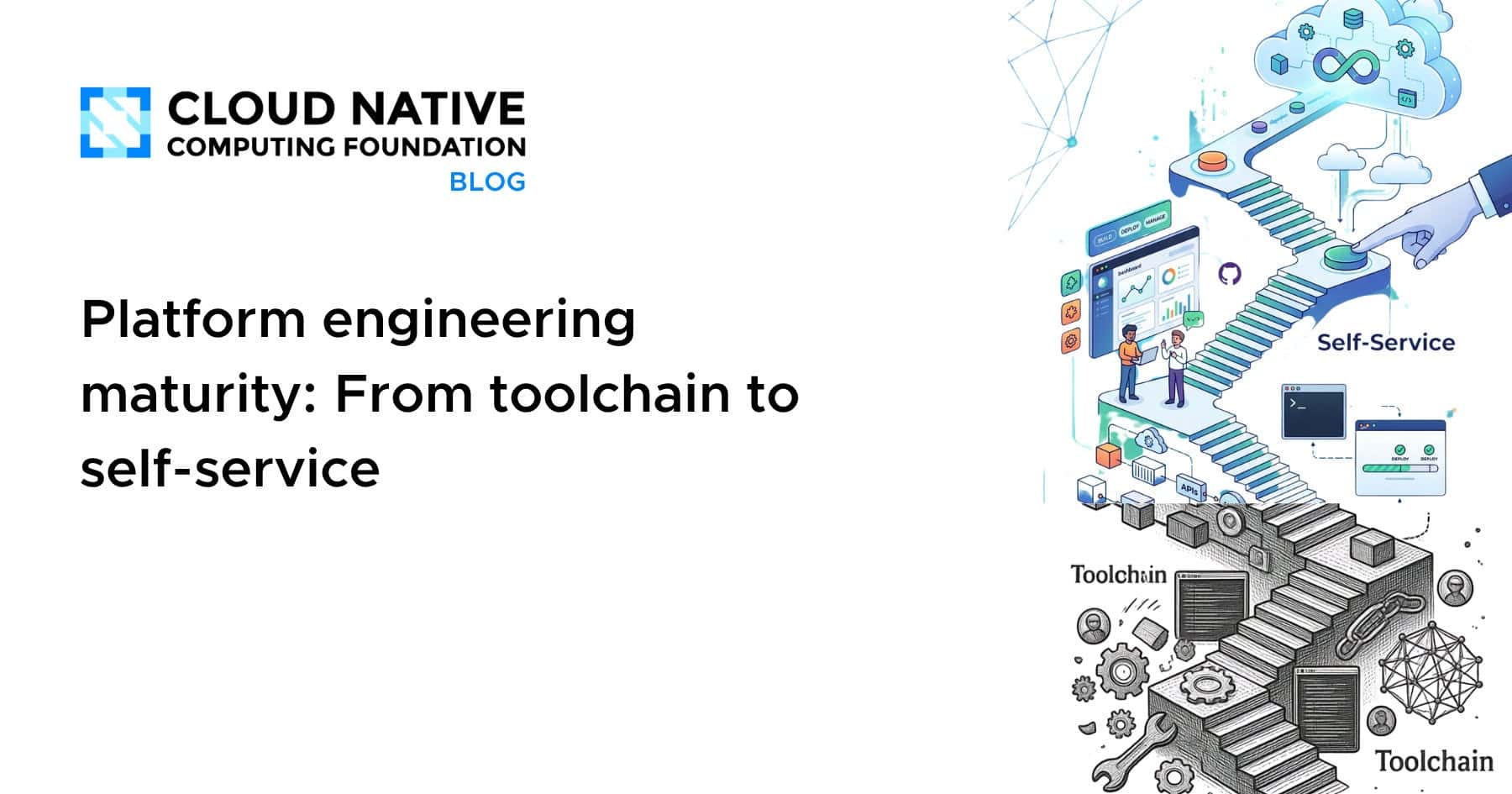 ↗
↗
Most platform teams remain at standardized tooling interfaces, missing the shift to self-service that cuts exception requests and frees platform staff.
Engineers benefit when platforms provide genuine self-service because routine provisioning no longer requires platform team intervention, accelerating delivery. Platform teams can then focus on improving the underlying framework rather than handling individual requests. Advancing to self-service interfaces has been shown to lower exception request volume by 40-60 % after adding configuration options.
Written by elseif from the cluster below · every claim links back to a sourceThe three things worth knowing
The CNCF Platform Engineering Maturity Model defines four interface levels: Custom Processes, Standard Tooling, Self-Service Solutions, and Optimizing.
Most teams that have built a platform sit at Level 2, where interfaces are standardized but any request outside the paved path still needs platform team action.
Reaching Level 3 enables one-click provisioning for routine tasks, drops exception requests by 40-60 %, and shifts platform work from ticket handling to framework improvement.
THE READ
What the cluster adds up to.
Many engineering organizations either lack a formal platform or have built one that still relies on manual handling of requests. In the first case, teams use scattered scripts and tribal knowledge, leading to inconsistent processes. In the second case, a golden path and documentation exist, but every deviation requires a platform engineer. Both situations reveal a gap between existing capabilities and truly self-service interfaces.
The CNCF maturity model treats interfaces as one of five independent aspects, each with four levels: Provisional, Operational, Scalable, Optimizing (named Custom Processes, Standard Tooling, Self-Service Solutions, Optimizing in the text). Level 2 provides consistent tooling such as CLIs, portals, and templates, yet the platform team remains in the loop for non-standard requests. Level 3 removes that loop for most routine tasks, offering one-click provisioning and measurable drops in exception tickets.
Moving to Level 3 demands investment in self-service configuration options, automated validation, and clear documentation; the cost is primarily engineering effort to build and maintain those automation layers. The approach stops working when the volume of exceptional or highly customized requests exceeds the coverage of self-service options, or when the platform team cannot keep the underlying framework updated to support new self-service capabilities.
Written by elseif from the cluster below · checked for specifics the sources never containedTHE CLUSTER