TECH Signal 444
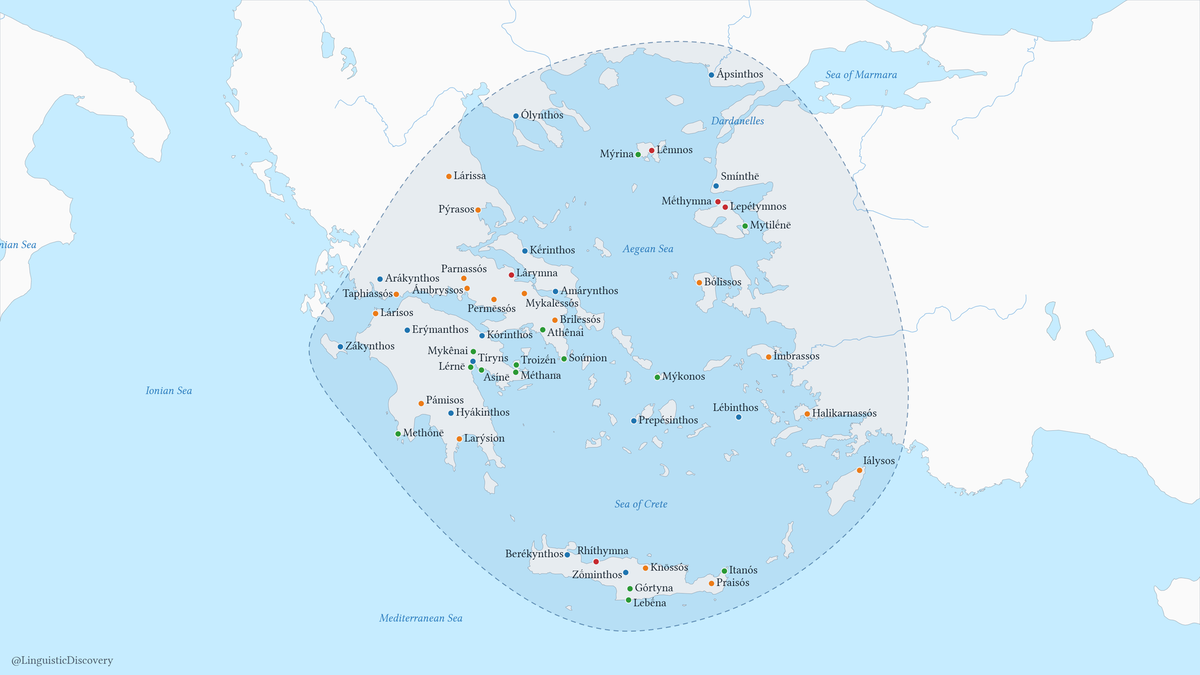
Linguistic Discovery explores the lost Pre-Greek language influencing Ancient Greek
 ↗
↗
Comments
The discussion of Pre-Greek highlights significant gaps in our understanding of language evolution. Identifying words in Ancient Greek that do not trace back to known languages can reshape our knowledge of cultural and linguistic history. This exploration may also contribute to the documentation and revitalization of less recognized languages.
Written by elseif from the cluster below · every claim links back to a sourceThe three things worth knowing
Ancient Greek contains around 1,000 words that do not connect to any known Indo-European languages.
The origins of these lexical enigmas, including essential Greek terms, remain unidentified despite extensive research.
Understanding these words can provide insights into the cultural interactions of early European societies.
THE READ
What the cluster adds up to.
The exploration of Pre-Greek as a lost language introduces a complex layer to the study of Ancient Greek linguistics. Researchers have found that certain words in Ancient Greek cannot be traced back to any known language, creating a significant gap in linguistic history.
This situation indicates that there may have been earlier languages or dialects that influenced the development of Greek, reflecting the interaction between different cultures and peoples in ancient Europe. This is particularly relevant for understanding how the Greeks adapted to their environment and incorporated new concepts.
While this research does not provide immediate practical applications for engineers, it emphasizes the importance of linguistic diversity and the historical context of language development, which could influence areas like computational linguistics and natural language processing.
The findings also prompt further investigation into the prehistoric languages of Europe, potentially enriching our understanding of human migration, cultural exchange, and language evolution. Such knowledge may also inspire interdisciplinary collaboration among linguists, historians, and archaeologists.
Overall, the identification of these untraceable words invites ongoing inquiry into ancient societies and their languages, which can lead to a more nuanced view of how languages evolve and influence each other over time.
Written by elseif from the cluster below · checked for specifics the sources never containedTHE CLUSTER