INFRA Signal 474
eBPF enables transparent control of AI API traffic in Kubernetes without code changes
 ↗
↗
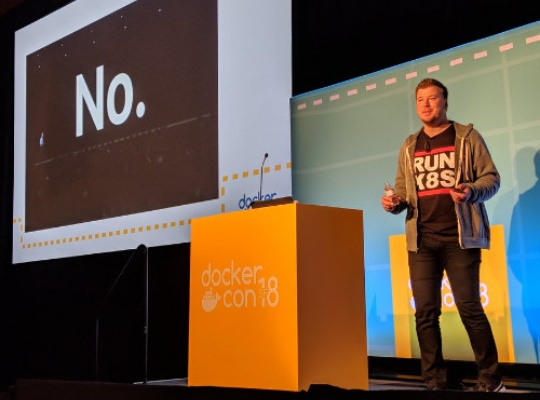
The presentation highlights risks of unowned AI-generated code in production and demonstrates how eBPF can intercept and manage AI API traffic in Kubernetes to enforce prompt filtering, model swapping, token limits, and syscall restrictions without modifying application code or restarting containers.
Engineers face growing risk when AI-generated code enters production without clear ownership or understanding, creating hidden dependencies and support challenges. Using eBPF provides a runtime mechanism to observe and control AI agent behavior, reducing the need for code changes while enforcing security policies.
Written by elseif from the cluster below · every claim links back to a sourceThe three things worth knowing
Unowned AI-generated code in production creates support and security risks due to lack of understanding and ownership.
eBPF kernel-level socket hooks can intercept AI API traffic in Kubernetes environments for runtime monitoring.
This enables transparent prompt filtering, model swapping, token limits, and syscall restrictions without altering code or restarting containers.
THE READ
What the cluster adds up to.
The presentation points out that AI-generated code often enters production without clear ownership, leaving teams unable to support or verify its behavior. This creates hidden dependencies that can cause incidents when the code fails or acts unexpectedly. Engineers must therefore find ways to observe and govern AI agents after they are deployed. The talk proposes using eBPF as a runtime tool to address this gap.
eBPF allows kernel-level socket hooks that can capture network traffic to and from AI services running in Kubernetes. By attaching these hooks, operators can inspect prompts, responses, and associated metadata without modifying the application containers. The demonstrated use cases include filtering prompts, swapping models, enforcing token limits, and restricting specific system calls. All of this is done transparently, meaning the AI agent sees no change in its interaction.
Adopting this approach requires familiarity with eBPF programming and the tooling provided by projects such as Cilium, which the presenter helps maintain. Teams must write and deploy eBPF programs that implement the desired security policies. There may be a performance cost associated with packet inspection, though the presenter notes that overhead is typically low for socket-level hooks. Additionally, the host nodes must run a recent Linux kernel that supports the needed eBPF features.
The technique works best in Kubernetes clusters where all nodes run Linux and the AI services expose traffic over standard sockets. Encrypted traffic that is not terminated before the eBPF hook may limit visibility into payloads unless decryption is performed upstream. The approach primarily governs API-level interactions and may not capture behaviors such as local file system calls or subprocess invocations that bypass the network layer. Consequently, engineers should complement eBPF monitoring with other observability and runtime security measures.
Written by elseif from the cluster below · checked for specifics the sources never containedTHE CLUSTER