ARCHITECTURE Signal 80
Netflix commerce platform evolved from U.S. DVD service to global streaming infrastructure
 ↗
↗
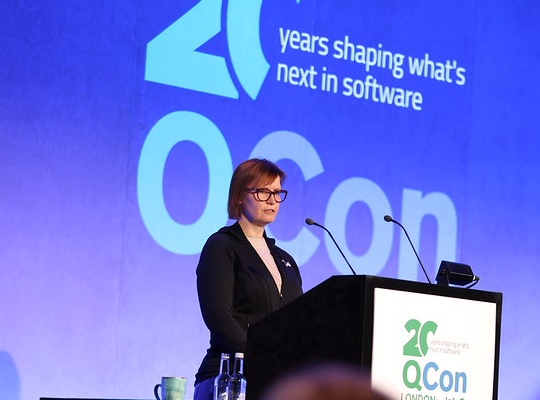
Kasia Trapszo explains how Netflix’s commerce platform grew from a U.S.-only DVD billing system into a global infrastructure that handles international payments, regulatory compliance, domain-based decomposition, and live-event scale.
The talk shows how a business-driven expansion forces incremental architectural change rather than a clean-slate redesign. Engineers can see concrete tradeoffs in payment routing, regulatory handling, and system decomposition that are directly applicable to scaling their own services.
Written by elseif from the cluster below · every claim links back to a sourceThe three things worth knowing
The commerce platform began as a monolithic system supporting only U.S. DVD rentals and domestic payments.
Global launch in 130 new countries required integrating diverse payment methods and meeting varied local regulations.
To cope, Netflix split the monolith along domain boundaries and re-architected components for massive live-event traffic.
THE READ
What the cluster adds up to.
When Kasia Trapszo joined Netflix, the commerce platform was a monolithic billing system built for the U.S. DVD-by-mail service. It processed payments through a single domestic gateway and entitlement logic tied to DVD shipments. The system was not designed for high-volume streaming or international commerce.
In 2016 Netflix announced simultaneous availability in 130 additional countries, prompting engineers to flip feature toggles across teams to enable signups, streaming, and payment routing worldwide. The commerce platform, still rooted in its DVD origins, had to handle the sudden surge of international signups and real-time payment processing.
Teams faced international payment realities such as multiple currencies, local payment methods, and differing regulatory mandates that required compliance checks. To manage this complexity, they began decomposing the monolith along domain boundaries, separating billing, entitlement, and payment processing into distinct services. Simultaneously, they re-architected components to scale for massive live-event demand, such as new-release premieres.
These changes were made through a series of messy tradeoffs rather than a single redesign, illustrating that architecture evolves as the business expands. The experience demonstrates that a system can survive long-term growth by continually adapting its components to new market and technical pressures.
Written by elseif from the cluster below · checked for specifics the sources never containedTHE CLUSTER