INFRA Signal 142
Prisma's pgbouncer=true on Supabase incurs four database round-trips per query
 ↗
↗
This change significantly impacts query performance and response times.
The use of pgbouncer=true in Prisma leads to excessive latency due to multiple round-trips for each database query. Understanding this issue is critical for optimizing database interactions in applications using Supabase and Prisma.
Written by elseif from the cluster below · every claim links back to a sourceThe three things worth knowing
Prisma's configuration with pgbouncer=true results in four network round-trips per query.
This change increased query latency from a more manageable level to significantly slower performance.
Identifying and correcting this configuration mistake is essential for improving application responsiveness.
THE READ
What the cluster adds up to.
The adoption of Prisma's pgbouncer=true setting causes every database query to be executed with four separate round-trips, leading to an increase in response time. This setting is intended to facilitate transactions through a connection pooler but inadvertently introduces considerable latency.
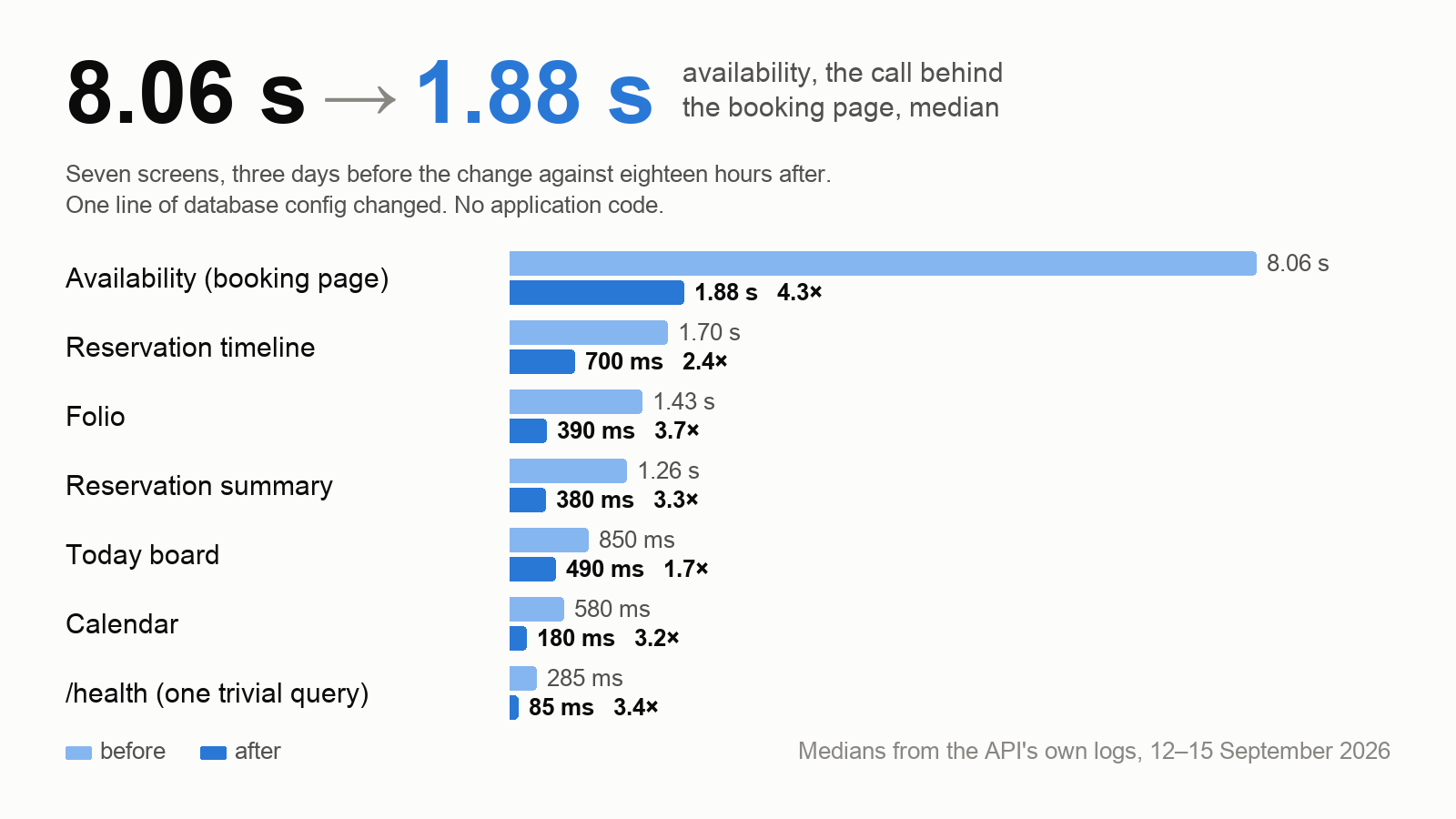
The cost of this change is evident in the increased query response time, which translates to an additional 188 milliseconds for health checks. This is a significant performance penalty that engineers must account for in application design and infrastructure planning.
This issue primarily arises when using Supabase's transaction pooler, Supavisor, in conjunction with Prisma. The additional round-trips can overwhelm application performance, particularly in latency-sensitive environments, necessitating a reevaluation of database connection strategies.
To mitigate these latency issues, developers may need to reconsider their use of pgbouncer=true or explore alternative configurations that minimize round-trips. The performance implications highlight the importance of thorough testing and measurement of database interactions in application development.
Ultimately, understanding the underlying cause of the performance bottleneck is crucial for optimizing database queries. The experience emphasizes the necessity of monitoring and diagnosing database performance issues to avoid unnecessary delays in application responsiveness.
Written by elseif from the cluster below · checked for specifics the sources never containedTHE CLUSTER