TECH Signal 404
Remaking Party House
 ↗
↗
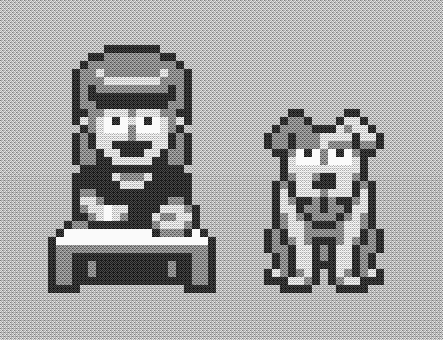
A developer recreated the Party House mini-game from the UFO 50 collection as a browser-based roguelite deckbuilder, using the AI assistant Claude and the original game’s assets.
The project shows how large language models can speed up game cloning when paired with a clear spec and existing source material, reducing the effort needed to reproduce gameplay. It also highlights the practical and legal considerations of reusing copyrighted assets for online sharing. For engineers, it illustrates a workflow where AI handles repetitive coding while the human focuses on design, integration, and asset compliance.
Written by elseif from the cluster below · every claim links back to a sourceThe three things worth knowing
The remake runs in a desktop browser, lacks mobile support, and requires the escape key to open options and controls.
Core gameplay alternates between a planning phase where guests are purchased and a party phase where abilities are used to score points and manage trouble.
The developer estimated writing about 80 % of the code and Claude contributing the remaining 80 %, relying on the original game as a source of truth to keep the project coherent.
THE READ
What the cluster adds up to.
The developer began Party House as a small experiment to understand how game development feels compared to other coding work. After building a basic prototype by hand, the project was set aside for several months when other responsibilities arose. Returning to the code, the developer turned to the AI assistant Claude to continue work. The original prototype already contained a functional core loop, which gave the AI a clear reference point.
Using the Godot engine as the foundation, the developer and Claude iterated on the remake, with the developer estimating they wrote about 80 % of the code and Claude contributing the remaining 80 %. The external game and a jointly created spec served as a source of truth, preventing the implementation from diverging as the project grew. All visual and audio assets were taken directly from the original Party House release, preserving the authentic look and sound. Because the remake is faithful to the source, the developer hopes its distribution qualifies as fair use while encouraging players to purchase the full UFO 50 collection.
Party House itself is a roguelite deckbuilder where play alternates between a planning phase and a party phase. During planning, players purchase new guests to add to their roster, spending limited resources to shape future capabilities. In the party phase, guests are drawn at random and their abilities are used to increase round scores and manage incoming trouble. Victory requires having four Star Guests present simultaneously before the timer expires, with the game’s music providing a constant backdrop.
The remake runs only in a desktop browser; it does not support mobile devices and warns users about sound, with the escape key opening the options and controls menu. No changes were made to the underlying gameplay mechanics, so the experience mirrors the original mini-game closely. By sharing the remake online, the developer highlights both the potential of AI-assisted coding and the legal considerations of reusing copyrighted assets. Engineers interested in similar projects can see how a narrow scope and a strong external spec make AI collaboration practical without overwhelming context limits.
Written by elseif from the cluster below · checked for specifics the sources never containedTHE CLUSTER