SECURITY Signal 124
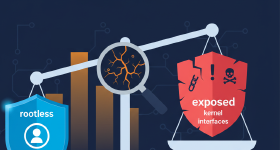
Rootless Docker maps UID 0 to unprivileged users via RootlessKit, but Ubuntu 24.04 restricts it
 ↗
↗
A Docker Privilege series post walks through how rootless Docker uses RootlessKit and setuid helpers to map an inner UID 0 to a non-root host UID, and catalogs the kernel and AppArmor settings that can disable it.
Engineers deploying Docker on multi-user hosts or hardened clusters need a concrete model of what rootless mode actually contains and which host settings silently disable it. The post is most useful when sizing blast radius for daemons and container escapes, because the containment depends entirely on the user-namespace mapping being intact and on unprivileged user namespace creation being allowed. On Ubuntu 24.04 and later, that allowance is no longer the default, so existing CI or runtime images may need explicit configuration to keep rootless working.
Written by elseif from the cluster below · every claim links back to a sourceThe three things worth knowing
Rootless Docker runs each user's dockerd as an unprivileged account under a per-user socket at $XDG_RUNTIME_DIR/docker.sock, using RootlessKit and the setuid helpers newuidmap and newgidmap to set up UID and GID mappings inside a user namespace.
A daemon or container-escape compromise inside this design lands as UID 0 inside the user namespace, which the kernel maps to a non-root host UID, so the escaped process cannot install kernel modules or read other users' data on the host.
The mode requires unprivileged user namespace creation enabled in the kernel, and on Ubuntu 24.04 and later AppArmor restricts this by default, requiring apparmor=unconfined or kernel.apparmor_restrict_unprivileged_userns=0; BuildKit running inside a Kubernetes pod also needs seccomp=unconfined.
THE READ
What the cluster adds up to.
The event is the April 23, 2026 installment of a three-part Docker Privilege series that traces the root path through the Docker socket, image builds, and BuildKit before introducing the rootless alternative. The post's concrete contribution is a mechanism-level walkthrough of how rootless Docker moves the daemon from a root-owned host process to an unprivileged account bound to $XDG_RUNTIME_DIR/docker.sock instead of /var/run/docker.sock. RootlessKit bootstraps a user namespace and invokes the setuid helpers newuidmap and newgidmap to configure UID and GID mappings, which is what lets the daemon appear as UID 0 inside nested PID, mount, and network namespaces without holding CAP_SYS_ADMIN on the host.
The security argument the post makes is one of blast-radius reduction rather than attack-surface elimination. A daemon exploit inside this architecture yields only the privileges of the unprivileged user, not host root, and a container escape lands inside the user namespace where the kernel maps UID 0 to a non-root host UID, so the escaped process cannot install kernel modules, modify system files, or access other users' data. Rootless BuildKit inherits the same model: each RUN step appears to run as UID 0 inside its container but maps back to the host user's UID, with the files it creates owned by that non-root UID on the host filesystem.
The trade-off the post surfaces is operational. The containment is only as strong as the mapping, so the unprivileged account must not be able to alter its own subuid or subgid entries or invoke newuidmap outside the daemon's control, otherwise the boundary collapses. Several common defaults can also silently disable or break rootless mode: the host kernel must permit unprivileged user namespace creation via kernel.unprivileged_userns_clone, Ubuntu 24.04 and later apply an AppArmor profile that restricts that creation by default, and running BuildKit inside a Kubernetes pod requires seccomp=unconfined to permit the namespace operations.
Only Lobsters carried the item, so the framing is a single technical blog post rather than corroboration across news sources, and the headline feed entry on Lobsters is a comments link with no independent editorial summary. The post notes that Kubernetes enabled userns by default in 2025, which places rootless mode in the deployable-defaults category for cluster workloads rather than as a niche configuration. For an engineer evaluating it on an Ubuntu 24.04 host, the practical takeaway is that an apparmor or sysctl change has to be made before adoption, and on Kubernetes the seccomp exception has to be carried in the pod security profile.
Written by elseif from the cluster below · checked for specifics the sources never containedTHE CLUSTER