INFRA Signal 543 2 feeds carried it
Russian cruise missile reportedly uses Nvidia Jetson Orin chip for AI-assisted targeting
 ↗
↗
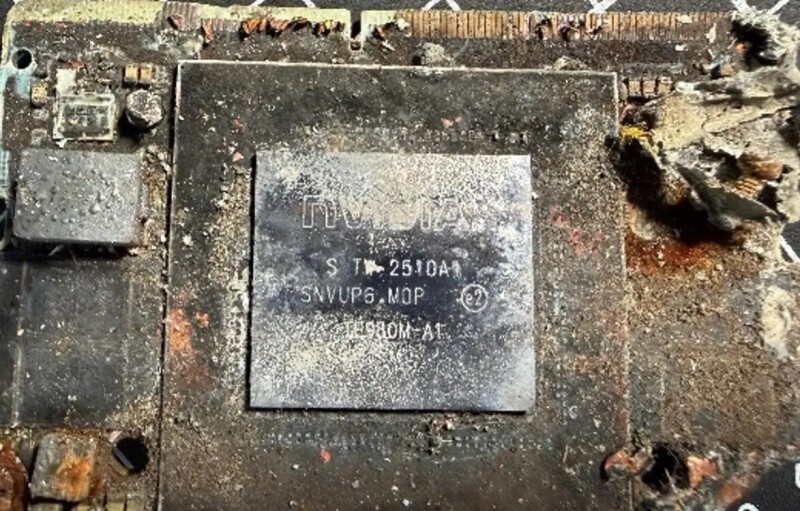
Ukrainian military intelligence found an Nvidia Jetson Orin module in a downed Russian missile, suggesting AI use in autonomous targeting despite sanctions.
This incident exposes gaps in export controls designed to prevent advanced Western hardware from reaching adversarial military applications. For engineers, it underscores the unintended consequences of widely available embedded AI hardware and the challenges of enforcing hardware-level restrictions in global supply chains.
Written by elseif from the cluster below · every claim links back to a sourceThe three things worth knowing
The recovered Nvidia Jetson Orin NX 16GB chip was designed for autonomous systems and embedded AI applications.
Nvidia ceased direct sales to Russia in 2022, but the chip likely entered the country through third-party resellers or smuggling.
Ukrainian intelligence argues this discovery demonstrates the inadequacy of current export control regimes for advanced hardware.
THE READ
What the cluster adds up to.
The presence of an Nvidia Jetson Orin chip in a Russian S-71M cruise missile reveals how civilian-grade AI hardware can be repurposed for military use. The Jetson Orin series is marketed for autonomous systems, robotics, and edge AI applications, making it a plausible candidate for missile guidance systems. While not as powerful as datacenter-class GPUs, its capabilities are sufficient for real-time image processing and target recognition, which aligns with the missile's reported autonomous engagement features.
This incident highlights the limitations of export controls and corporate compliance measures. Nvidia officially exited the Russian market in 2022, yet its hardware continues to surface in Russian military equipment. The chip's journey likely involved third-party resellers, pre-owned markets, or smuggling networks, demonstrating how difficult it is to track and restrict hardware once it enters global supply chains. For engineers, this raises questions about the effectiveness of hardware-level restrictions and the potential need for embedded kill switches or geofencing in sensitive components.
The discovery also underscores the broader challenge of preventing dual-use technology from reaching adversarial states. The Jetson Orin chip is not subject to the same export restrictions as high-end datacenter GPUs, yet its capabilities are evidently valuable for military applications. This suggests that future export control regimes may need to expand their scope to include a wider range of AI-capable hardware, even if it is not explicitly designed for military use. The incident may prompt calls for stricter oversight of reseller channels and secondary markets.
From a technical perspective, the use of the Jetson Orin in a missile system illustrates the growing role of embedded AI in modern warfare. The chip's ability to process optical sensor data in real time enables autonomous target acquisition and engagement, reducing reliance on manual guidance. However, the fact that the hardware was recovered from a downed missile also suggests that these systems are not infallible. Engineers working on autonomous systems should consider the implications of hardware failures or vulnerabilities in high-stakes environments like military applications.
Written by elseif from the cluster below · checked for specifics the sources never containedTHE CLUSTER