LANGUAGES Signal 602 2 feeds carried it
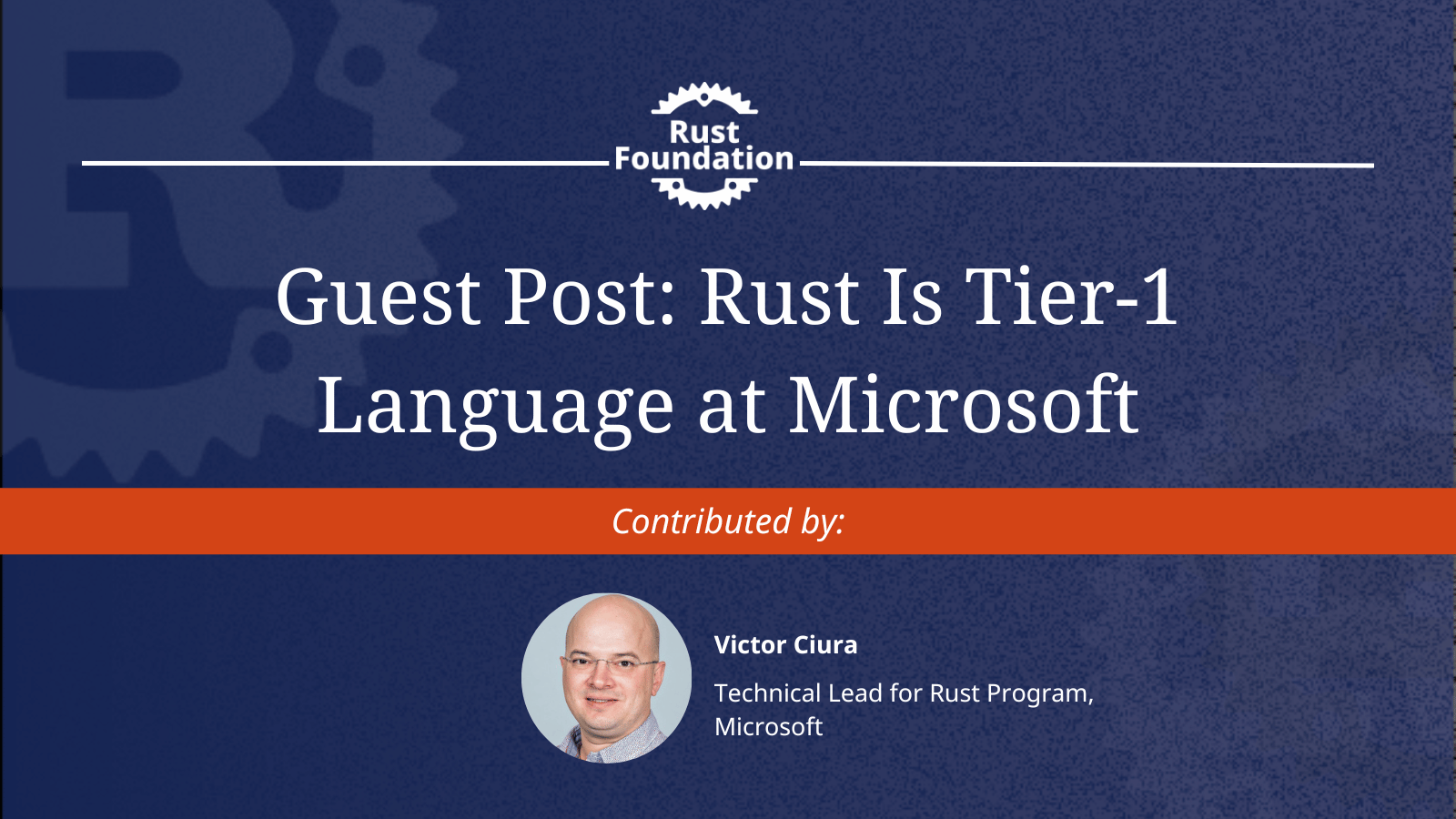
Microsoft designates Rust as Tier-1 language for internal development with MSVC integration
 ↗
↗
Microsoft elevates Rust to Tier-1 status, ensuring full toolchain, compliance, and platform support for internal projects alongside C++, C#, and TypeScript
This change signals Microsoft’s commitment to Rust as a core language for Windows-native development, reducing fragmentation in tooling and workflows. Engineers building or maintaining hybrid Rust/C++ systems on Windows will see improved interoperability and shared platform investments, but adoption requires alignment with MSVC’s ecosystem and compliance requirements.
Written by elseif from the cluster below · every claim links back to a sourceThe three things worth knowing
Rust now shares Tier-1 status with C++, C#, and TypeScript for internal Microsoft development, including full SDL compliance and toolchain support
rustc_codegen_utc connects Rust’s compiler to MSVC’s backend, enabling shared code generation, security features, and debugging workflows for hybrid projects
The integration reduces duplicated engineering efforts for Windows-native features but ties Rust’s evolution to MSVC’s roadmap and ecosystem constraints
THE READ
What the cluster adds up to.
Microsoft’s designation of Rust as a Tier-1 language formalizes its role in the company’s internal development stack. This status ensures Rust projects receive the same toolchain, compliance, and platform integration support as C++, C#, and TypeScript. For engineers, this means Rust code can now move from local development to production with the same paved path, including secure builds, debugging tools, and quality workflows. The change reflects Microsoft’s strategic investment in Rust but also imposes constraints: projects must adhere to the company’s Security Development Lifecycle (SDL) requirements and platform-specific tooling.
The introduction of rustc_codegen_utc bridges Rust’s compiler with MSVC’s backend, addressing a critical gap in Windows-native development. This integration allows Rust to leverage MSVC’s existing capabilities, such as binary hardening, post-link analysis, and Hotpatch servicing, without requiring parallel implementations. For hybrid Rust/C++ projects, this shared backend enables seamless interoperability, including cross-language inlining, optimization, and Sample Profile Guided Optimization (SPGO). However, the dependency on MSVC’s ecosystem means Rust’s evolution on Windows will be tied to Microsoft’s compiler roadmap, potentially limiting flexibility for teams using alternative toolchains.
While Rust’s Tier-1 status reduces fragmentation in Microsoft’s internal tooling, it does not eliminate the dominance of C++ in legacy systems. The shared code generation platform minimizes maintenance costs for new features and security workflows, but hybrid projects will remain common for years. Engineers working on such systems will benefit from improved debugging, profiling, and crash-dump analysis, but must also navigate the complexities of interoperability, including ABI compatibility and platform-specific quirks. The integration’s success hinges on Microsoft’s ability to maintain parity between Rust and C++ in evolving platform capabilities.
The operational impact of this change extends beyond technical compatibility. By aligning Rust with MSVC’s ecosystem, Microsoft ensures that Rust projects can participate in the same validation, servicing, and diagnostic workflows as C++ code. This alignment is particularly valuable for teams building firmware, drivers, or kernel components, where platform-specific tooling is non-negotiable. However, the integration’s reliance on MSVC may pose challenges for projects targeting cross-platform or non-Windows environments, where Clang or other compilers are preferred. Engineers will need to weigh the benefits of shared tooling against the constraints of a Windows-centric ecosystem.
Written by elseif from the cluster below · checked for specifics the sources never containedTHE CLUSTER