TECH Signal 355
Spotify AI Persona labels will alert listeners if an artist isn't real
 ↗
↗
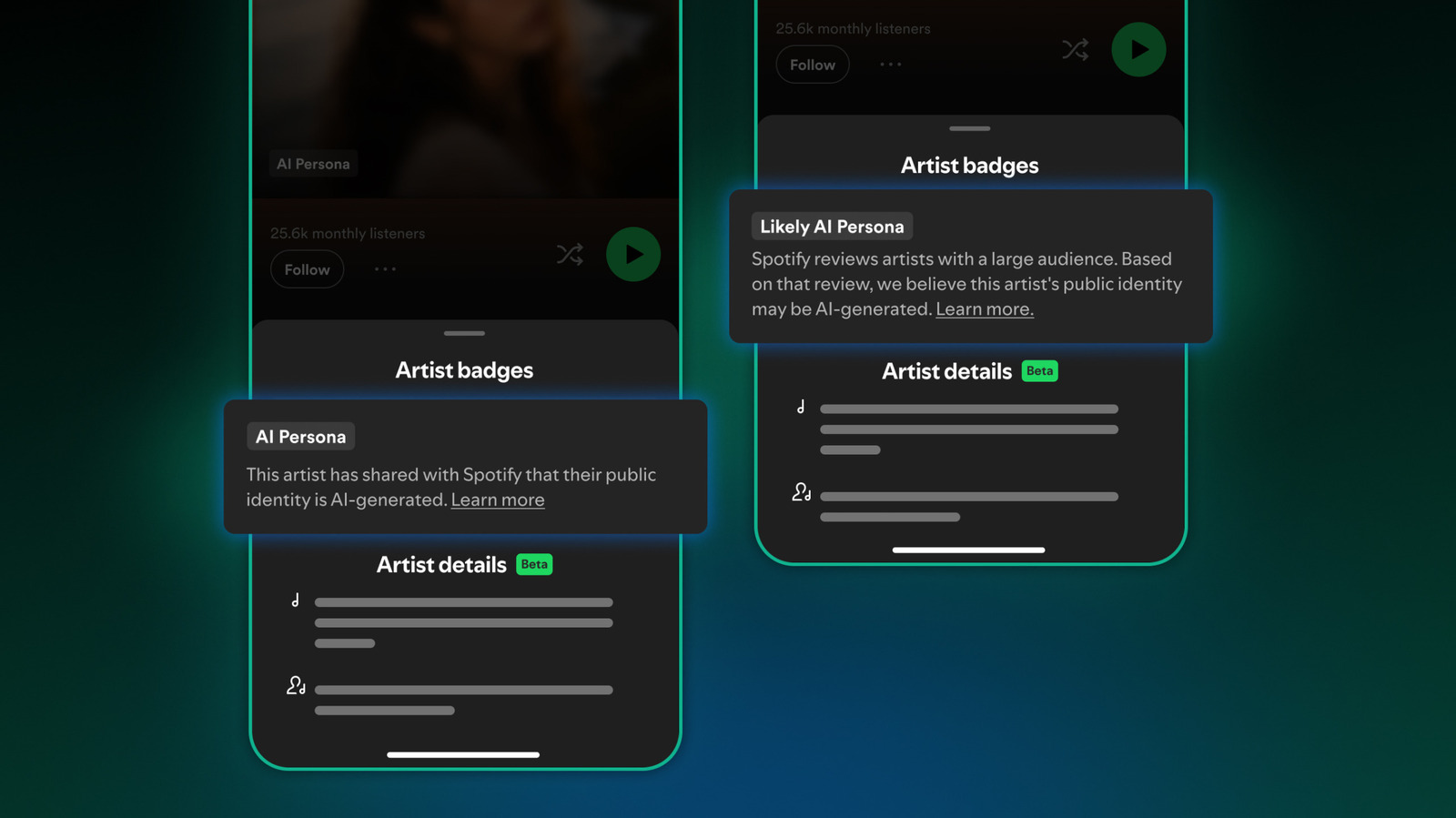
Spotify will label artist profiles as AI-generated if they are not real people, using both self-declaration and automated detection.
Engineers building or integrating with music platforms must now account for AI-generated content metadata in their systems. This change forces clearer distinctions between human and synthetic artists, which may affect recommendation algorithms, licensing, and user trust. The appeal process for mislabeled artists also introduces new operational workflows for dispute resolution.
Written by elseif from the cluster below · every claim links back to a sourceThe three things worth knowing
Artist accounts can self-identify as AI Personas via Spotify for Artists starting immediately.
Spotify will apply a 'Likely AI Persona' badge to accounts it detects as non-human, with an appeal process for disputes.
AI Persona content will be excluded from personalized recommendations by default, altering discovery mechanics.
THE READ
What the cluster adds up to.
Spotify’s move to label AI-generated artists reflects a broader industry shift toward transparency in synthetic media. The dual approach, self-declaration and automated detection, creates a layered system where human oversight and machine learning coexist. For engineers, this means designing interfaces and APIs that can handle dynamic metadata tags, as well as ensuring compliance with platform policies that may evolve. The exclusion of AI Persona content from recommendations also signals a deliberate choice to prioritize human-created art in discovery, which could influence how other platforms handle algorithmic curation.
The operational cost of this change is non-trivial. Artists must now navigate a new self-identification process, while Spotify’s internal teams must manage the review and appeal workflows for mislabeled accounts. Automated detection systems, though scalable, are prone to false positives, which could lead to disputes and reputational risks. Engineers integrating with Spotify’s ecosystem will need to account for these labels in their own applications, particularly if they rely on recommendation data or artist metadata. The appeal process adds a layer of complexity, requiring systems to track and resolve disputes without disrupting user experience.
This labeling system has clear limits. It only applies to artist profiles, not individual tracks, leaving room for AI-generated music to slip through without transparency. The exclusion from recommendations may also create a two-tiered system where AI artists struggle for visibility, potentially discouraging their use on the platform. For engineers, this raises questions about how to handle edge cases, such as collaborations between human and AI artists, and whether similar labeling will extend to other forms of content. The system’s effectiveness hinges on accurate detection, which remains an unsolved challenge in generative AI.
Written by elseif from the cluster below · checked for specifics the sources never containedTHE CLUSTER