SECURITY Signal 51
Startup Mara raises $7 million to develop 8.8-ounce backpack-portable drone interceptors at 20x lower cost
 ↗
↗
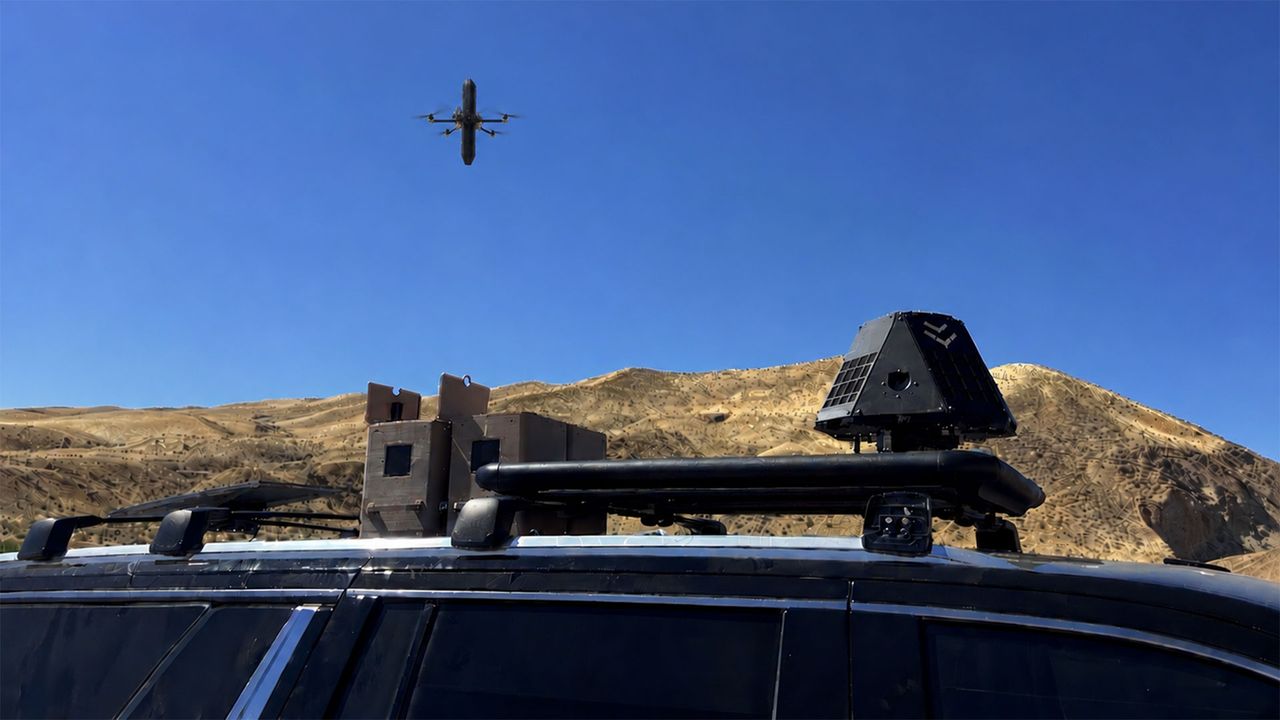
San Francisco-based defense startup Mara has secured funding to produce Spike, a portable counter-drone system with lightweight interceptors priced competitively against attack drones
Drone warfare has escalated to the point where low-cost FPV quadcopters are causing significant battlefield losses. A portable, cost-effective interceptor could shift the economics of counter-drone defense, particularly in asymmetric conflicts. If Mara’s claims hold, the system may reduce reliance on expensive, less mobile alternatives
Written by elseif from the cluster below · every claim links back to a sourceThe three things worth knowing
Mara’s Spike system uses 8.8-ounce autonomous interceptors designed to cost no more than the drones they destroy
The system detects and tracks fully autonomous and fiber-optic-controlled drones in all weather conditions
Mara claims a 20x cost advantage over existing interceptors and plans field deployment by late 2026
THE READ
What the cluster adds up to.
Mara’s Spike system introduces a portable counter-drone solution with lightweight, low-cost interceptors. The 8.8-ounce Seekers are designed to match or undercut the price of the FPV quadcopters they target, which typically cost a few hundred dollars each. This pricing model contrasts sharply with traditional interceptors, which Mara claims are 20 times more expensive. The system’s mobility, housed in a backpack, addresses a key limitation of ground-based or vehicle-mounted alternatives, which often lack the agility to respond to swarming attacks
The system’s targeting unit combines electro-optical, acoustic, and optional radar sensors to detect drones that evade RF-based detection. This includes fully autonomous drones and those controlled via fiber-optic links, which do not emit detectable radio signals. The ability to track such threats in all weather conditions and at ranges up to 25 miles could make Spike particularly effective against modern drone tactics, which often involve coordinated swarms. However, the system’s reliance on human oversight for rules of engagement may introduce latency in high-speed engagements
Mara’s cost claims hinge on the Seekers’ ability to achieve a one-to-one or two-to-one cost ratio against attack drones. If validated, this could disrupt the economics of drone warfare, where cheap FPV quadcopters are currently outpacing expensive countermeasures. The system’s $30,000 to $100,000 price range for a complete launcher, depending on the number of Seekers, positions it as a mid-tier solution, cheaper than high-power microwave systems but more capable than improvised 3D-printed interceptors. However, its effectiveness against larger, slower drones remains unproven compared to existing solutions
Deployment timelines suggest ground-mounted units will reach customers by late 2026, with man-portable variants following in 2027. Mara’s partnerships with NATO’s DIANA accelerator and U.S. defense organizations, along with a paid order from a European NATO partner, indicate early traction. However, the system’s real-world performance in active conflict zones, such as Ukraine, where it has been tested, will determine whether its cost and mobility advantages translate into operational success. Scaling production to meet demand could also pose challenges, particularly if the system gains widespread adoption
Written by elseif from the cluster below · checked for specifics the sources never containedTHE CLUSTER