TECH Signal 369
Static Hour challenges you to be the arbiter of truth and fear
 ↗
↗
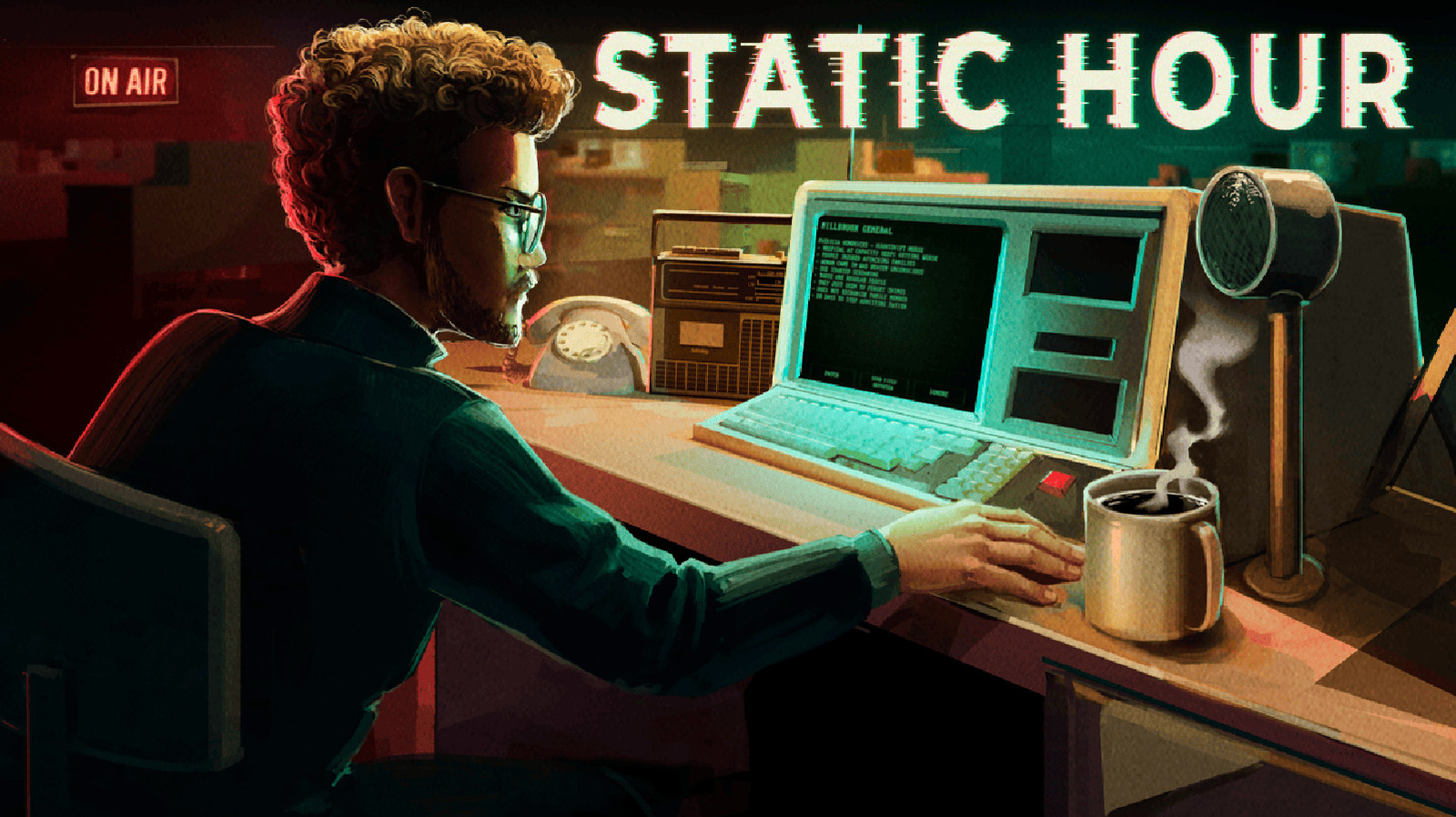
Static Hour puts players in the role of a 1980s radio news editor who must verify incoming reports during a crisis using only analog tools and FCC guidelines.
For engineers, the game illustrates the challenge of separating signal from noise when data sources are unreliable and time is limited. It highlights how regulatory constraints and public perception shape information flow in emergency situations. The scenario mirrors real-world tasks of validating sensor feeds, communications, and alerts under uncertainty.
Written by elseif from the cluster below · every claim links back to a sourceThe three things worth knowing
Players monitor phones, radio, and police scanner while using rotary phones and rolodexes to gather additional details.
The game requires adherence to FCC rules while managing how the town reacts to each broadcast.
Set in a 1980s small-town station, the experience relies on audio-driven tension and visual cues from period-appropriate tech.
THE READ
What the cluster adds up to.
The core mechanic places the player as the arbiter of truth, forcing rapid judgments about which incoming tips are genuine and which are rumors or red herrings. This mirrors the signal-processing task of filtering noisy sensor data to extract reliable information under tight deadlines. Success depends on the player’s ability to cross-check limited analog inputs such as phone calls and scanner feeds.
Beyond pure data validation, the game imposes regulatory and social layers: every broadcast must comply with FCC rules, and the player must anticipate how the town will react to each piece of news. This reflects how engineering decisions in communications systems are shaped by legal standards and public-safety considerations, not just technical accuracy.
The setting reinforces the constraints of legacy technology: a small-town radio station equipped with rotary phones, rolodexes, and a muted color palette creates an environment where modern digital shortcuts are unavailable. Engineers working with older infrastructure may recognize similar challenges when maintaining or upgrading systems that rely on outdated hardware.
However, the experience is bounded by the single-room perspective and the reliance on external information streams that the player cannot control. These limits mean the game does not capture the scalability of modern newsroom workflows or the integration of digital verification tools, highlighting where the simulation stops reflecting real-world engineering practice.
Written by elseif from the cluster below · checked for specifics the sources never containedTHE CLUSTER