TECH Signal 404
Surface Pro 12 and Laptop 13 entry prices rise $350 and $300 with Snapdragon X2 Plus
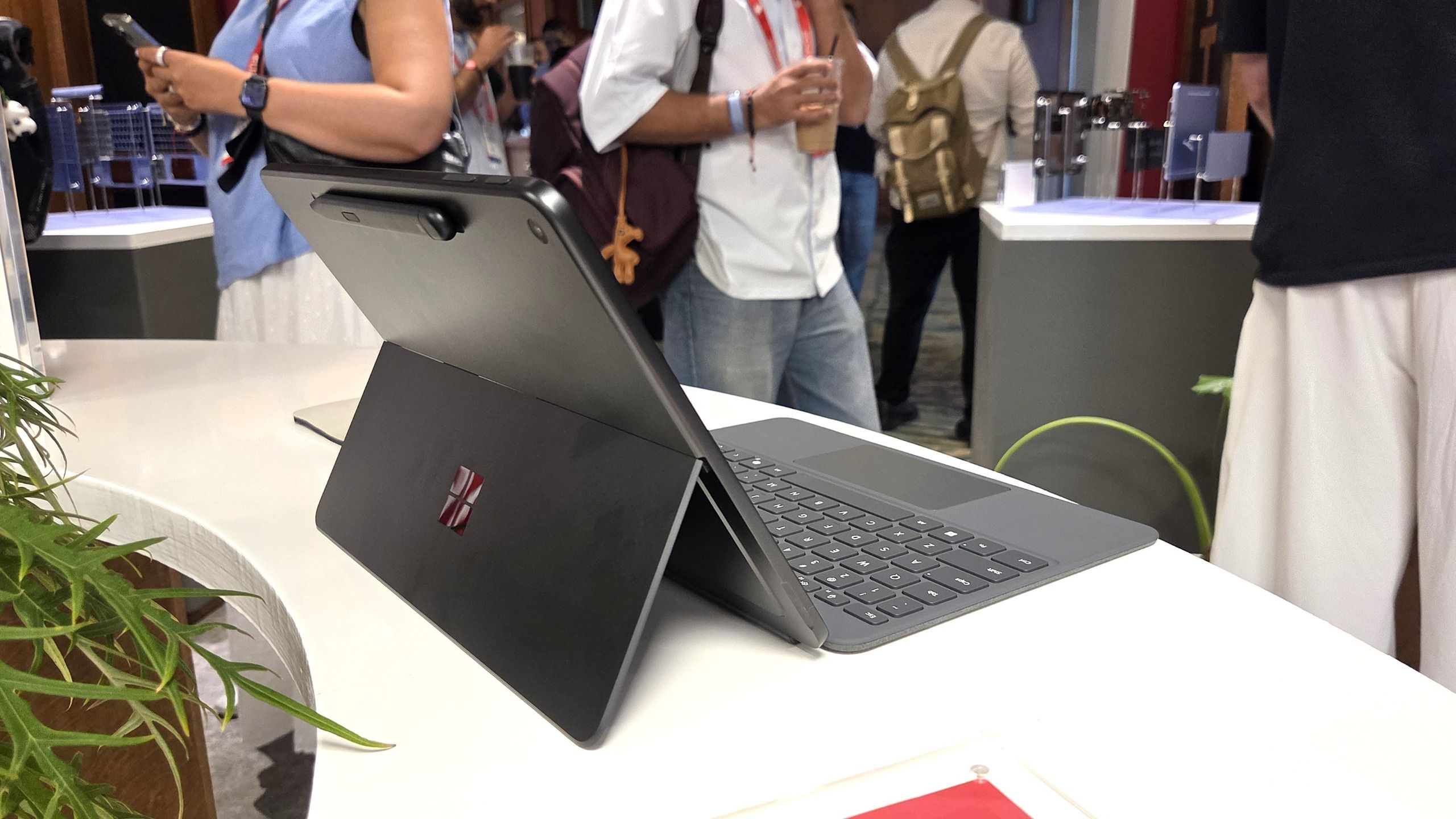 ↗
↗
Microsoft's second-generation compact Surface devices launch with Snapdragon X2 Plus chips and a 16GB RAM minimum, raising starting prices significantly from the first-generation models.
The price increase is driven by a mandatory 16GB RAM floor and new silicon, removing the sub-$1,000 entry point that existed for the previous generation. Buyers seeking low-cost ARM-based Windows devices will find the new models priced closer to premium x86 laptops, while the physical chassis and display resolutions remain largely unchanged.
Written by elseif from the cluster below · every claim links back to a sourceThe three things worth knowing
The Surface Pro 12-inch (2nd Edition) starts at $1,149.99 and the Surface Laptop 13-inch (2nd Edition) at $1,199.99, up from $799.99 and $899.99 respectively.
Both devices feature the six-core Snapdragon X2 Plus processor with an 80 TOPS NPU, replacing the previous 45 TOPS accelerator.
The new models enforce a 16GB LPDDR5x RAM minimum, eliminating the 8GB configurations that were available in the first generation.
THE READ
What the cluster adds up to.
Microsoft has refreshed its smallest Surface lineup with the Snapdragon X2 Plus platform, but the most significant change for procurement and personal buyers is the price. The Surface Pro 12-inch (2nd Edition) now starts at $1,149.99, a $350 increase over the first-generation model, while the Surface Laptop 13-inch (2nd Edition) starts at $1,199.99, up $300 from its predecessor. These devices go on sale in the United States on October 13, 2026, following an announcement at Qualcomm’s Snapdragon Summit on September 23, 2026.
The hardware changes are modest relative to the cost increase. Both systems retain the same chassis, port layouts, and display resolutions as their predecessors, with the Pro maintaining a 12-inch 2,196 x 1,464 panel and the Laptop a 13-inch 1,920 x 1,280 panel. The primary internal upgrades are the move to the six-core Snapdragon X2 Plus chip, which includes an 80 TOPS Qualcomm Hexagon NPU, and a mandatory 16GB LPDDR5x RAM floor. Microsoft claims these changes deliver up to 95% faster on-device AI inference and over 60% faster graphics performance, though no independent benchmarks were included in the reporting.
The price hike is directly tied to the elimination of lower-memory configurations. The first-generation models offered 8GB RAM options that allowed Microsoft to price them below $1,000, but the new models only offer 16GB or 24GB of RAM. Microsoft has not confirmed whether it will continue selling the older, cheaper models, and reports indicate the previous generation is no longer available in the Microsoft Store, though some retailers still have inventory. This shift effectively removes the budget entry point for ARM-based Windows devices in this form factor.
For engineers and developers, the practical impact is a higher barrier to entry for testing ARM Windows environments. The new devices offer improved NPU performance for local AI workloads, but the lack of resolution upgrades and the retention of 60Hz panels on the Laptop model mean the visual experience is unchanged. The battery life estimates show marginal gains, with the Pro rated for 13 hours of web use and the Laptop for 18 hours, which are only slightly better than the previous generation's figures.
The strategic positioning of these devices remains focused on portability and local AI acceleration rather than raw CPU throughput. The Snapdragon X2 Plus has two fewer CPU cores than the previous generation but a more powerful integrated GPU and NPU. This trade-off suggests Microsoft is prioritizing AI inference capabilities over general-purpose computing speed, a move that may appeal to users relying on local large language models but offers less benefit for traditional CPU-bound tasks.
Written by elseif from the cluster below · checked for specifics the sources never containedTHE CLUSTER