AI Signal 121
Developers urged to use behavioral evaluations for AI coding agents instead of costly end-to-end benchmarks
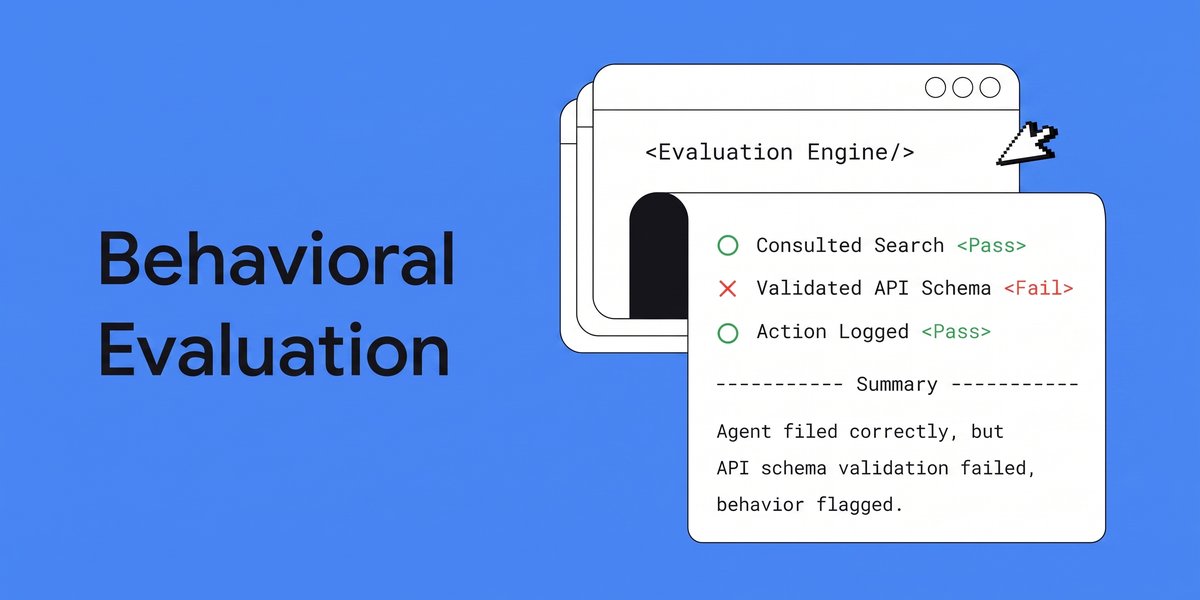 ↗
↗
Behavioral evaluations provide fast, local checks that reveal why AI coding agent changes succeed or fail, avoiding expensive end-to-end benchmark runs.
End-to-end benchmarks like SWE-bench, Terminal-Bench, and DeepSWE are slow, costly, and lack the diagnostics needed to pinpoint failures in AI coding agents. By shifting to behavioral evaluations, engineers gain immediate feedback on discrete actions such as tool calls or file modifications, enabling rapid iteration and confident model updates. This approach acts as a safety net that guards against regressions while keeping development cycles efficient.
Written by elseif from the cluster below · every claim links back to a sourceThe three things worth knowing
Behavioral evaluations target discrete, observable actions like specific tool calls or file modifications rather than overall task success.
They are implemented as fast, deterministic, unit-style checks that run locally, supporting prompt engineering and model changes.
A rich suite of these evaluations serves as a regression guard, giving confidence that updates do not degrade core agent behavior.
THE READ
What the cluster adds up to.
The article describes a shift from relying on broad end-to-end benchmarks to adopting behavioral evaluations for AI coding agents. End-to-end benchmarks measure overall success but do not reveal why a score changes, leaving engineers without root-cause insight. Behavioral evaluations instead focus on intermediate, observable actions such as whether the agent asks clarifying questions or runs a local validator before declaring a task complete.
Adopting this approach requires engineers to write unit-style assertions that check specific tool calls or file modifications. These checks are designed to run quickly and locally, reducing the overhead associated with heavyweight benchmark suites. The effort to create and maintain the evaluation set is offset by the ability to iterate on prompts or swap models with immediate feedback on whether core behaviors are preserved.
However, behavioral evaluations only capture the behaviors that are explicitly asserted; they may miss emergent failures or edge cases not covered by the test suite. They are not a replacement for full system validation but serve as a complementary safety net. If the evaluation suite is incomplete or incorrectly specified, engineers can still experience regressions that go undetected despite passing the behavioral checks.
Written by elseif from the cluster below · checked for specifics the sources never containedTHE CLUSTER