TECH Signal 479
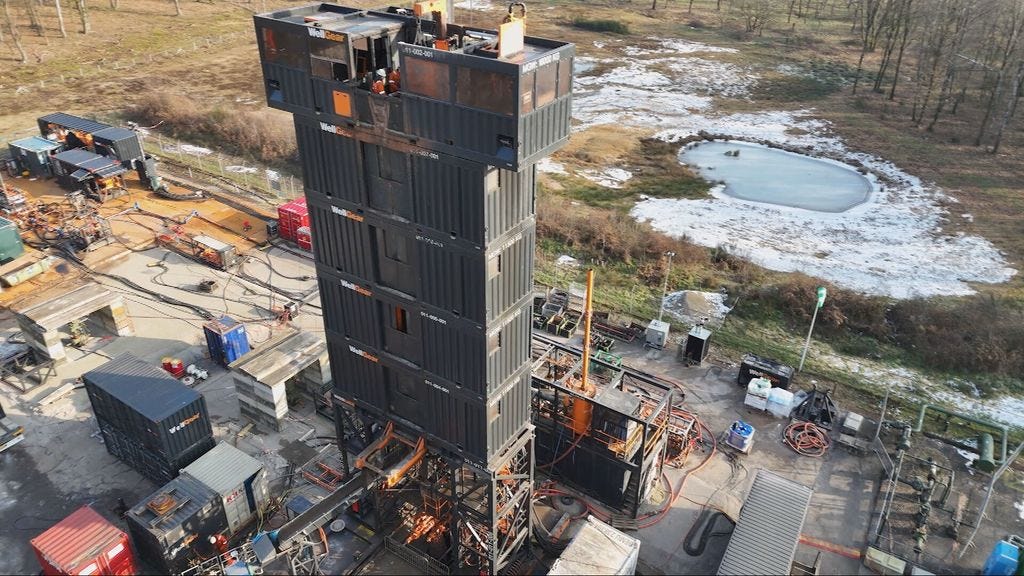
Dutch government reportedly fills inactive Groningen gas wells with cement to block future production
 ↗
↗
The Netherlands is permanently sealing its Groningen gas wells with cement, eliminating the option to resume extraction despite remaining reserves.
This decision removes a strategic energy asset from future policy consideration, regardless of geopolitical or economic shifts. For engineers, it highlights how irreversible infrastructure decisions can constrain national resilience and technical flexibility.
Written by elseif from the cluster below · every claim links back to a sourceThe three things worth knowing
The Groningen field contains 500 billion cubic metres of gas, worth €200 billion at current prices, now inaccessible.
Cement plugging is irreversible, unlike mothballing, which would preserve the option to restart production.
The move prioritizes political commitments over technical or economic contingency planning.
THE READ
What the cluster adds up to.
The Dutch government is physically destroying inactive gas wells in Groningen by filling them with cement. This action is not driven by safety or environmental concerns, as the wells were already shut down. Instead, the decision is explicitly political: to prevent any future government from reversing the 2023 production halt. The material consequence is the permanent loss of access to 500 billion cubic metres of natural gas, a resource valued at approximately €200 billion at current market prices.
For engineers, the choice to cement wells rather than mothball them is a stark example of irreversible infrastructure deprecation. Mothballing would preserve the technical option to resume production with minimal additional cost or delay. Cement plugging, by contrast, requires full decommissioning, including the removal of pipelines and surface infrastructure. The Mining Council and the government’s scientific advisor both recommended mothballing, citing flexibility in the face of geopolitical or economic uncertainty. The decision to ignore these recommendations underscores the weight of political symbolism over technical pragmatism.
The Groningen case illustrates a broader trend in energy policy: the prioritization of concentrated, vocal interests over diffuse, long-term benefits. The earthquakes caused by gas extraction were minor, with most registering below 1.5 on the Richter scale. Yet, local opposition led to a production halt and now the permanent destruction of the wells. The remaining gas reserves are equivalent to twice the EU’s total imports from Russia since 2022, a strategic buffer that is now unavailable. This loss of optionality could have significant consequences for energy security, particularly in scenarios where global LNG supplies are disrupted.
The decision also raises questions about the role of engineers in policy implementation. While the technical feasibility of mothballing was established, the political imperative to demonstrate commitment to the phase-out overrode these considerations. The result is a permanent reduction in the country’s energy resilience, with no environmental or safety benefit. For engineers working in energy infrastructure, this case serves as a cautionary example of how policy decisions can lead to the unnecessary destruction of functional assets, limiting future technical and operational flexibility.
Written by elseif from the cluster below · checked for specifics the sources never containedTHE CLUSTER