TECH Signal 481
The phone book that led us to Assad's spy chief in hiding
 ↗
↗
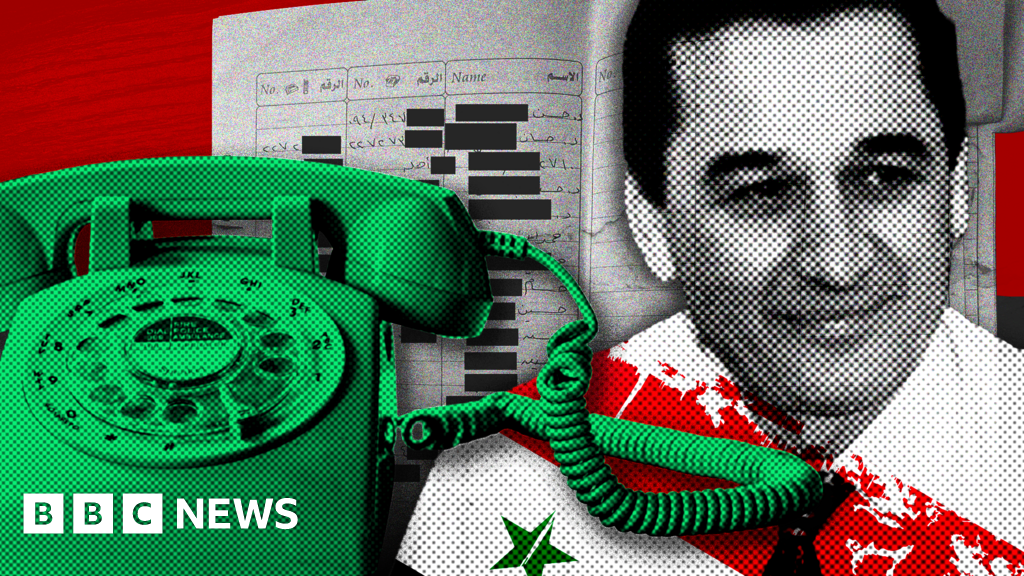
BBC reporters found a handwritten contact notebook in the abandoned Damascus apartment of Hussam Luka, a sanctioned Syrian intelligence chief known as "The Spider," and used it as a starting point to trace him after Assad's December 2024 fall.
The piece shows how physical artifacts - a paper notebook, spray-painted phone numbers on Homs walls - can outlast the digital systems a regime depends on, and can serve as the most concrete investigative thread left behind when a government collapses. For engineers building contact storage, secure messaging, or data-wiping products, the implication is that operational security often fails at the analog layer rather than the digital one. The single feed carrying this story carried it only as a Hacker News comment thread, with no engineering commentary attached.
Written by elseif from the cluster below · every claim links back to a sourceThe three things worth knowing
The investigation hinged on a handwritten notebook of contacts found alongside personal effects, gold medals, and photographs in the subject's abandoned apartment, not on any digital forensic trail.
During the Syrian civil war, the same subject's phone number had been spray-painted on walls across Homs as a public contact channel for civilians seeking safe passage, illustrating how analog records functioned as both regime and civilian infrastructure.
Despite running Syria's General Security Directorate with broad surveillance reach, the subject's documented post-collapse whereabouts relied on physical evidence left in a single residence rather than on any described digital forensic process.
THE READ
What the cluster adds up to.
The artifact at the center of the BBC piece is mundane: a paper notebook holding dozens of contacts ranging from shopkeepers and doctors to military officials and people sharing the apartment owner's family name. Found on a console table in a Damascus residence that rebels were searching days after Assad fell, the notebook sat alongside scattered photographs of the owner and stacks of gold medals inscribed with his name. Its value to investigators was not as evidence of any single act but as a contact map - exactly the kind of working record a national intelligence chief would accumulate while running informants across a long war. The article treats the notebook as the next thing to be processed, a hand-curated graph of relationships whose edges could be followed by phone call, visit, or further document search.
What the piece frames as a lead is, from an engineering perspective, a data store with no API. The reporter and the rebels searching the apartment treated the notebook as the next investigative artifact to work through, and the article leaves open whether any of those edges yielded a confirmed location for Luka. We cannot say from the material given whether the contacts translated into actionable intelligence or whether the trail went cold. What is observable is that the entire chain of custody depends on a physical object surviving a regime collapse intact, which it did.
The notebook is not the only analog record in the story. Earlier in the Syrian civil war, the BBC reports, the subject's personal phone number had been spray-painted across walls in Homs neighborhoods under siege. Civilians used that number to negotiate safe passage out of rebel-held areas; some who called were allowed to leave, others were never seen again. A single phone number thus functioned simultaneously as a state-controlled hotline, a public directory entry, and an instrument of intimidation, and it survived as graffiti long after the events it referred to. For engineers, this is a reminder that contact identifiers leak into the physical environment in ways no contact-sync or privacy-control product can address.
It is worth being honest about the framing. Only one feed carried the article, and on that feed the summary is just "Comments," with no engineering discussion attached. The piece is investigative journalism with a human-rights subject, not a technology story in any conventional sense. Treating it as "tech" requires reading it through the lens of records, identifiers, and operational security, which is a fair angle but not the one the source material foregrounds. The article does not describe any tools, queries, or digital systems used to process the notebook, and we should not invent any.
For someone building or operating software, the operational lesson is narrow but worth keeping. Systems that manage contacts, communications metadata, or human-source relationships tend to assume digital storage and digital deletion as the failure modes that matter. The Assad regime's collapse suggests the opposite: when institutions fall apart, the records that survive are often paper, photographs, and walls, and the records that vanish are the ones stored only on infrastructure that goes dark with the government. The phone book is not a vindication of analog systems over digital ones; it is a reminder that both classes of artifact age differently under stress, and that any operational security model which ignores the physical layer is incomplete.
Written by elseif from the cluster below · checked for specifics the sources never containedTHE CLUSTER