TECH Signal 133
Analysis tallies actual duty on Canadian goods and models household tariff costs
 ↗
↗
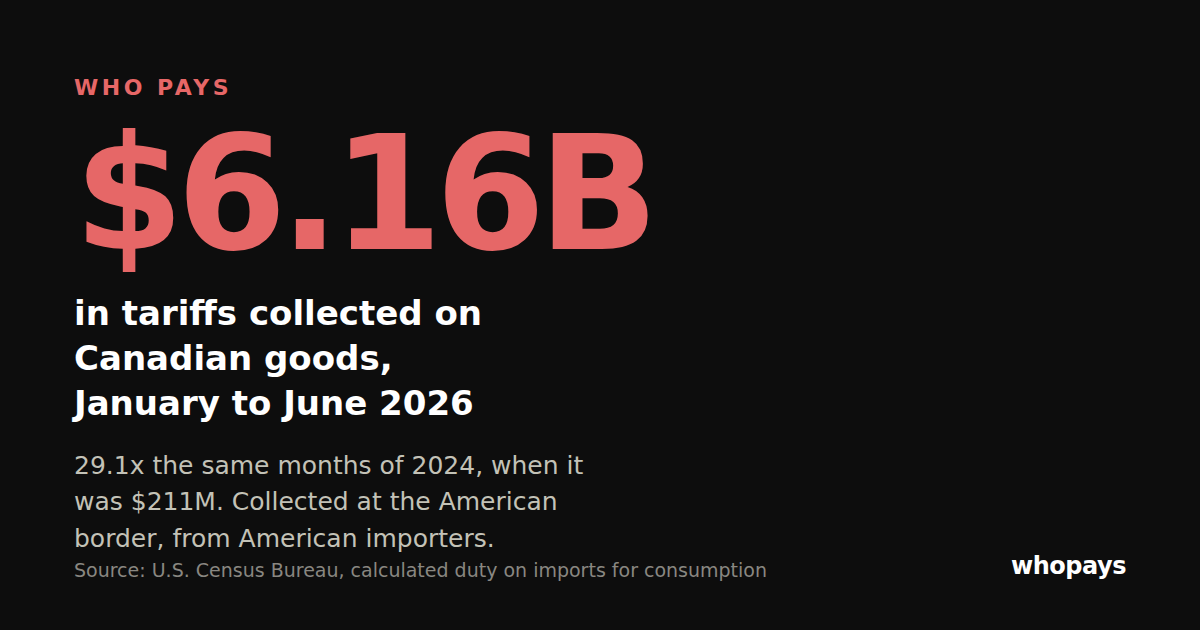
A new analysis uses public customs data to show duty collected on Canadian goods and a modelled estimate of household costs from tariffs on all U.S. imports since 2025.
The analysis separates measured customs data from a modelled household cost estimate, making clear which numbers are observed and which rely on assumptions. For engineers working with trade or supply chain data, it demonstrates a method for combining public datasets and flagging uncertainty. It also shows the two-way nature of tariffs: U.S. importers pay duties on Canadian goods, while Canadian counter-tariffs hit American exporters.
Written by elseif from the cluster below · every claim links back to a sourceThe three things worth knowing
Duty collected on Canadian goods from January to June is presented as measured customs data.
The household cost estimate is a model covering all U.S. imports since 2025, not just Canada.
Canada's counter-tariffs are paid by Canadian importers and affect American exporters, not U.S. importers.
THE CLUSTER