TECH Signal 317
Fossil bite marks suggest giant crocodylian Purussaurus neivensis dominated Miocene South American food chain
 ↗
↗
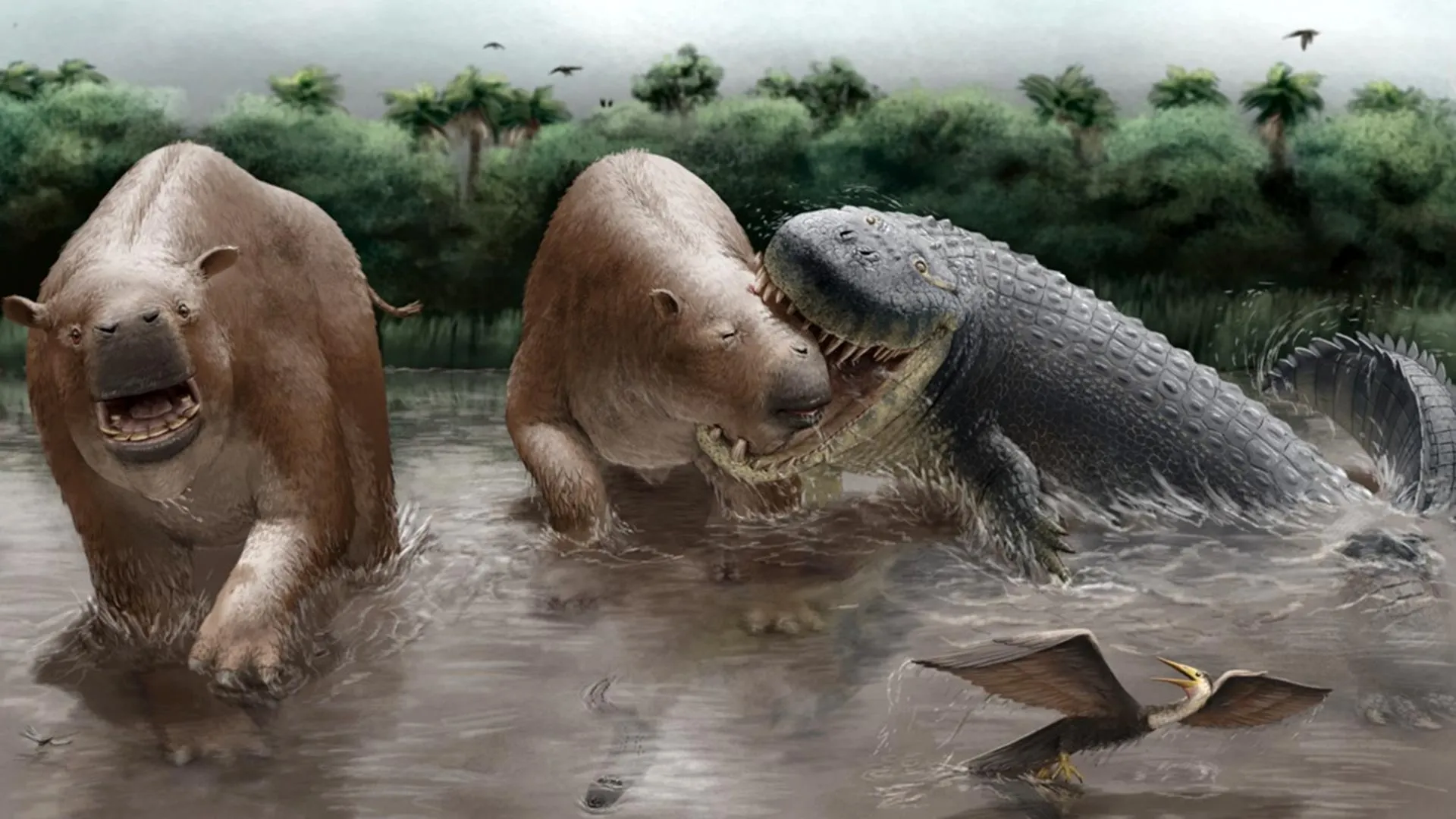
A study of bite marks on 10.5 to 16 million-year-old herbivore fossils from Colombia indicates that crocodylians, particularly the roughly seven-meter Purussaurus neivensis, were the most significant predators in Miocene South America, surpassing mammals in ecological importance.
The study shifts the understanding of Miocene South American ecosystems by positioning crocodylians rather than mammals as the dominant predators of large prey. This challenges assumptions about predator hierarchy in ancient tropical communities and demonstrates how direct physical evidence from bite marks can reshape ecological reconstructions.
Written by elseif from the cluster below · every claim links back to a sourceThe three things worth knowing
Bite and tooth marks on fossilized herbivore remains provide direct evidence that Purussaurus neivensis was a key predator, rather than relying on inferred anatomy or size alone.
Purussaurus neivensis grew to about seven meters and weighed roughly 1,800 kilograms, placing it near the top of a food chain that also included saber-toothed mammals, terror birds, and sebecids.
The study, published in Journal of Vertebrate Paleontology, analyzed fossils ranging from 10.5 to 16 million years old from Middle Miocene Colombia.
THE READ
What the cluster adds up to.
The study examined fossilized herbivore bones preserved in museum collections, looking for bite and tooth marks left by predators. These traces offer direct physical evidence of predator-prey interactions, which the researchers argue is more reliable than inferring predatory behavior from anatomy or body size alone. The fossils ranged from 10.5 million to 16 million years old and came from Middle Miocene deposits in Colombia.
The frequency of marks attributed to Purussaurus neivensis led the researchers to conclude that crocodylians were the most important predator group in this ecosystem, particularly for large prey. Oscar Wilson, a postdoctoral researcher at the University of Helsinki, noted that the sheer abundance of prey meant mammalian predators could not have consumed it all, leaving room for crocodylians to occupy a dominant predatory role. This finding reframes the competitive landscape of Miocene South America, where anacondas, saber-toothed mammals, flightless terror birds, and sebecids all coexisted.
Purussaurus neivensis, related to modern caimans, reached approximately seven meters in length and weighed roughly 1,800 kilograms. The study suggests its influence extended beyond individual kills, potentially affecting herbivore population sizes across the ecosystem. This positions it not just as a top predator but as a species that may have shaped the broader structure of the ancient tropical community.
The Miocene ecosystem centered on a vast lake that covered a large portion of the South American continent, supporting giant turtles, crocodylians, and a diverse array of herbivores including giant ground sloths, glyptodonts, astrapotheres, and toxodontids, some weighing well over a metric ton. The richness of this prey base is what the researchers argue sustained such a varied and formidable predator guild, with crocodylians emerging as the most ecologically significant group based on the bite mark evidence.
The study was published in the Journal of Vertebrate Paleontology by a team led by Oscar E. Wilson, with co-authors from multiple institutions. The research relies on museum collections rather than new field excavations, demonstrating how existing fossil archives can yield new ecological insights when examined for trace evidence like bite marks. The approach could be applied to other ancient ecosystems where predator roles remain debated.
Written by elseif from the cluster below · checked for specifics the sources never containedTHE CLUSTER