TECH Signal 317
Freezing optical fiber core at -196 °C increases light-sound interaction 1,000x, enables optoacoustic memory
 ↗
↗
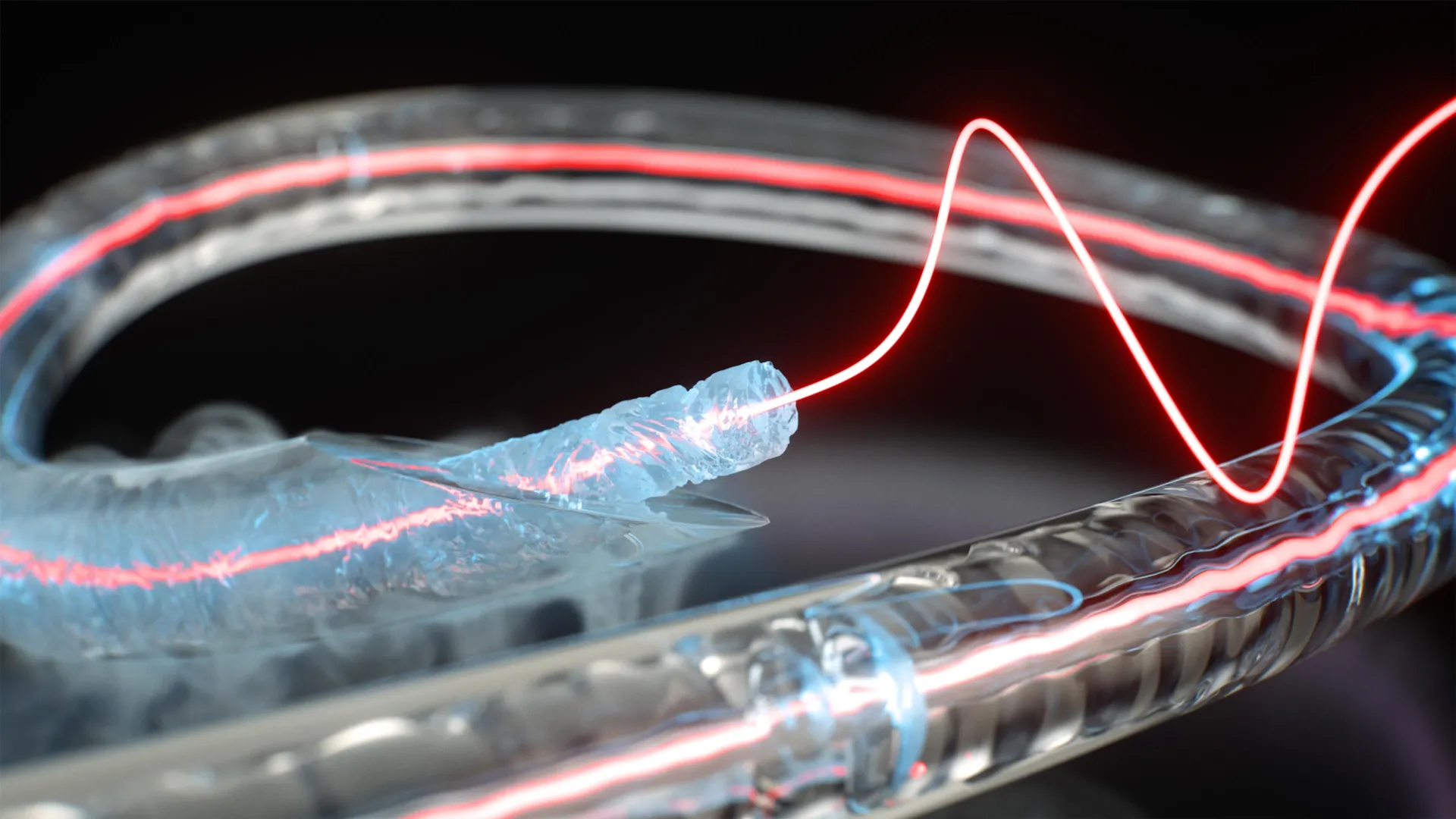
Researchers froze the liquid core of an optical fiber at -196 °C, creating an environment where light and sound interact more than 1,000 times more strongly than in standard fibers, and used the effect to demonstrate optoacoustic memory.
The dramatic increase in light-sound coupling enables optoacoustic memory, where information carried by light is temporarily stored in slower sound waves and then converted back to light. This could significantly reduce the energy required by future photonic computing systems and opens possibilities for quantum information processing, microwave photonics, and high-precision sensing.
Written by elseif from the cluster below · every claim links back to a sourceThe three things worth knowing
Freezing a liquid core optical fiber at -196 °C preserves its ability to guide both light and hypersonic sound waves while increasing their interaction more than 1,000 times compared to standard fibers.
The researchers demonstrated optoacoustic memory, transferring information from light waves to slower sound waves for temporary storage and then converting it back to light.
The technology could reduce energy requirements for photonic computing and enable applications in quantum information processing, microwave photonics, and high-precision sensing.
THE CLUSTER